
How to Turn an Astronomy Calendar into an Observing Plan
Use an astronomy calendar to plan Moon, planet, meteor and eclipse observations. Check local visibility, time zones, equipment and realistic viewing conditions.
An astronomy calendar can offer an exciting list of events, but a date in a list is not the same as an observing opportunity from your home. Some entries describe a global instant, others a period of activity, and others a geometry visible only from part of Earth. Begin with Astronomy Calendar and read each event according to what it actually represents.
A useful calendar session ends with a local plan: where to look, when to look and what equipment or conditions are needed. NASA's skywatching resources provide observing background. The related site tools help turn that background into specific questions about the Moon, planets, showers and darkness for your selected location.
Separate an event instant from its local date An event can be specified in UTC while your device displays a local time. Near midnight, the date can differ between the two. This is normal time conversion, not a disagreement about the astronomical event. Keep the time-zone label when sharing a calendar entry with someone in another region.
Also distinguish a precise instant from an approximate observing period. A full-Moon phase has an astronomical instant; a meteor shower can remain active across several nights. A planet's conjunction can be defined by coordinates while the most comfortable local view occurs at another time. Read the entry's explanation before treating its listed date as a compulsory appointment outside.
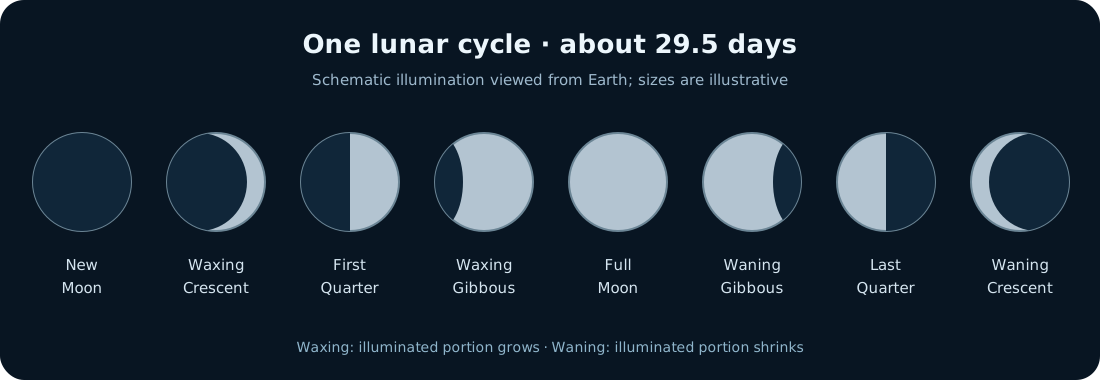
Use the Moon calendar for more than full Moon Moon Calendar helps follow the cycle, while Full Moon Calendar focuses on a particular phase. The best phase depends on the observing goal. A bright full Moon suits some landscape scenes, while shadows near the terminator at another phase can be more useful for lunar terrain.
For faint stars, a bright Moon above the horizon can be an obstacle. Pair the phase calendar with Moonrise and Moonset for the chosen night. A near-full Moon below the horizon later in the session has a different effect from the same phase high overhead. The phase and the local position belong together in a practical plan.
Planetary events describe apparent relationships An alignment or conjunction concerns how objects appear from a viewpoint, not necessarily a close physical approach between them. The Moon and a planet can look near each other while being separated by enormous distances. Planetary Events Calendar is useful for discovering these changing patterns, especially when you compare them with the local sky.
Before choosing a session, check Planets Visible Tonight or the relevant planet-position tool. An event can be geometrically interesting but poorly placed in twilight or below your local horizon. A wide-field view may also be more appropriate than a telescope if the apparent separation is large. Let the actual angular geometry guide the observing method.
Shower peaks are not personal hourly promises Meteor Shower Calendar shows recurring opportunities, but the headline peak rate often describes idealised conditions. Your observed count depends on radiant altitude, darkness, moonlight, cloud and the time spent watching. A shower's radiant is a direction of apparent origin, not a tiny point where every meteor appears.
Use the calendar to identify a promising period, then check Meteor Shower Tonight for local context. Give yourself a comfortable wide view and enough time. NASA's meteor overview explains the physical distinction between a meteoroid, the visible meteor and material that reaches the ground. Those definitions keep the calendar's viewing story accurate.
An eclipse needs a visibility check Eclipse Calendar can list an event that your location cannot see. Solar-eclipse visibility is strongly geographical, and lunar eclipses still require the Moon above your horizon during the relevant part of the event. A date alone is not enough to promise that an eclipse will be visible from a particular city.
Follow an authoritative event map and local circumstances before making travel or viewing plans. For solar observation, use NASA's eclipse safety guidance and the appropriate certified viewing method. A calendar reminder is not a substitute for the necessary protection. Keep the event type, visibility region and viewing conditions clear when explaining the opportunity to another observer.
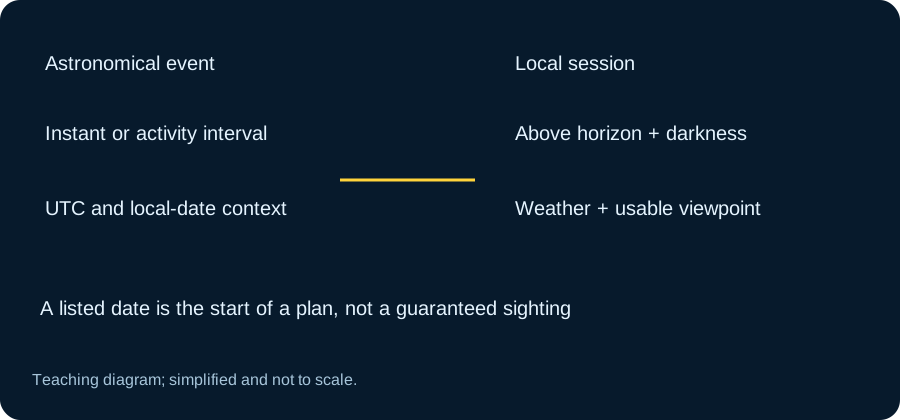
Event context and local observing conditions need to be read together when selecting the session. Read NASA’s skywatching resources when you want to check the underlying context rather than infer it from a thumbnail or summary number. Compare it with the astronomy calendar for the selected question.
Equinox and solstice are useful seasonal markers The Equinox and Solstice page helps place the year's changing Sun geometry in context. These are astronomical events, while local weather seasons are influenced by geography and climate. The event does not switch the temperature everywhere at once or guarantee a particular sunset scene.
Explore the seasonal changes with Day Length and the sunrise-sunset calendar. Around an equinox, the everyday idea of equal day and night is affected by the definitions of sunrise, sunset and atmospheric refraction. The practical lesson is to read precise event definitions alongside the broad seasonal pattern rather than force every location into a simplified slogan.
Julian dates are a time representation Julian Date Converter helps translate an instant into a continuous day-count representation used in astronomy. It is not a separate sky event. Keep the time scale and input convention in mind, especially if you compare its result with an ephemeris or a technical table.
For an ordinary observing diary, a clearly labelled civil date, local time and location may be sufficient. A Julian date can make some comparisons convenient, but adding a long decimal number does not automatically make a record more accurate. The quality still depends on the time actually measured and the convention used. State those assumptions when sharing a technical comparison.
Read the event's scale and equipment needs A calendar thumbnail makes every target look easy to recognise, but the real angular size and brightness can be very different. A close-looking pair in an illustration may span a wide area of sky, while a photographed nebula may need equipment and processing far beyond a casual glance. Read the observing description before choosing the instrument or inviting a beginner to see a feature that will not look like the image.
Keep published imagery as context rather than a promise. A useful plan might be a naked-eye conjunction, a binocular lunar view or a patient shower session. Each can be rewarding when the expectation matches the actual opportunity. If the entry does not state whether equipment is needed, investigate the target through an authoritative observing source. This short check turns an attractive event list into something you can use confidently.
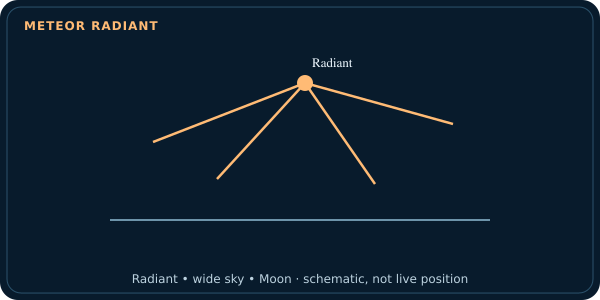
Build a short monthly shortlist Choose a few events that match your equipment, free time and horizon. For each, note whether the entry is an instant or an interval, confirm local visibility, and select an alternative evening where appropriate. A nearby night can still offer a worthwhile near-full Moon or a continuing shower even if cloud spoils the nominal highlight.
Recheck the local tools close to the session and follow NASA's current skywatching material for additional context. Record what you observed rather than marking every listed event as a successful sighting. A good calendar is a starting point for decisions; its value comes from connecting the event with your actual sky.
Do not let a thumbnail define the expected view
Read whether an image is a photograph, artist concept or teaching illustration. A calendar often uses a recognizable picture to introduce a topic rather than simulate your local sky. Keep that picture separate from the event description and the selected observing time. This is especially important for eclipses, faint comets and telescopic targets, where an attractive illustration can create expectations that a casual session cannot reproduce.
Continue with the astronomy calendar for the selected question, and keep NASA’s skywatching resources beside the result when you need its definitions or broader context.