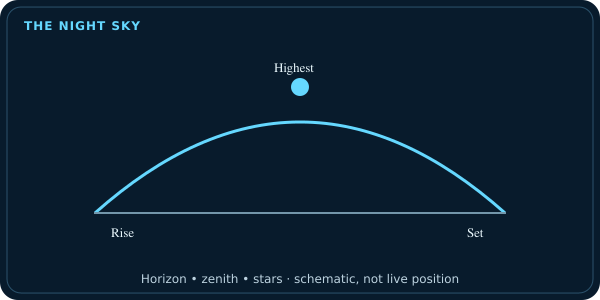
Why the ISS Is Visible at Dawn and Dusk: Sunlight Explained
Understand why the best ISS viewing opportunities cluster near twilight and how to choose a visible pass from your location.
If you are asking what time can you see the ISS tonight, the answer starts with sunlight and twilight. The ISS circles Earth repeatedly every day, but you cannot see every overhead pass. The best naked-eye opportunities usually happen near local dawn or dusk, when your sky is dark enough for contrast while the station is still illuminated by sunlight. That lighting geometry is the key to understanding what time you can see the ISS tonight.
The key comparison is between your local darkness and the station’s sunlight. Around dawn or dusk, an observer can already be in shadow while the ISS remains high enough to reflect sunlight. A location-specific pass prediction shows when that favourable geometry may occur.
Why sunset and sunrise create good ISS viewing conditions
After sunset, you can already be standing in darkness while the ISS—hundreds of kilometers above Earth—is still in sunlight. Before sunrise, the reverse geometry can also work: your ground location remains dark while the station catches sunlight. NASA’s Spot the Station guidance says sighting opportunities occur within a few hours before or after sunrise or sunset.
Why an overhead pass can be invisible
A tracker can correctly calculate that the ISS is above your horizon while the station is inside Earth’s shadow. In that case it is not receiving direct sunlight to reflect toward you. Bright daytime sky can create the opposite problem: the station may be illuminated, but the contrast is too low for easy naked-eye viewing.
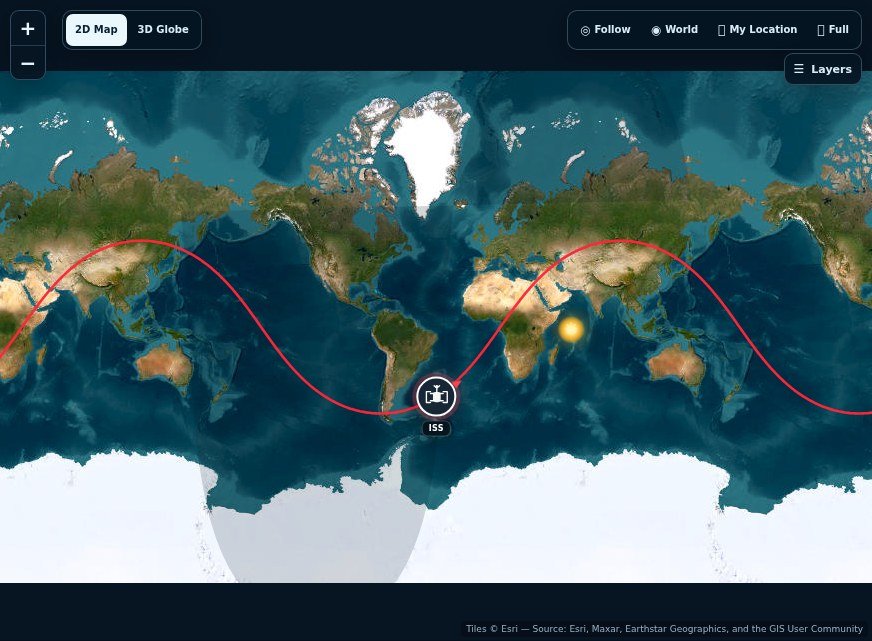
How Earth’s shadow can make the ISS disappear
Sometimes you can watch the ISS move brightly across the sky and then fade quickly before reaching the horizon. That can happen when it enters Earth’s shadow. The spacecraft has not vanished or changed orbit; the lighting conditions have changed.
How to choose tonight’s best ISS pass
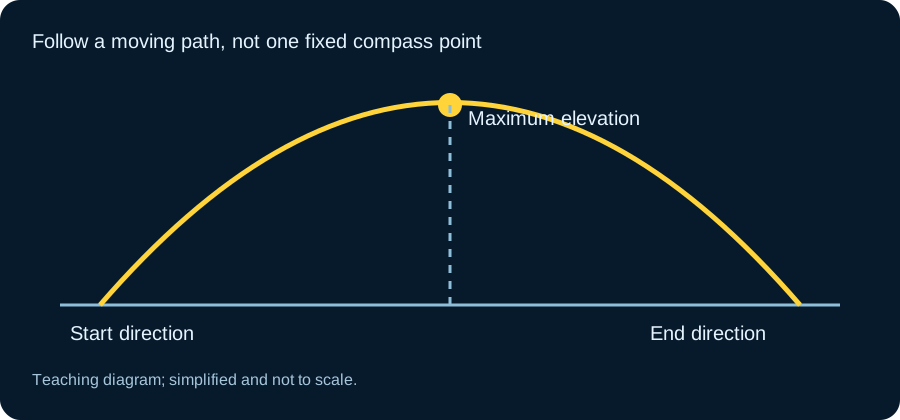
Open the ISS tracker, set your location and compare upcoming passes. Favor a pass with a convenient twilight time, useful maximum elevation and a clear path away from major obstructions. Then read the appearance and disappearance directions before going outside.
Does the best time differ across the United States?
Yes. Sunset, sunrise and the station’s pass geometry are local. A useful pass in Florida is not automatically useful in California or Washington at the same clock time. Always use your own location and local time zone.
What to expect when you see the ISS
Look for a bright, steady point moving smoothly across the stars. It does not normally show the colored flashing navigation lights of an airplane. If you want a full viewing workflow, read how to see the ISS tonight.
Why official viewing forecasts may differ from a simple orbit pass
Some observing services filter passes using illumination and brightness criteria, while a geometric tracker may list every above-horizon event. Both can be correct while answering different questions. When planning an ISS sighting, prefer a pass that combines good elevation, a dark-enough sky and a sunlit station.
The ISS is often easiest to see when the observer is in darkness but the station is still illuminated by the Sun. That geometry is common around dawn and dusk, which is why a bright pass can occur even though the station produces no visible light of its own.
Sunset on the ground is not sunset at the station
It helps to imagine two observers: one standing on the ground and one much higher above Earth's surface. When the ground observer loses a direct view of the Sun, the higher observer may still see sunlight over Earth's curved edge. This is why a spacecraft can remain illuminated while your surroundings are already dark. The useful contrast comes from that difference, rather than from lights switched on by the crew.
The relationship changes continuously as the station travels. A visible pass can begin with good illumination and then move into shadow before setting. Alternatively, a spacecraft can emerge from shadow during a pass. Those transitions depend on the orbit and Sun direction at that moment. A day-night boundary drawn on a flat map is helpful context, but it cannot by itself describe every three-dimensional lighting condition along the station's path.
Compare the pass with your own twilight
Use local sunrise, sunset and twilight times for the observing location. A forecast written for another city can be misleading even if both places share a clock time zone. Longitude affects when the Sun reaches the horizon, and latitude changes the duration of twilight. The same evening pass can therefore have different contrast for observers hundreds of kilometres apart.
Try comparing two opportunities using the station's peak elevation and the Sun's local position. A higher pass in a darker sky often feels easier, but it still needs an illuminated station. If the tracker only provides geometry, keep that limitation in mind. The most useful planning question is not simply whether the station crosses the sky after sunset. It is whether a sunlit section of that crossing happens while your background sky is dark enough to see it.
Seasons can rearrange your routine
A run of convenient evening observations does not mean the station will appear at the same time throughout the year. Its orbit and the changing Sun direction create different periods of visibility for your location. You may find morning opportunities more useful later. Check the upcoming local list afresh instead of carrying yesterday's successful time into the next week.
The practical routine can stay simple. For an evening pass, find the start direction while there is still enough light to recognise the landscape. For a morning pass, arrive early and allow time to orient yourself. In either case, note when cloud or a nearby streetlight compromises the view. Separating local conditions from the underlying orbit helps explain why two passes with similar elevations can produce very different experiences.
What a sudden fade can tell you
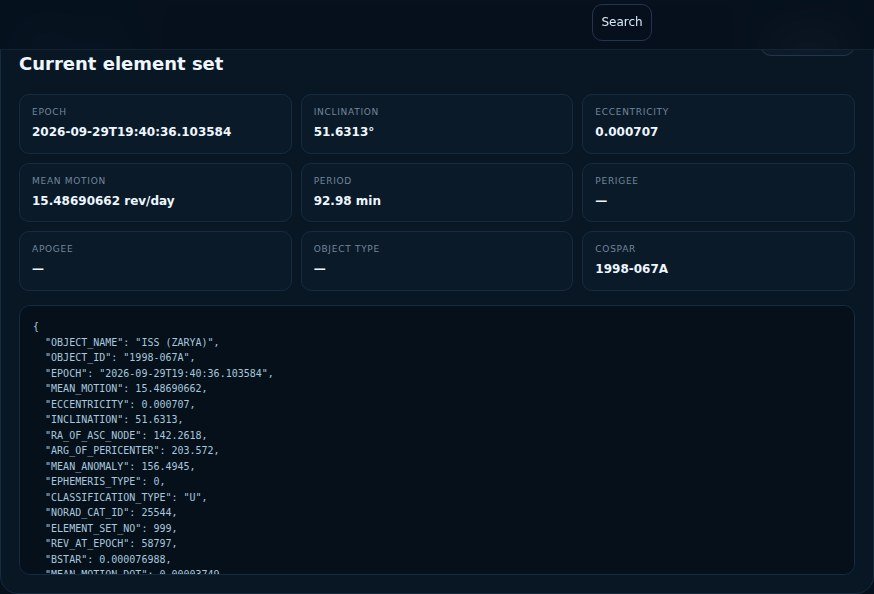
If the point fades well above a clear horizon, shadow entry is one possible explanation. Watch whether the change is gradual or abrupt, and record the approximate time. Thin cloud or changing reflection geometry can also affect brightness, so the observation alone is not proof of shadow entry. Compare it with a service that explicitly models illumination if you want to investigate further.
Avoid interpreting the disappearance as a maneuver, emergency or station shutdown. A naked-eye sighting gives you a limited view of reflected light. It does not measure spacecraft health. The satisfying part is understanding how the Sun, Earth and your viewpoint combine to reveal an object that is otherwise difficult to notice. With a little practice, a fading pass becomes an illustration of orbital lighting rather than a confusing end to the observation.
Frequently asked questions
Can the ISS be visible in the middle of the night?
Most routine naked-eye opportunities cluster around twilight because the station needs sunlight while your sky is dark. Exact opportunities vary with season and latitude.
Can the ISS be seen during the day?
The station can be above the horizon during daylight, but bright sky usually makes ordinary naked-eye viewing impractical.
Why are there no visible passes tonight?
Your location may not have a favorable combination of pass geometry and illumination that night.
What does maximum height mean?
It is the highest elevation the station reaches during that pass, measured in degrees above your horizon.