
Choose a target before choosing a telescope setting
Deep Sky Objects Tonight turns a large catalogue into a manageable observing list. Search for an object, filter its type, or use the saved observing location to sort targets by current altitude. A galaxy, nebula or cluster can be geometrically above the horizon and still difficult to detect, so the list also distinguishes daylight, twilight and darker conditions. Start with a familiar object instead of setting the faintest magnitude threshold immediately. The Constellations & Deep Sky directory provides the wider sky context, and the existing Deep Sky Object Explorer remains available for broader catalogue browsing.
What belongs in this catalogue
This view uses the site's local OpenNGC subset of finite-coordinate NGC and IC objects. It contains galaxies, open and globular clusters, nebulae, planetary nebulae, star-forming regions and supernova remnants. Some familiar objects also carry a Messier number, which can be easier to remember than their NGC identifier. A Messier cross-reference does not mean this subset is a complete copy of every Messier object, and objects outside the subset are not silently fabricated. The OpenNGC project documents the underlying catalogue. Unknown magnitudes remain marked as unavailable instead of being converted to zero or presented as extremely bright targets.
Using the brightness filter carefully
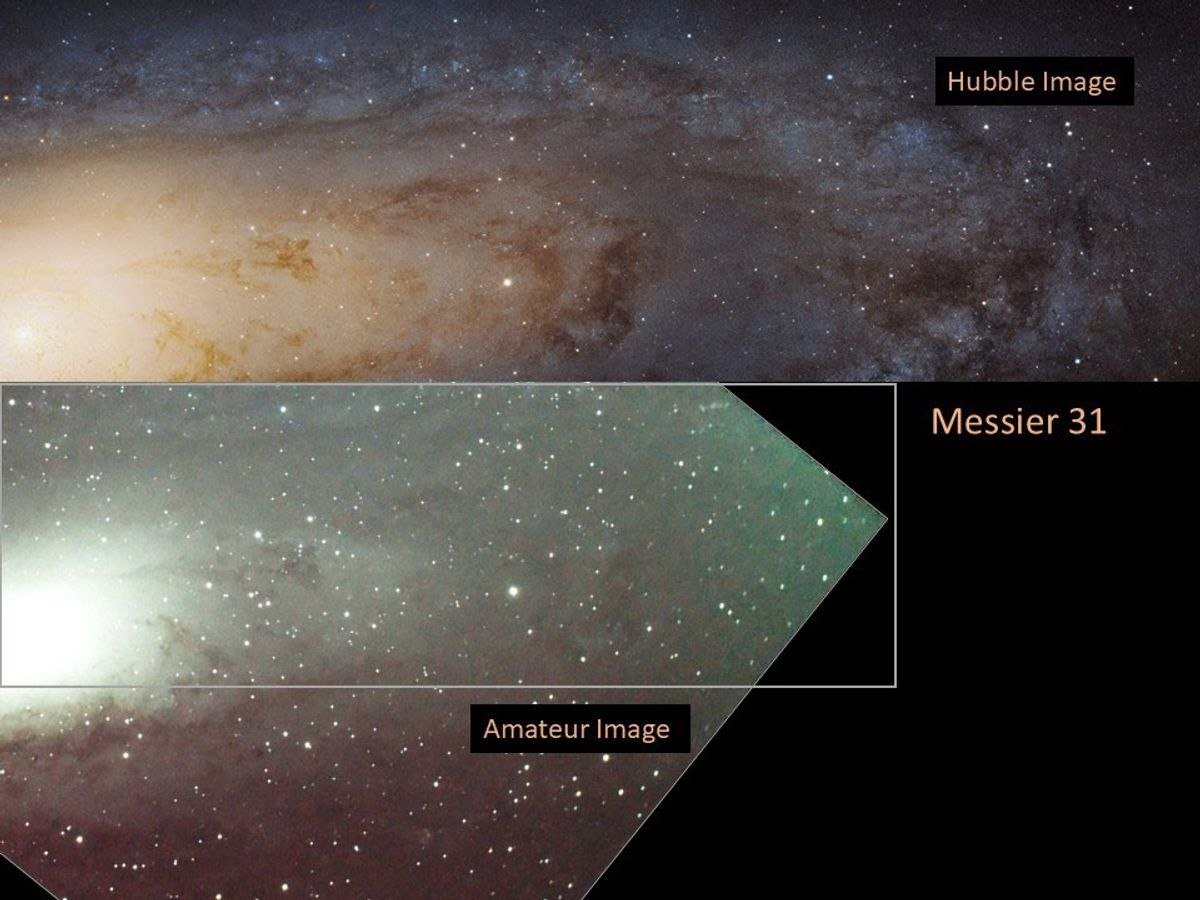
Astronomical magnitude runs in the opposite direction from an ordinary brightness score: smaller numbers describe brighter integrated light. When you set a maximum magnitude, objects without a measured catalogue value are excluded because there is no reliable number to compare. Integrated magnitude is only a starting point for an extended object. If the same total light is spread across a large galaxy, its surface can be much harder to distinguish from the sky than a star with an equivalent magnitude. Moonlight and urban lighting make this difference especially important. For a first galaxy, inspect the Andromeda Galaxy observing guide and compare its central glow with the much fainter outer disk.
Type filters change the observing task
Choose open clusters for wide-field star patterns, globular clusters for compact concentrations, and galaxies for distant stellar systems. Nebula filters may include emission, reflection or mixed regions, depending on the catalogue classification. A planetary nebula is not a planet: the name describes the rounded appearance seen in early telescopes. Supernova remnants are material left after stellar explosions and should not be confused with newly discovered supernova events. These distinctions help you choose equipment and understand what the selected entry represents. The catalogue type is a scientific label, not an automatic equipment recommendation. A large nearby cloud may need a wider field than a small distant galaxy even if their listed brightnesses appear similar.
Read the local position before heading outside
The card shows direction, altitude and whether the chosen coordinate is above or below the astronomical horizon. Those values use the existing global location from the site's header. They do not request another location or overwrite the observer saved for the satellite and Moon tools. If no location is available, catalogue search continues to work and the position area tells you what is missing. Set the location once in the header, then return to the list. Check Night Sky Tonight for familiar stars that can help orient you. A correctly computed bearing is useful only after you know where north, east, south and west actually lie at your observing site.
What Tonight and custom dates mean
Tonight selects the next nine o'clock in the evening according to the browser's local time. The date input, in contrast, is labelled UTC. Now returns to the real current time and refreshes the list periodically. Moving the date changes the local geometry; it does not create a fresh photograph or change the catalogue's measured properties. A target's listed magnitude is a reference value, not a live photometer measurement. When sharing a plan with someone elsewhere, include the UTC timestamp and the observing coordinates rather than only saying tonight. The Astronomy Calendar is useful for scheduling a session, while this tool answers the more specific question of where a selected catalogue target appears at the chosen time.
A useful opportunity estimate
Selecting an object adds an hourly planning estimate for the next twenty-four hours. Samples qualify when the target is at least twenty degrees above the horizon and the Sun is below minus twelve degrees. The highest qualifying sample is displayed with a local timestamp. This is a deliberately limited calculation: it does not measure clouds, terrain, moonlight or nearby lighting, and hourly sampling cannot supply a precise transit time. If the tool finds no qualifying sample, that means the defined conditions were not met in those samples, or the location is missing. It does not mean that the object never rises. Change the date or compare another target instead of interpreting the message as a permanent visibility verdict.
Find the object in the regular sky map
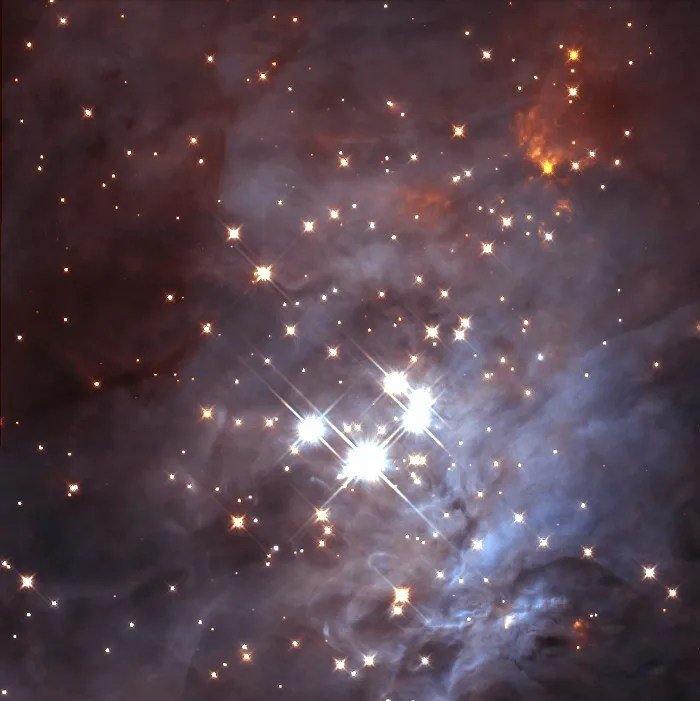
Find in sky transfers the chosen object to the site's familiar Observer Sky View. A crosshair marks its coordinate and the readout gives local altitude and azimuth. You can use the map's zoom buttons, drag within the chart or return to Whole sky. The point remains useful below the horizon because its bearing can help you understand where it will appear later. It is not a large photograph pasted over the chart. This separation matters: the map teaches location, while the article images teach structure. For the Orion Nebula, for example, the chart locates the Sword and the images show the nebular gas and young stars that a scientific telescope resolves.
Begin with a wide field
Use a low-power telescope eyepiece or ordinary binoculars to locate the surrounding star pattern. Once you have confirmed the field, increase magnification only if the target benefits from it. A cluster often tolerates more magnification than the broad outer glow of a galaxy. Give your eyes time to adjust to darkness and reduce unnecessary screen brightness between chart checks. A telescope does not remove the effects of sky brightness; it gathers both target light and background light. Clear, dark conditions can matter more than a dramatic increase in magnification. NASA's Messier observing introductions help explain the range from wide star clusters to small distant systems.
Photographs are references, not promised eyepiece views
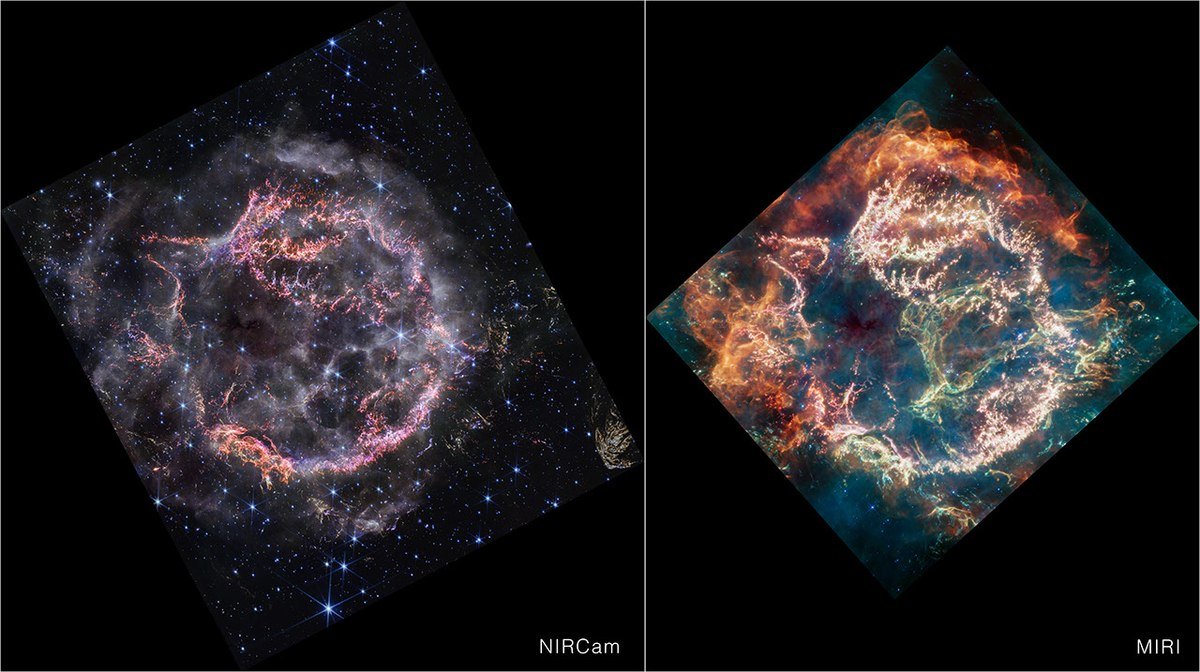
The illustrations are archival scientific images and locator charts with source credits. Infrared data are mapped into visible colours so we can study structures that human eyes do not directly detect. Optical images can also combine long exposures, multiple filters and processing that bring out faint details. At the eyepiece you may see a subtle grey glow or a small concentration of stars instead of a colourful cloud. That observation can still be a successful identification. Record the brightest part, nearby field stars and any change when you use averted vision. An honest description of a modest observation is more valuable than trying to force the visual appearance to match a space-telescope photograph.
Keep a list you can finish
After applying filters, choose a small set of targets that are well placed for your available observing time. The results are limited to the first one hundred and fifty matching cards so the mobile page remains manageable; narrow the search if the list is longer. Try one galaxy, one nebula and one cluster to compare their appearances. Use the Orion guide or Cassiopeia guide to organise a route around recognisable stars. Catalogue data carry attribution to OpenNGC and its contributors, and the underlying subset is distributed under its stated licence. The goal is a repeatable observing plan that combines trustworthy coordinates with realistic expectations from your own sky.