
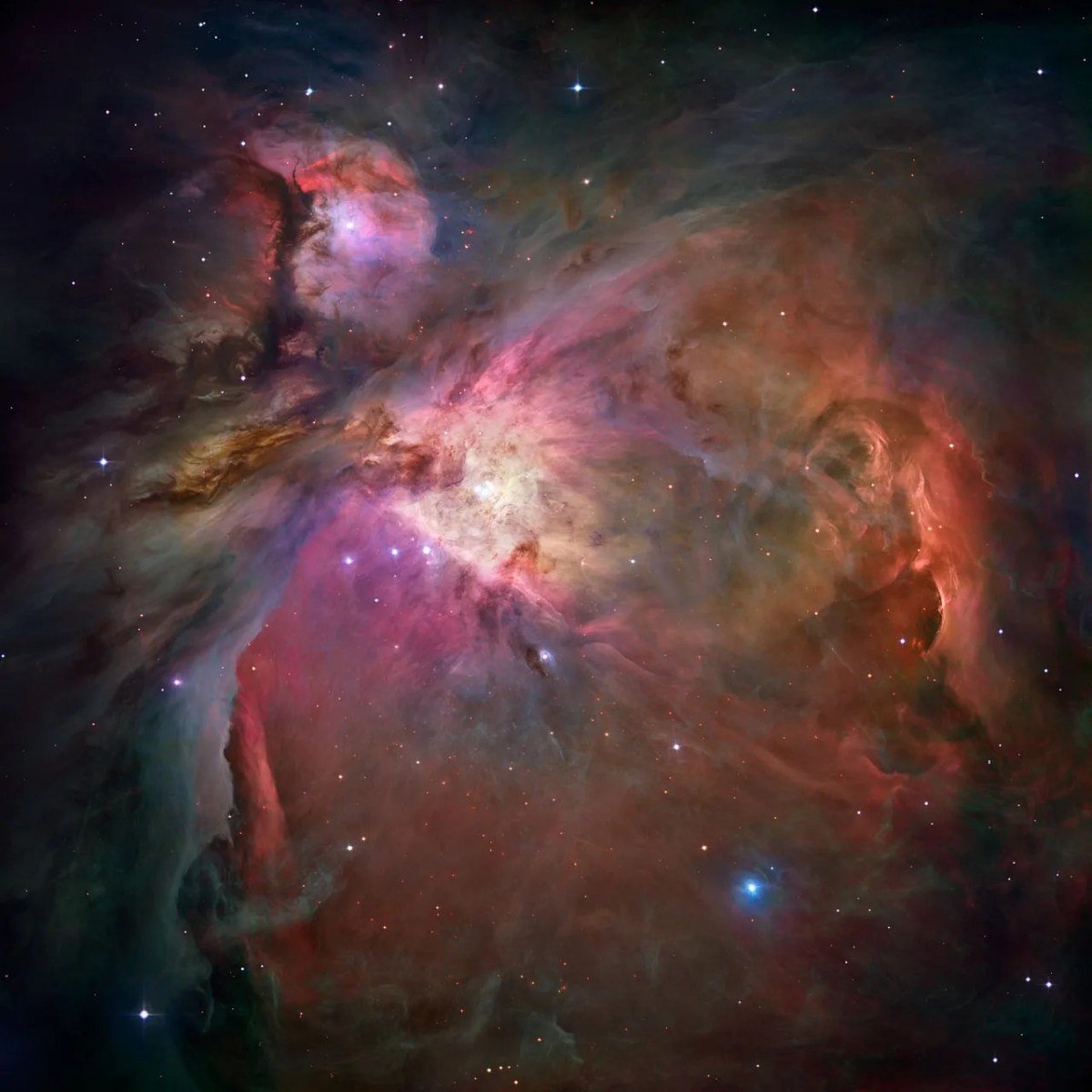
The cloud in Orion's Sword
The Orion Nebula is a bright star-forming region in the constellation Orion. Its familiar catalogue names are Messier 42, M42 and NGC 1976. It lies in the Sword region near the distinctive three-star Belt, making it a useful first nebula for many observers. This page separates two tasks: the live tool shows where its catalogue coordinate lies in your local sky, and the article explains what kind of object you are looking for. Begin with the Orion constellation guide if you have not yet identified the Belt. Once that larger pattern is familiar, locating the smaller Sword field becomes much easier.
A nebula within our own galaxy
M42 is part of the Milky Way, rather than an external galaxy like Andromeda. Gas, dust and young stars contribute to its complex appearance. Hot stars energise some of the gas, while dust can obscure or reshape the view of material behind it. Scientific images reveal a wealth of structure that is not obvious in a small visual telescope. The NASA Messier 42 reference provides an illustrated introduction. The catalogue entry is a reference coordinate for the nebular region, not a physical marker placed in the cloud or a live measurement of its brightness.
Locate the Sword relative to the Belt
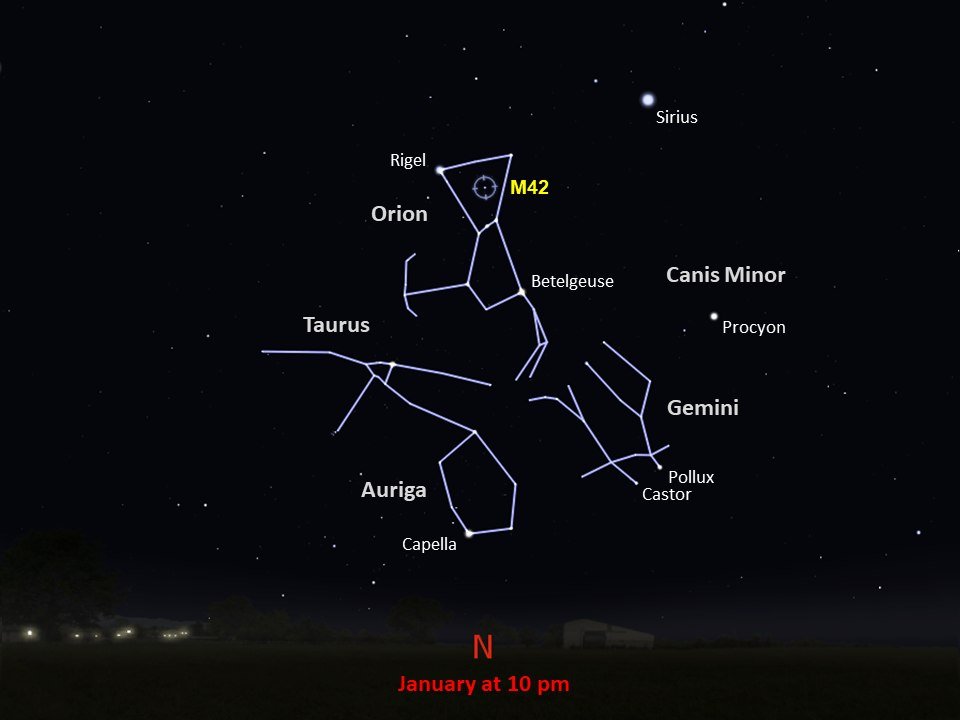
The Sword lies beside the Belt in the familiar drawing of Orion, usually below it in northern-hemisphere charts. The constellation can be tilted or inverted relative to the horizon, so use the relationship between the stars rather than an absolute downward instruction. Start with your unaided eyes, then sweep the Sword with binoculars. Under suitable conditions its central part looks less star-like and more hazy. The Constellations Visible Tonight tool helps determine whether Orion is well placed at your intended hour. If the region is low, wait until it is higher or choose a different target rather than fighting heavy near-horizon haze.
What a beginner may see
A first view does not need to reveal every detail. In binoculars, M42 may appear as a small luminous patch among stars. A modest telescope can show more obvious haze and structure around its brighter central area when the sky and equipment cooperate. Most observers should expect a much subtler appearance than the vivid colours of a scientific image. Moonlight, streetlights, haze and poor dark adaptation can all reduce contrast. Give your eyes time to settle and compare the field carefully. If you identify a faint patch in the correct position, record that achievement without feeling that a grey view is a failed attempt to reproduce a colourful photograph.
The Trapezium and the central field
A compact grouping of young stars commonly called the Trapezium lies within the nebula. Resolving its brighter members is a separate observing exercise from merely detecting the cloud. Use a telescope view that is stable and sufficiently sharp, beginning at lower power to confirm the surrounding field. Atmospheric conditions and focus can matter as much as magnification. The article's close-up image shows a scientific view of this region, not a promised result for every telescope. The small star grouping helps illustrate why large and small scales need different charts: Orion's Belt establishes the broad address, the Sword narrows it, and a higher-power view investigates the centre.
Learning from young stars and disks
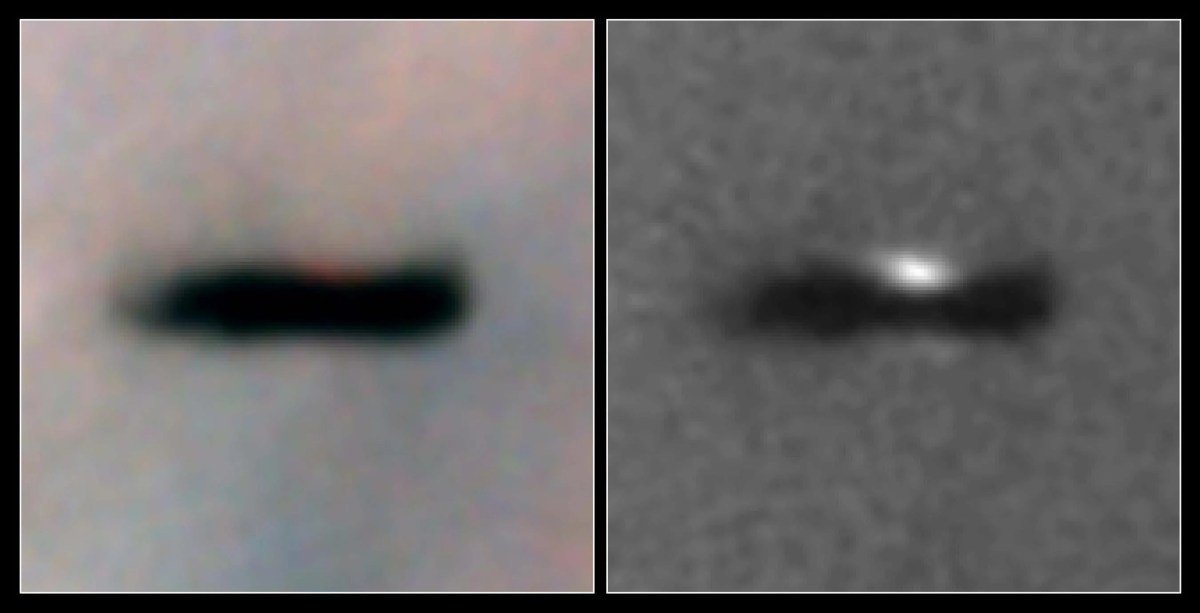
Hubble images of objects in the Orion region reveal material around young stars, including disks associated with developing planetary systems. Such structures are far beyond what an ordinary binocular observation resolves. Their significance is educational: the small cloud you locate on the sky is part of an active environment where stars and their surrounding material develop. A source image can explain that science without claiming that every detail is visible in the live observer map. Read the instrument and credit information accompanying the illustration. The NASA Hubble mission pages provide the wider background on how these images are acquired and interpreted.
Select the time and check the horizon
The tool reads the observing location already saved in the site's header. It computes the target's altitude and azimuth for Now, the next local nine o'clock in the evening, or a custom UTC instant. The representative coordinate of M42 is more useful for telescope planning than the centre of the full Orion constellation. Even a positive altitude is not enough if a nearby obstruction blocks the field. Aim for a clear direction and a comfortably elevated target. The Night Sky Tonight overview can help you find brighter surrounding stars that confirm the correct direction before you start moving an instrument.
How the opportunity estimate is chosen
For a selected target, the page samples the next twenty-four hours at hourly intervals. A sample qualifies when M42 is at least twenty degrees above the horizon and the Sun is below minus twelve degrees. The highest qualifying sample is shown as a local timestamp. This helps you compare rough observing opportunities without pretending to provide a minute-accurate culmination time. It does not include the Moon's glare, local cloud or transparency. If no sample qualifies, change the time or compare another object. A missing opportunity within this chosen window is not a permanent claim that the Orion Nebula cannot be observed from your location.
Use a wide view before increasing power
A low-power view usually makes it easier to establish the Sword field and see how the nebula relates to its stars. Once the identification is secure, experiment with higher magnification to inspect the central area. More power does not automatically reveal more nebula; it changes the field, image brightness and scale. Keep the original lower-power view available so that you can return to the wider context. A stable mount and careful focus are useful before considering additional accessories. The Deep Sky Object Explorer can help compare M42 with a cluster or galaxy, but the best eyepiece choice depends on the object and your particular observing conditions.
Read the image captions before comparing colours
The figures are archival observations or locator references, and their credits identify the scientific source. Long exposures and selected filters reveal faint structures and colour relationships that human vision in a telescope may not reproduce. A locator chart also has a particular hemisphere and seasonal orientation, which is why it should not replace the current local map. Use the chart for the relationship between stars and the scientific photograph for the structure of the cloud. Keeping those purposes separate makes the page more useful: it avoids mistaking an attractive image for a live sky position or believing that an unfamiliar image orientation means the target is in the wrong place.
A short observing route around Orion
Make the nebula part of a simple session rather than a frantic tour. Identify the Belt, compare the colours of a few brighter Orion stars, inspect the Sword with binoculars and finish with a telescope view of the central region. Record what changed as the magnification changed. If conditions are poor, the star pattern can still be a useful learning target even when the nebula is disappointing. Use Deep Sky Objects Tonight to find alternatives higher in the sky, or return to the directory to explore another region with clearer visibility from your current position.
Why returning on another night helps
One observation cannot show you every effect of the sky. A darker night, a higher target altitude or clearer air can noticeably improve the same instrument's view. Keep notes of local time, equipment, haze and Moon conditions so that a later comparison has meaning. The object's position is calculated from catalogue coordinates and date-aware astronomy, while its visual detectability remains an observing question. No location values are changed by this page, and the map remains useful even when the catalogue is browsed before a location is selected. Plan a return session through the Astronomy Calendar, then use the timestamped live chart when you are ready to look again.