
Supernovae: read the discovery, then plan the observation
A supernova catalogue answers several different questions. It can identify a reported stellar explosion, give its direction among the background stars, and record what a survey measured when it first found the source. Those facts do not automatically tell you whether it is bright enough to observe tonight. This directory keeps discovery information beside a location-based sky tool so you can make that distinction yourself. Start by selecting an object, inspect its source and measurement dates, and then use Supernovae Tonight to explore the geometry of your observing session. The small symbol marks a direction; it is not a promise of naked-eye visibility.
What a supernova name actually tells you
The familiar SN prefix describes a classified supernova. An AT name belongs to a reported astronomical transient and should not be treated as a confirmed stellar explosion merely because it appeared suddenly. The Transient Name Server maintains the official modern reporting system. Classifications can be refined when better spectra become available, and coordinate corrections may follow additional observations. A useful observing record therefore includes a source link as well as a name. Open the original report before comparing objects from different survey lists. If two reports use different positions or dates, check which measurement each field represents instead of silently averaging them. This directory includes classified records and clearly separates historical remnants from recent discovery records.
Discovery brightness is a historical measurement
A discovery magnitude belongs to a particular exposure, date, instrument and filter. It may have been measured before maximum brightness, after maximum, or against a subtraction image. A number without that context is easy to misread. Smaller astronomical magnitudes mean brighter sources, but two measurements in different passbands are not automatically interchangeable. Here, the discovery filter remains visible beside the value. A latest reported magnitude appears only when verified object photometry has been loaded. Otherwise the tool says it is unavailable. Do not use an old discovery value as a current telescope target recommendation. For a practical session, compare the most recent measured value with your instrument, sky background and exposure plan, while retaining the original measurement time.
Use the sky position without changing your location
The map reads the same saved observer location used by Night Sky Tonight. It does not create a second location setting. Right ascension and declination identify the catalogue direction; altitude and azimuth describe that direction from your location at the selected time. Changing the date rotates the local view, not the object's catalogue identity. Select Find in sky to centre the marker, then use the map's zoom controls to inspect the surrounding stars. A marker below the horizon is shown as a bearing near the horizon so you can understand where the target lies. It still cannot be observed through the Earth, and nearby buildings or hills may hide targets that have a positive calculated altitude.
A useful shortlist is more than a brightness sort
Begin with a small set of objects that have reliable classifications and recent observations. Check their altitude during darkness, then consider separation from the Moon, local transparency and the brightness of the host galaxy. A point source projected onto a bright galaxy core can be harder to measure than a similarly bright source in a sparse field. The discovery-magnitude filter in this tool is explicitly a discovery filter, not a current-brightness ranking. Search by object name, type or host to narrow the catalogue, and turn off Above horizon when you want to study targets that rise later. The list is capped for readability; changing the search is more useful than scrolling through hundreds of unrelated names on a phone.
Supernova types need spectra and context
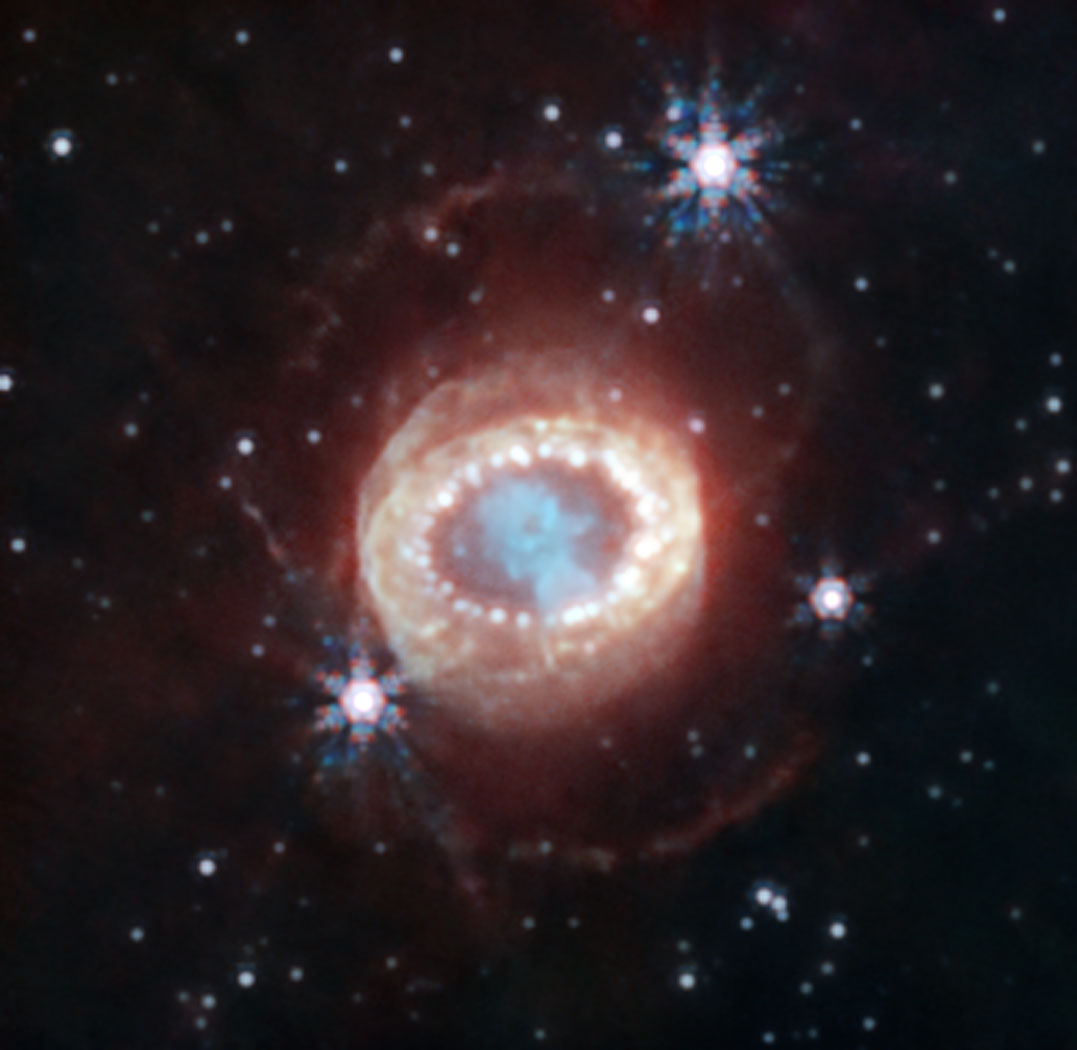
Type labels summarize observed spectral features rather than the appearance of a small map symbol. Type Ia supernovae are associated with thermonuclear disruption involving a white dwarf, while core-collapse classes involve the deaths of massive stars. Within those broad families there are important differences in light-curve shape and spectral evolution. A single bright detection does not establish the class. Follow the classification material linked from an object's TNS record if you need the evidence behind its label. The directory is an observing and reference tool, not an automatic classification engine. For an example with decades of follow-up, explore SN 1987A, where the continuing remnant provides a very different target from a newly announced extragalactic point source.
Read photographs as scientific observations
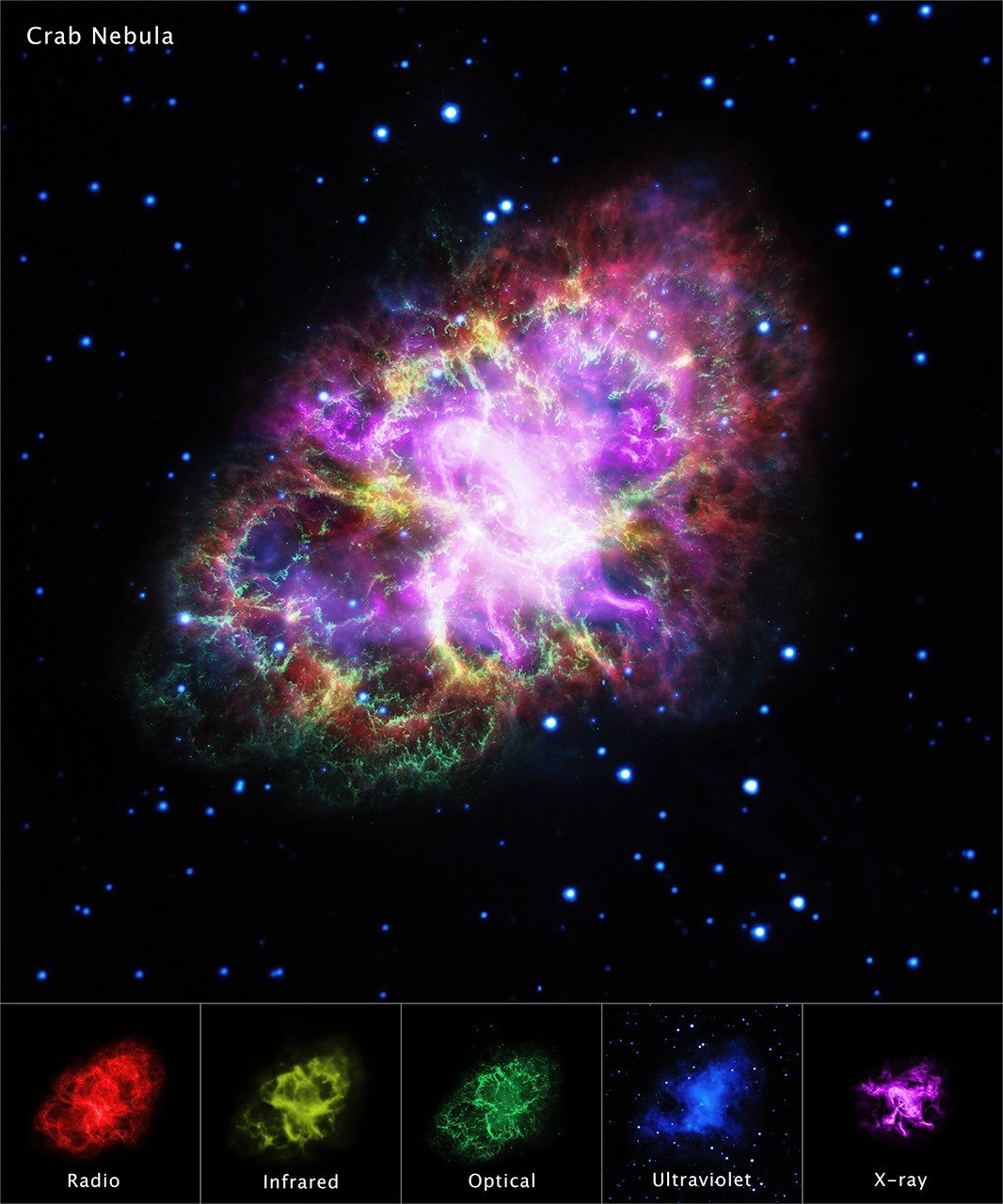
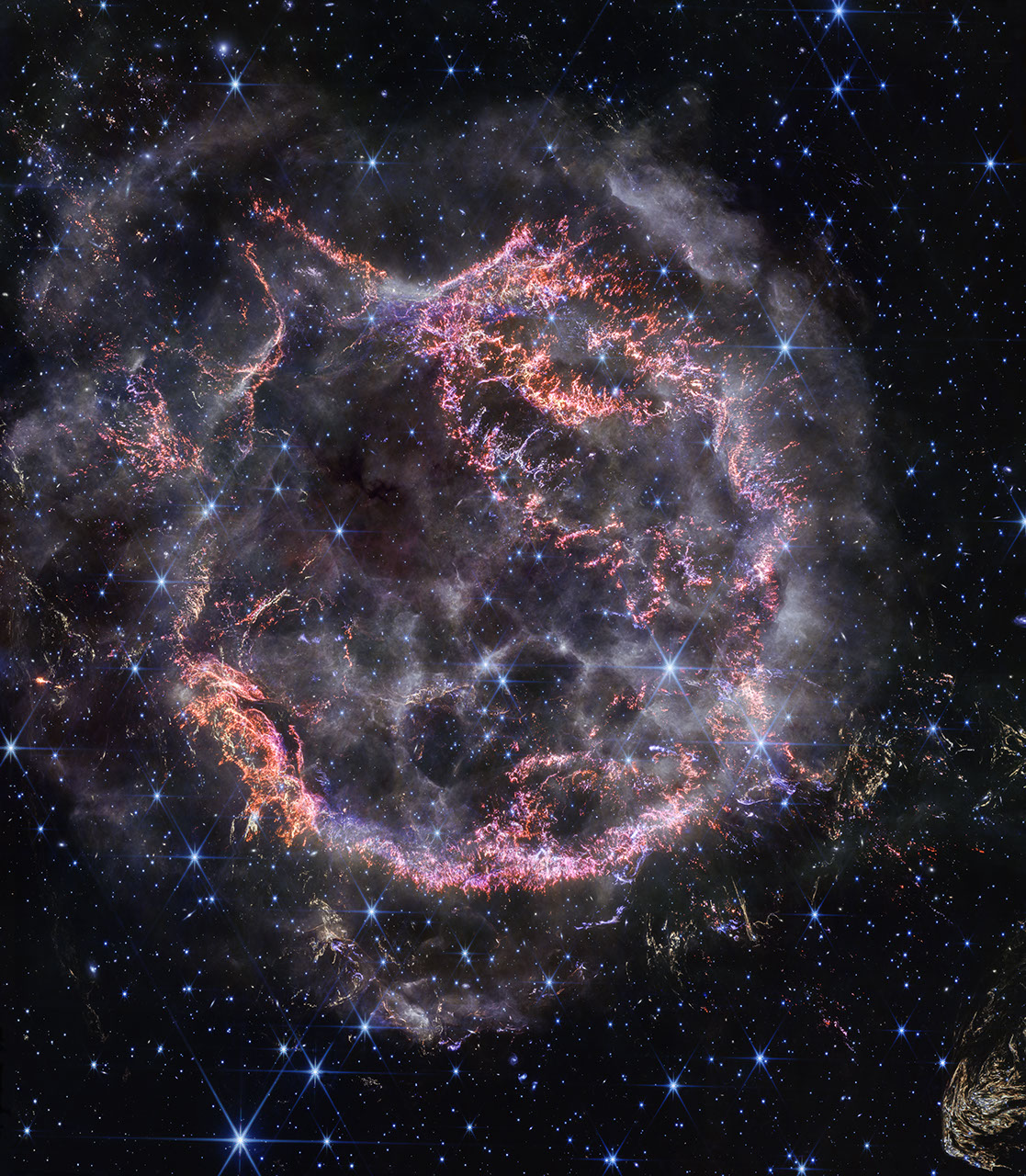
The photographs embedded here show known remnants, not live images of every recent catalogue entry. Telescope pictures combine exposures and often assign visible display colours to infrared or X-ray data. They reveal structure that cannot be reproduced by simply looking through a small telescope. Read each caption and follow its credited source for the instrument and wavelength information. The Crab Nebula illustrates how a compact pulsar and extended filaments belong to one remnant. Cassiopeia A shows a different expanding debris system. Comparing these objects is useful because it prevents the word supernova from being reduced to one generic explosion picture, while keeping each photograph attached to its actual subject.
Check how the catalogue was updated
The catalogue banner reports whether you are reading a selected bundled snapshot or a refreshed TNS list. Automatic refresh requires owner-configured credentials and uses a shared cached download rather than a separate external request for each visitor. The refreshed list keeps the latest two hundred discoveries; that selection is still not a ranking of currently bright objects. If a refresh fails, previously verified data remain available with their original timestamp. Object photometry has its own observing dates, which should always be checked separately.
Keep an observing record you can check later
Write down the selected object's name, catalogue coordinates, observing time, filter and data-source timestamp before leaving the page. If you take images, retain the exposure settings and comparison-star information with them. A failed detection is valuable only when its limiting sensitivity is understood; it is not a measured magnitude of the supernova. Check the original source again before a later session because transient brightness changes and classifications can improve. You can use Supernova Remnants for more stable reference targets and Deep Sky Objects Tonight for a wider observing list. The strongest result from this directory is a traceable shortlist, with measured facts distinguished from computed directions and from attractive archival imagery.