
Recognising Orion before using a telescope
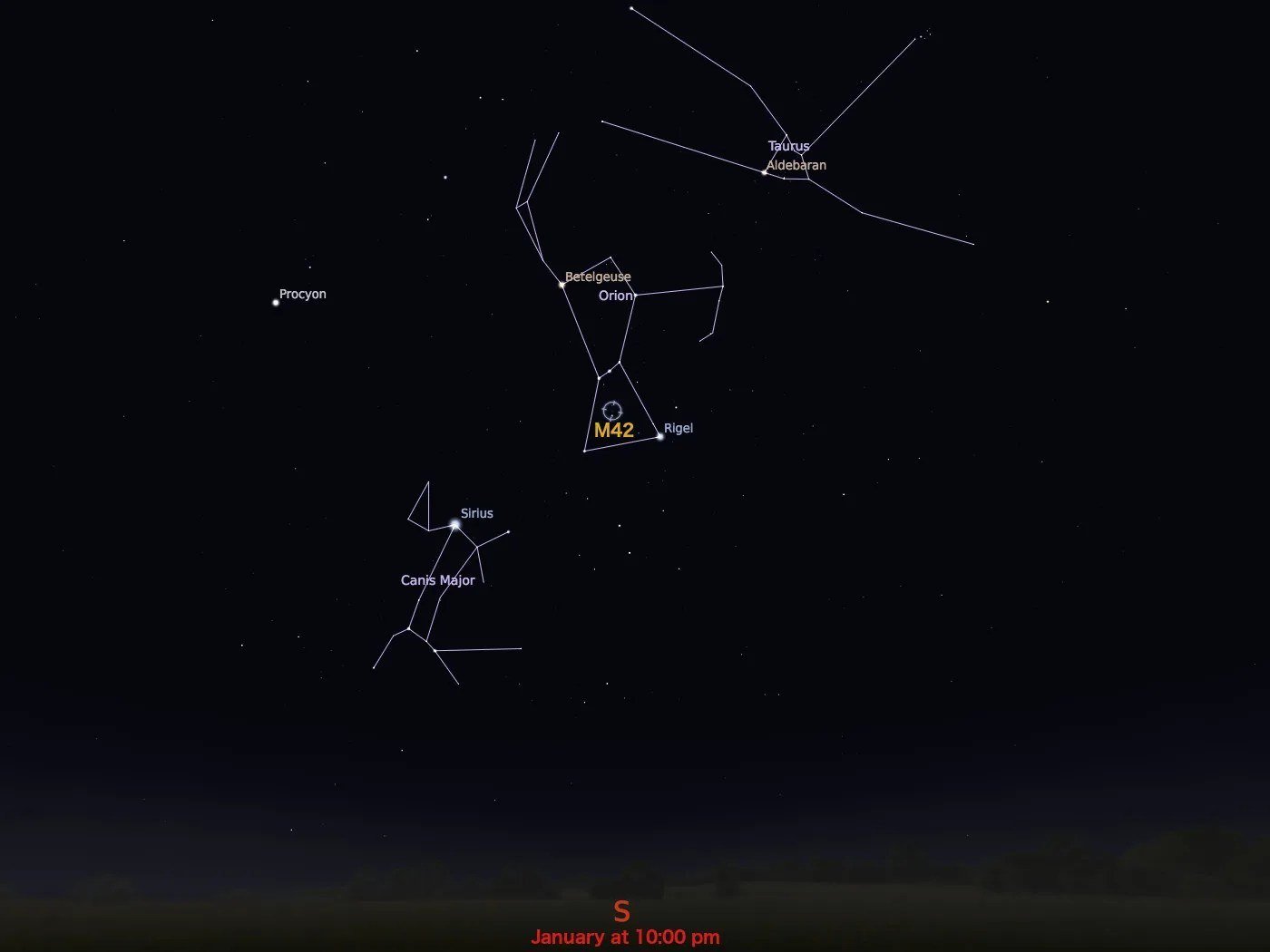
Orion is one of the most useful starting points for learning the night sky because its central pattern is distinctive. Three closely spaced stars form the Belt, with a larger arrangement of brighter stars around them. The stars form a recognisable figure in a chart, but they are not all at one distance or members of one simple physical group. Start by matching the Belt and the surrounding bright stars in the Observer Sky View at the top of this page. The tool marks a representative centre of the constellation. Use Constellations Visible Tonight to check its broader placement before assuming that a photograph taken in another season represents your current view.
A named region near the celestial equator
Orion crosses the celestial equator, which helps explain why its familiar central stars can be seen from many locations in both hemispheres. The height and orientation of the pattern still depend on latitude and the hour. A northern observer and a southern observer can recognise the same stars while seeing the figure at quite different angles. The IAU constellation reference defines Orion as a region with official boundaries, not just the Belt and the bright corner stars. The simple connecting lines in our live chart are an orientation aid. They do not draw every boundary or claim to represent the full scientific geometry of the region.
The Belt gives you a reliable landmark
The three Belt stars are Alnitak, Alnilam and Mintaka. Once you have matched their short line, compare the surrounding field rather than jumping immediately to a faint target. Betelgeuse and Bellatrix help identify the upper part of the familiar figure, while Rigel and Saiph help define its lower part. The apparent tilt changes through the night as the sky turns. A chart can also seem inverted when compared with an optical finder or a telescope eyepiece, so identify a few individual stars before deciding that the whole field is wrong. The Constellations & Deep Sky directory provides a useful route back to other nearby regions after you have learned this pattern.
Why the representative centre is only a guide
The catalogue card gives altitude and direction for one approximate centre of Orion. This lets the directory sort broad regions without assigning a single rise time to every star. A constellation covers an area, and different stars can cross the horizon at different times. When Orion is only partly risen, the centre may be below the horizon while a bright star is already visible. Conversely, a centre above the horizon does not ensure that the whole figure clears your local trees or buildings. For a specific telescope target, use the individual object coordinate. The Orion Nebula page gives a more meaningful position for observing M42 than the centre of the whole constellation.
Finding the Sword and its nebula
Below the Belt in the usual northern-sky drawing is the Sword, a shorter arrangement containing the Orion Nebula. The words above and below describe a familiar chart orientation; the actual figure can rotate relative to your horizon. Look for the Sword by its relationship to the Belt, not by assuming it always hangs straight downward. Binoculars can show the area as a small bright grouping with a hazy central region under suitable conditions. The NASA introduction to Messier 42 provides scientific images and finder charts. Those photographs explain what lies there, while the live map tells you where to look from your current location.
Choosing an evening for Orion
Orion has different evening placements over the year, so a fixed instruction such as look south at eight o'clock will not work for every date and country. Use Tonight to examine the next local nine o'clock, then move to a custom UTC time if your observing session starts earlier or later. The selected-target estimate looks for an hourly sample with the representative centre at least twenty degrees high and the Sun below minus twelve degrees. This is a convenient regional planning aid, not a promise that every Orion target meets the same conditions. The Night Sky Tonight tool can help you compare the surrounding sky and decide whether Orion or another region is the better choice for the evening.
Bright stars do not have identical properties
The apparent brightness and colour of Orion's stars can offer a gentle introduction to stellar differences. Betelgeuse is often associated with a reddish appearance, while Rigel usually appears much bluer or whiter. The perceived colours depend on your eyesight, sky conditions and equipment. A brighter appearance does not by itself reveal a star's true luminosity because distance also matters. Some stars change brightness, and catalogue values are reference measurements rather than live readings. Treat a colour comparison as an observation to record, not a precise temperature measurement from a phone screen. When identifying a star, its position in the pattern is usually a more dependable first clue than a subtle colour impression.
The Trapezium is a separate observing scale
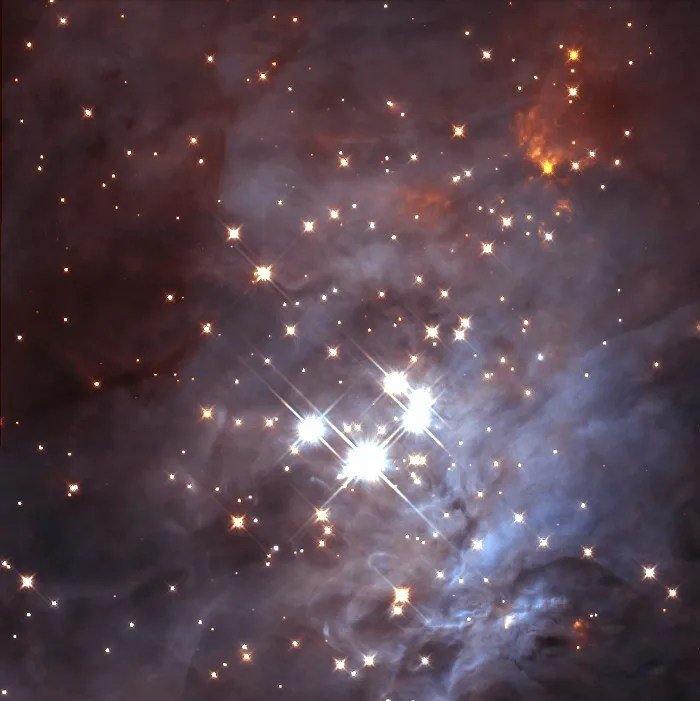
The small Trapezium grouping lies within the Orion Nebula and requires a much narrower view than the constellation as a whole. A telescope can begin to separate its brighter members under suitable conditions, while scientific images show far more crowded and intricate surroundings. This is a good demonstration of why one chart scale cannot serve every task. Use a broad view to recognise Orion, a medium view to find the Sword, and a narrower view to inspect the nebula and its central stars. Start with low magnification to establish the field. Increasing power too early can remove the landmarks that help you identify what you are looking at.
What the images reveal about Orion
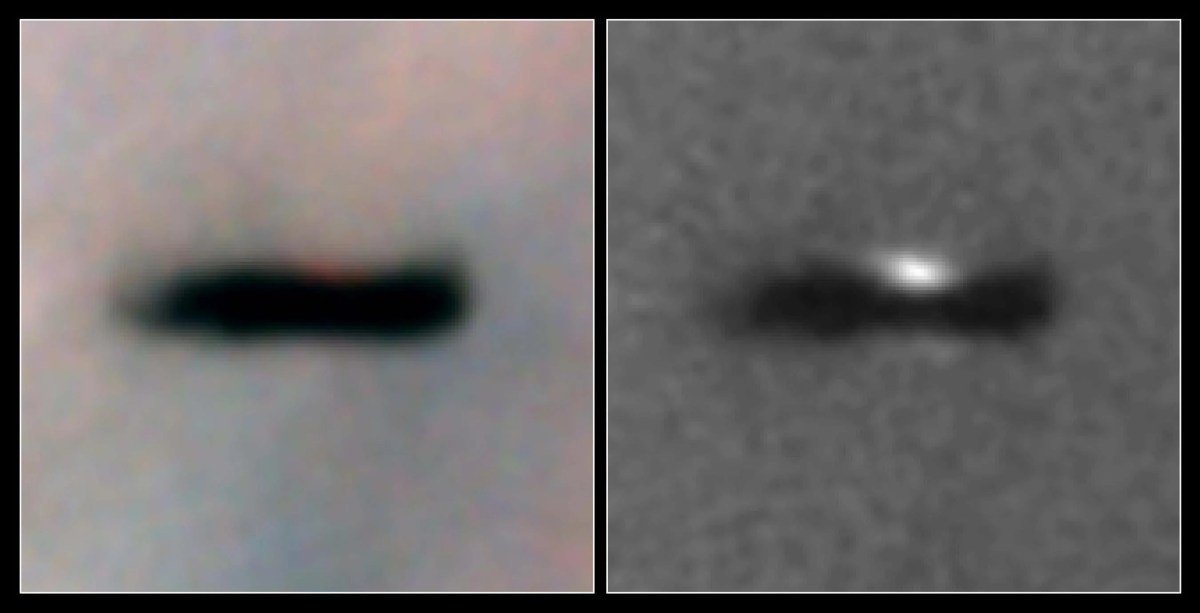
The illustrations show a locator chart, the central young-star region and examples of protoplanetary disks observed by Hubble. They are related to objects within Orion, not photographs of the whole constellation taken from your current observing site. Locator charts are labelled as archival so that their season and hemisphere are not mistaken for live information. Close-up images bring out material that ordinary binoculars cannot resolve. Credit and source links accompany each figure. For another kind of deep-sky target, compare the Andromeda Galaxy guide: both objects can begin as faint patches in an observing session, but one is a nearby star-forming cloud and the other a vast external stellar system.
A practical first session
Spend the first few minutes outside without looking through a telescope. Confirm the horizon direction, locate the Belt and identify at least two surrounding bright stars. Then use binoculars to inspect the Sword before bringing the telescope to the field. Write down the date, local time, equipment and the most convincing feature you noticed. If the Sword does not show haze, try another evening with less moonlight or clearer air. There is no need to turn an unsuccessful attempt into a claim that the nebula is absent. The Deep Sky Objects Tonight list offers alternatives that may be higher or better suited to your conditions.
Keeping the chart and the real sky consistent
The page reads the same observer used by the rest of the site. If you travel, change the location in the header rather than looking for another location box inside this tool. The UTC input and the local output timestamp serve different purposes: UTC identifies the chosen instant unambiguously, while the local timestamp helps you plan your evening. The map can show Orion's position during daytime, but that does not mean its stars are visible by eye. Weather, terrain and streetlights are not measured here. Combine the positional guide with your actual surroundings, and use the Astronomy Calendar to reserve another suitable night for revisiting this rewarding region.