Select a name to locate it on the global NASA surface mosaic. Diameters and center coordinates come from the USGS/IAU Gazetteer; the blue markers identify approximate crater centers. Map markers show reference locations and do not predict illumination or visibility tonight.
The next full moon occurs when the Moon is opposite the Sun in the sky as viewed from Earth. The calculator searches forward through the lunar phase cycle and refines the time of phase 0.5, the full-moon point.
Because the Moon’s orbital speed varies, a simple fixed 29.53-day addition is not used as the only timing method.
When Is the Next Full Moon? How the Countdown and Local Time Work
The Next Full Moon tool searches forward through the current lunar phase cycle and displays the estimated full-phase time in your browser’s local timezone. The countdown is useful for planning, but understanding why Full Moon dates move from month to month helps you interpret the result correctly.
Why the Full Moon does not fall on the same calendar date each month
The interval from one New Moon to the next averages about 29.53 days, and Full Moons follow the same synodic rhythm. Calendar months, however, contain 28 to 31 days. The lunar cycle therefore slides through our civil calendar rather than staying attached to one date.
The actual interval also varies slightly because the Moon’s orbital motion is not perfectly uniform. That is why a good phase calculation follows lunar geometry instead of simply adding a fixed number of days to the previous Full Moon.
What the countdown represents
The countdown runs toward the calculated instant when the phase cycle reaches Full Moon. It is not a countdown to moonrise. Depending on your longitude and timezone, the Full Moon instant may occur while the Moon is below your horizon or while the Sun is above the horizon.
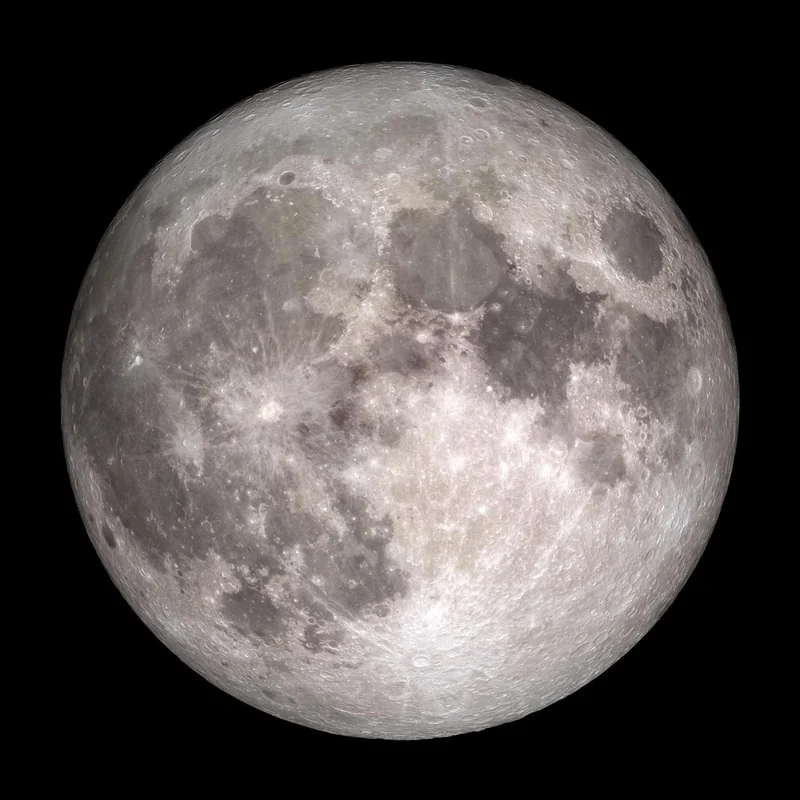
Full Moon reference view from NASA. This photograph is educational reference imagery, not the current live phase. NASA source.
To plan when you can actually observe the Moon, combine the countdown with Moonrise and Moonset Time and the Moon Live Tracker. Those tools are location-dependent, whereas the global phase event is essentially shared by observers worldwide.
Why the displayed date can differ across countries
An astronomical event has one physical instant, but clocks label that instant differently around the world. For example, a Full Moon occurring shortly before midnight in one timezone can already be on the next calendar day farther east. SpaceTracker.live formats the calculated event using the timezone supplied by your browser.
Full Moon versus “looks full”
The Moon’s visible disk changes gradually. Even when the countdown still has several hours remaining—or has just reached zero—the Moon may already look completely round to the naked eye. The Full Moon Tonight page is useful when your question is about your local evening rather than the next mathematical phase instant.
What happens after Full Moon?
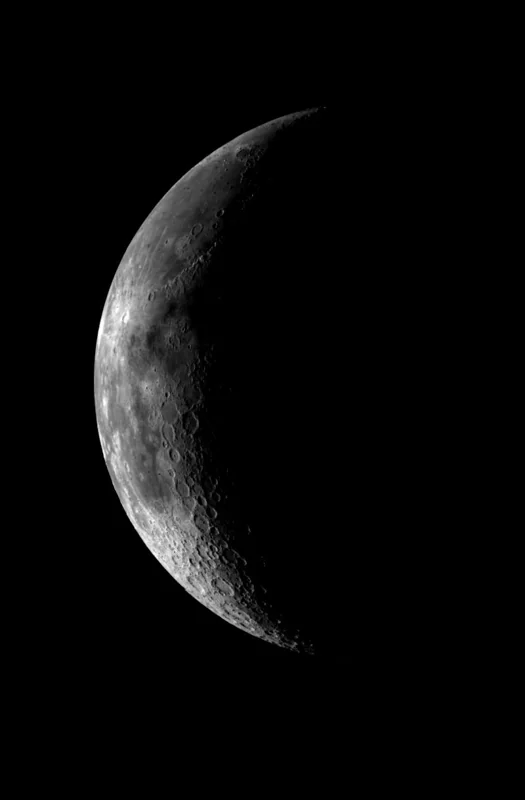
After the phase peak, the Moon becomes waning gibbous and the illuminated fraction gradually decreases. It then passes Last Quarter and Waning Crescent before returning to New Moon. You can follow that progression on Moon Phase Today or preview your local evening with Moon Phase Tonight.
Accuracy and appropriate use
The countdown on this site is generated with compact client-side astronomy calculations suitable for education and casual observing. Small differences from professional ephemeris tables are possible. Timezone settings on your device also affect the displayed local date and time. If timing is important for scientific work, navigation or an official event schedule, use an authoritative astronomical almanac or ephemeris.
NASA/JPL Galileo view of the western near side, showing lunar surface features. This is a reference photograph, not a live observation. NASA source.
Use a countdown as a planning aid
The next Full Moon calculation returns one instant, but your best observation may be a different evening. The precise universal timestamp can land on a different date in your time zone. Cross-check the year in the USNO Full Moon Calendar, then inspect the nearest nights with Moonrise and Moonset Time. Around local sunset the Moon may be near the opposite horizon, yet hills, buildings or weather can block that particular view.
If you want lunar detail rather than a round disk, inspect the waxing gibbous days before the event: the sunlight boundary still reveals shadows across part of the surface. The daily Moon calendar is useful for moving your observing session by a day or two. See the NASA Moon science overview for context about the lunar surface and orbit.
Why the calendar date is not fixed
One synodic cycle averages about 29.53 days, so its phase instants drift against civil months. A Full Moon can occur early or late in a month; some calendar months contain two. The timing is unrelated to the weather or whether the Moon is above your horizon. For tonight's yes-or-no answer, use Full Moon Tonight; for the current phase percentage, use Moon Phase Today. The USNO phase tables are a suitable reference when you need a published universal phase time.
Choose a crater for the next observing night
A countdown tells you when the global phase occurs, while the crater atlas helps choose a surface target for that evening. The northern crater Plato is 100.68 km across; Clavius in the southern highlands spans 230.77 km. Such numbers describe physical extent on the lunar surface, not apparent size in your telescope. Compare a day on either side of exact Full Moon with the daily calendar if you want changing shadows.
Frequently asked questions
How often is there a Full Moon?
Roughly once every 29.5 days, although the calendar date shifts from month to month.
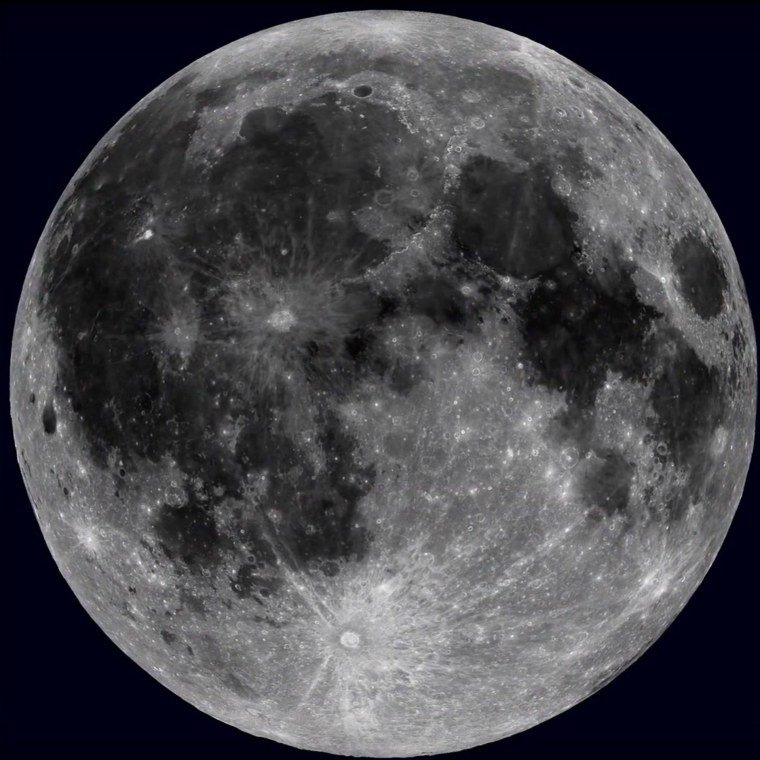
NASA/Goddard/Arizona State University: LRO near-side surface reference. Dark maria and bright crater rays help explain what observers see on the Moon. NASA source.Why can two websites show different calendar dates?
They may be formatting the same astronomical instant in different time zones, or they may use different levels of numerical precision.
Does the countdown tell me when the Moon rises?
No. Moonrise is location-dependent and is shown by the separate Moonrise and Moonset tool.
Can there be two Full Moons in one calendar month?
Yes. Because a synodic month is shorter than many calendar months, two Full Moons can occasionally fall within one civil month.
Educational-use note: SpaceTracker.live is an independent educational website. Moon positions, phases, distances and rise/set times on these tools are calculated values and can differ slightly from high-precision professional ephemerides.