Select a name to locate it on the global NASA surface mosaic. Diameters and center coordinates come from the USGS/IAU Gazetteer; the blue markers identify approximate crater centers. Map markers show reference locations and do not predict illumination or visibility tonight.
Moonrise and moonset vary by date and location because the Moon moves eastward against the stars every day. This calculator uses your coordinates and the Moon’s apparent altitude to estimate today’s local rise and set times.
At high latitudes, there can be days when the Moon remains above or below the horizon for the whole local day.
Moonrise and Moonset Time: Why the Times Change by Date and Location
Moonrise and moonset are local events. The Moon may be rising in one part of the world while it is high overhead or already below the horizon somewhere else. This tool uses your coordinates together with a calculated lunar position to estimate the Moon’s horizon crossings for the current local day.
Why moonrise is not at the same clock time every day
Earth’s rotation carries the sky from east to west each day, but the Moon is also moving eastward in its orbit around Earth. Because of that additional orbital motion, Earth generally has to rotate a little farther before the Moon returns to a similar position in the local sky. Moonrise therefore tends to shift later from one day to the next, although the actual change is not a fixed number of minutes.
The shift varies because the Moon’s path is inclined, its orbital speed changes, and the angle between the lunar path and your horizon depends on latitude and season.
Why location matters so much
Latitude changes the angle at which the Moon’s daily path intersects your horizon. Longitude changes the local timing of that crossing. Two cities at the same longitude but different latitudes can therefore have different rise/set behavior, while two cities at similar latitude but far apart in longitude will see the event at different local clock times.
What counts as “moonrise”?
A rise/set calculation is not simply the moment when the Moon’s center has a geometric altitude of exactly zero. Astronomical algorithms normally account for the Moon’s apparent size and atmospheric refraction near the horizon. SpaceTracker.live uses an apparent-altitude threshold and a simple refraction model to estimate the crossing.
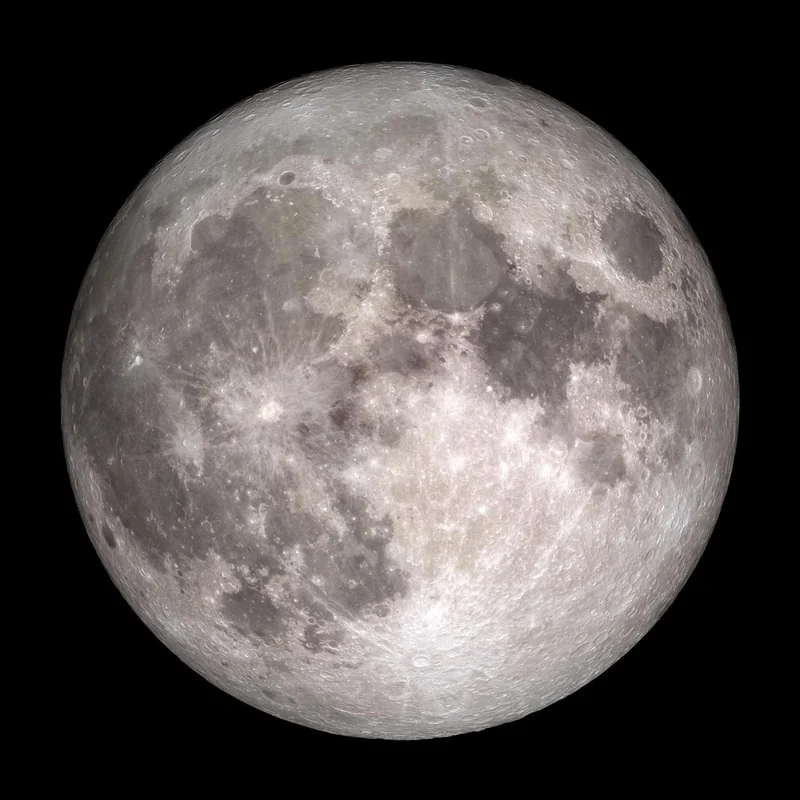
Full Moon reference view from NASA. This photograph is educational reference imagery, not the current live phase. NASA source.
Your actual first or last view can differ because the real horizon may contain hills, buildings, trees or haze. Observer elevation above sea level is also not modeled as a detailed topographic horizon.
Some days have unusual results
The Moon is not guaranteed to both rise and set within every civil calendar day. A rise can occur shortly before midnight with the corresponding set on the following day, or vice versa. At high latitudes there can also be periods when the Moon stays above or below the horizon for a whole local day. Those are real geometric possibilities, not necessarily calculation failures.
Use rise/set together with live position
Once the Moon is above the horizon, open Moon Live Tracker for current altitude and azimuth. Check Moon Phase Today to understand the illuminated fraction, or use Moon Phase Tonight when planning an evening observation. If you are waiting for the next bright Full Moon, see Next Full Moon.
Timezone and device settings
The page formats times using your browser’s local timezone. If the computer or phone timezone is wrong, the displayed local clock time can also be wrong even when the underlying astronomical calculation is reasonable. Location and timezone are separate inputs: coordinates control the horizon geometry, while your device timezone controls how the event time is labeled.
Accuracy and use
This tool is intended for general observing and education. Small differences from professional almanacs are normal because of different ephemerides, refraction models, observer elevation and numerical methods. For precision navigation, surveying or scientific timing, use an authoritative almanac or professional ephemeris.
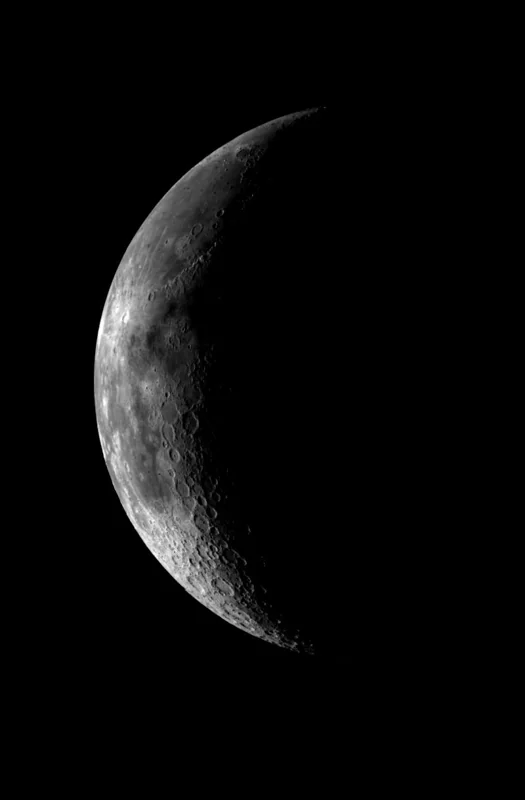
NASA/JPL Galileo view of the western near side, showing lunar surface features. This is a reference photograph, not a live observation. NASA source.
Why the Moon does not rise at the same time each day
The Moon travels eastward in its orbit while Earth rotates. Its rise time often shifts later from one day to the next, but the change is not a fixed number of minutes because orbital speed and the angle of the Moon's path relative to your horizon vary. The phase calendar shows the broad month cycle; this page provides location-specific horizon crossings. For the Moon's current direction between those times, use the live sky map.
Some high-latitude dates may have no Moonrise or Moonset within a given local civil day. That is a legitimate geometrical possibility, not necessarily a missing calculation. The Moon may remain above or below the horizon all day, or an event may occur just outside the midnight-to-midnight interval. Confirm precision-critical schedules with the U.S. Naval Observatory rise/set service.
Choosing a useful viewing window
For a slim waxing crescent, the early evening western horizon can matter more than the nominal Moonset time; for a waning crescent, check the predawn sky. The Moon's phase tonight and illumination affect brightness, while clouds and obstructions control real visibility. A rise time is a calculated crossing of a standard horizon, not a guarantee of a photograph at that minute.
What to look for after Moonrise
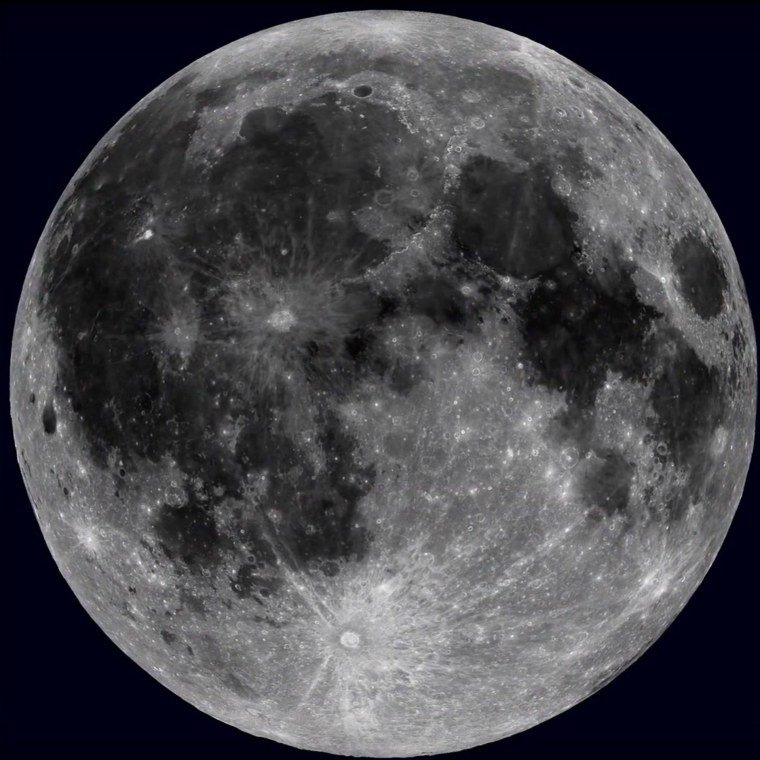
Moonrise time tells you when the disk approaches a standard horizon, not which craters will be sharply lit. Once the Moon is comfortably above local obstacles, open the lunar surface atlas. The blue marker for Langrenus locates a 131.98 km eastern crater, while Plato is a 100.68 km feature in the north. Features close to the real terminator may show particularly useful shadows; their marker color is a map key, not a real-time visibility signal.
NASA/Goddard/Arizona State University: LRO near-side surface reference. Dark maria and bright crater rays help explain what observers see on the Moon. NASA source.
Frequently asked questions
Why is there no moonrise listed today?
The Moon may already be above the horizon at the start of the local day and not rise again until the next day, or high-latitude geometry may produce an always-up/always-down case.
Does moonrise always happen about 50 minutes later each day?
No. That is only a rough rule of thumb; the daily shift varies with the Moon’s orbit and your location.
Why is my visible horizon time different?
Terrain, buildings, observer elevation and atmospheric conditions can move the apparent first or last visibility away from a simplified astronomical horizon calculation.
Do I need to allow GPS location?
No. You can enter latitude and longitude manually if you prefer not to use device geolocation.
Educational-use note: SpaceTracker.live is an independent educational website. Moon positions, phases, distances and rise/set times on these tools are calculated values and can differ slightly from high-precision professional ephemerides.