
The next new Moon is an instant, not a whole evening
A new Moon is a particular alignment in the lunar cycle, while a dark observing night is a practical interval at your location. This next new Moon tool keeps those ideas separate. It finds the next geocentric Sun–Moon longitude conjunction after your chosen UTC start, lists the following events, and shows the Moon's current local direction in the Observer Sky View. If you want the broader cycle first, our Moon phase today page helps you connect the numerical event with the changing illuminated appearance.
The result does not mean that the Moon disappears for an entire calendar day. It also does not tell you when a first crescent will be seen. Those questions involve location, geometry and observing conditions beyond the single conjunction time. Starting with an exact definition makes the rest of the planning much easier.
Set the starting time and read the two clocks
The main input is UTC. Choose a valid start, or press Now to return to the current minute. The first row is the first new Moon found after that start, and the remaining rows extend the sequence across twelve events. The time-until figure is measured from your selected start, so a future input is a planning reference rather than a countdown from the real present.
Each event is shown in UTC and in your browser's device time zone. The second clock follows the device settings; it is not inferred from your saved latitude and longitude. That distinction matters if your phone remains set to your home time zone while you travel. Use the UTC column when sharing a plan across countries, and confirm the device-zone label before copying a local calendar time.
What the calculation calls new Moon
The search looks for zero geocentric ecliptic longitude difference between the Moon and Sun. It uses Astronomy Engine's lunar phase search rather than adding a fixed number of days to the last event. The actual intervals vary, so a repeating calendar reminder based on a rounded average will eventually drift away from the calculated conjunctions.
A conjunction normally places the Moon near the Sun's direction in our sky, but not necessarily directly across the solar disk. The Moon's orbit is inclined, and most new Moons do not produce a solar eclipse. NASA's Moon phases explanation is a helpful reference for the geometry. The event list here is a phase calendar; eclipse circumstances require a separate calculation and observing plan.
Why first-crescent visibility is a separate task
A thin crescent after conjunction may be too low, too close to the Sun or too faint against twilight to detect from a particular place. Lunar age alone cannot settle the question. The Moon's elongation, altitude, setting time, atmospheric clarity and observer's equipment all affect whether a crescent can be seen. A numerical new Moon time should therefore never be presented as a guaranteed sighting announcement.
Use our Moonrise and Moonset times as one part of a local plan. A later Moonset than sunset can offer a possible interval, but even that interval is not a detection guarantee. Do not sweep near the Sun with unfiltered binoculars or a telescope. A crescent observation must be planned with the Sun's position and optical safety fully understood.
Choosing dark nights around the event
Deep-sky observers often prefer nights with little lunar glare. The exact new Moon instant is a useful anchor, but the nights on either side may be equally practical depending on Moonrise, Moonset and your observing hours. An evening session before conjunction can have a different Moonlight situation from a predawn session on the same date.
Begin with the event list, then check your actual time window. Our deep sky object explorer can identify targets high above your horizon, while the local Moon tools show whether the Moon interferes with that interval. Weather, nearby lighting and target altitude may still dominate the decision. A dark lunar phase is one favorable ingredient; it cannot make a cloudy night transparent or move a seasonal target into view.
Using Observer Sky View sensibly
The Moon marker in the sky view follows the UTC field, not the future event selected from the table. That makes the chart useful for inspecting any time you enter, including a planned conjunction or an evening afterward. Copy an event time into the main field if you want to examine the local direction at that instant. Your saved sitewide location supplies the horizon geometry.
Near new Moon, the Moon and Sun can appear close together on the chart. That is a positional relationship, not an invitation to search through unfiltered optics. Altitude is measured against an ideal horizon, so buildings and hills are not represented. The background stars are a real catalogue subset used for orientation; the chart is not a prediction of which stars will be detectable in bright daytime or twilight conditions.
Exporting a calendar without losing UTC
The calendar download creates an ICS file containing the calculated twelve new Moon events. Each entry uses UTC and a short event duration so that calendar software treats it as an instant on the timeline rather than an all-day label. Your calendar application will normally display that instant in its chosen time zone, which may differ from the device used to download it.
After importing, open the first event and confirm the time-zone behavior before relying on the whole list. A calendar entry is convenient for planning a trip or reminding yourself to check conditions, but it is not an automatic observing forecast. If you change the tool's starting date, export a fresh file and avoid keeping duplicate sets of reminders that make the same conjunction look like several different events.
What the NASA photographs show
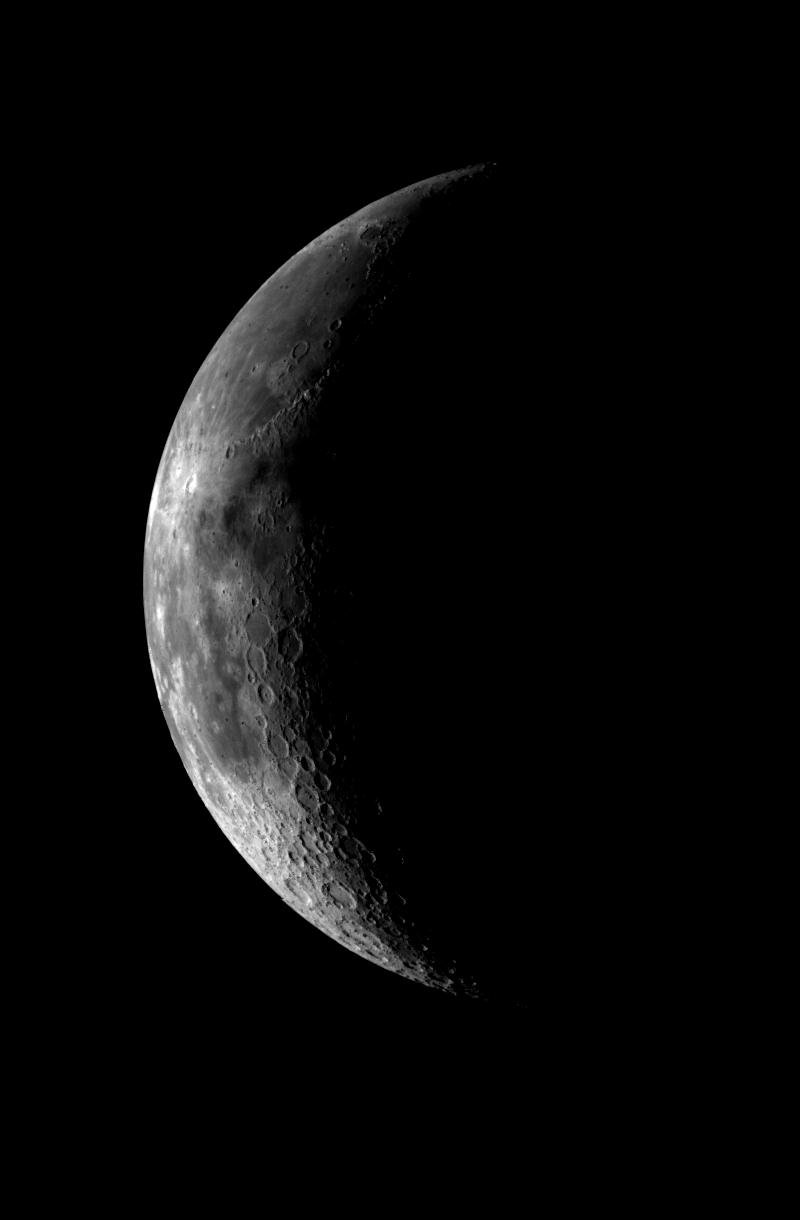
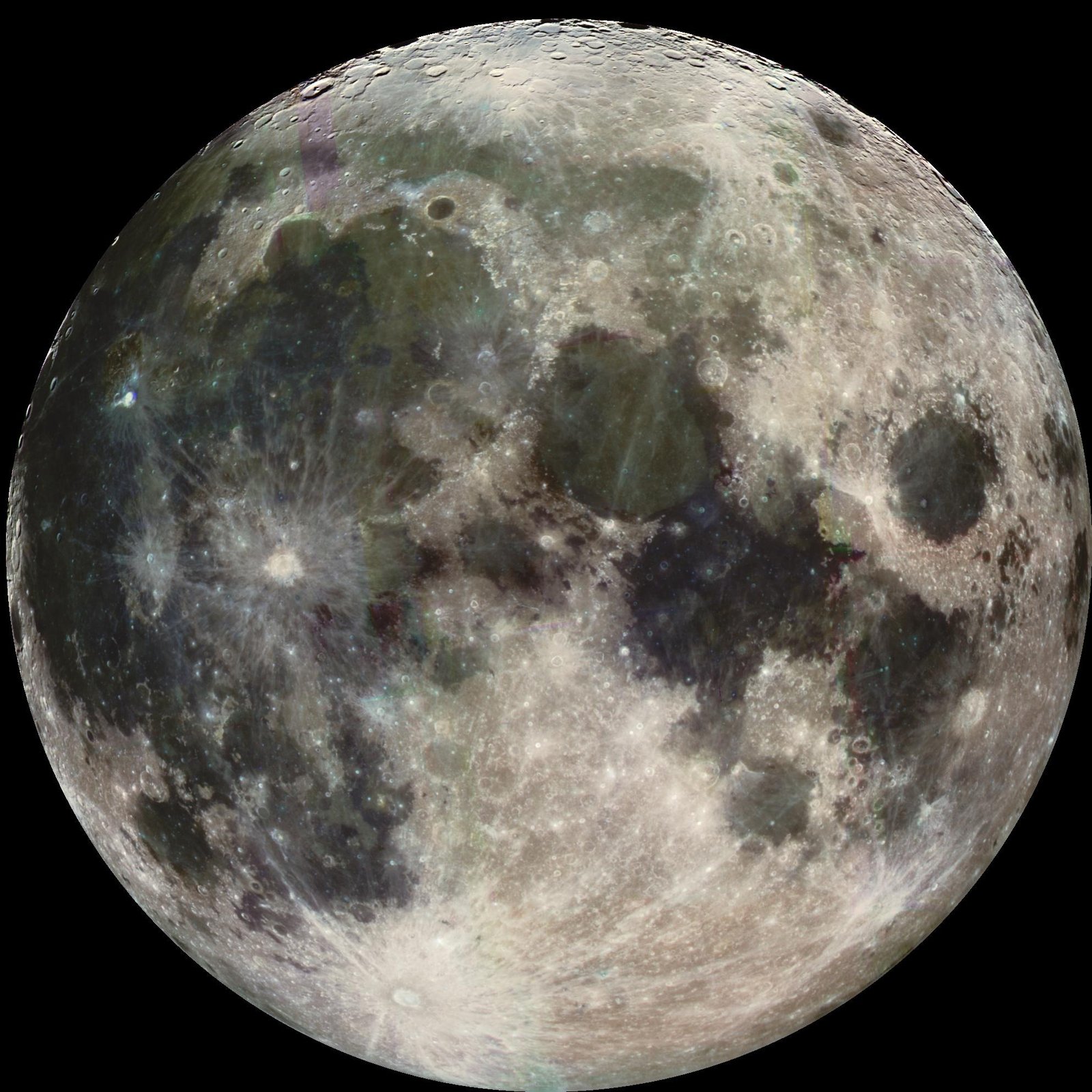
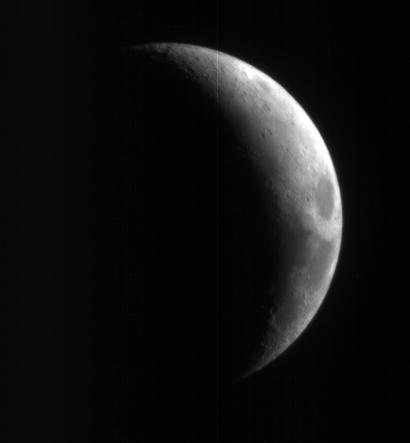
The three images distributed through this article are real NASA mission photographs of the Moon. They illustrate the lunar globe, an illuminated crescent and surface detail; none is a photograph of a completely unlit new Moon taken from your location at the calculated instant. Keeping that distinction visible avoids using a beautiful reference picture as false evidence for the current sky.
Spacecraft viewpoints can show different portions of the Moon from those visible in a typical Earth-based observation. Image contrast and resolution also depend on the instrument and processing. Follow the source links in the captions to understand the origin of each picture. For your own observing log, record what you actually saw alongside the phase time, rather than substituting a mission image for your observation.
Phase, illumination and age are related but different
The phase angle describes geometry around the lunar cycle. Illuminated fraction describes how much of the visible disk is lit. Lunar age usually means elapsed time since a specified new Moon. These quantities are related, but they are not interchangeable labels for one exact number. Near conjunction, a small elapsed age does not by itself tell you the crescent's height or contrast in your twilight sky.
The elongation readout is provided as a geometric reference for the selected time. For a fuller description of the visible lunar appearance, compare it with Moon phase tonight. Use the same time reference when comparing tools. An apparent disagreement can come simply from one screenshot using UTC and another using a local calendar date on the opposite side of midnight.
Keep an observing plan tied to its purpose
For a dark-sky trip, use the new Moon sequence to shortlist dates, then check weather and target visibility closer to departure. For a lunar photography project, choose the phase and Sun angle that reveal the features you want, rather than assuming that new Moon is the most interesting lunar target. For an eclipse, consult dedicated circumstances rather than a general phase list.
A useful note includes the event's UTC time, your observing location, the intended session window and the reason for choosing it. Our next full Moon page offers the opposite phase reference when planning illuminated lunar views. Treat the phase calendar as a reliable organizing layer, then let local conditions and your actual observing goal determine what you do on the night.