
NASA ROMAN MISSION TRACKER
Where Is Roman Space Telescope Now? Live Tracker
Nancy Grace Roman Space Telescope · launched August 30, 2026 · en route to Sun–Earth L2
NASA CONFIRMED · COMMISSIONING IN PROGRESSSept 30 mission report ↗
Where is NASA’s Roman Space Telescope now?
Roman is travelling toward the Sun–Earth L2 region while its instruments undergo commissioning. NASA confirmed the Wide Field Instrument has been activated, the guidance system has passed tests, and the Coronagraph has received its first light. Its distance and motion below are calculated from the site’s existing NASA/JPL Horizons trajectory, not from a real-time spacecraft telemetry feed.
Earth-distance scale · reference to ~1.5 million km L2 regionAwaiting JPL data
Distance from Earth is not the percentage of the journey completed. Actual L2 orbit insertion depends on spacecraft trajectory and maneuvers.
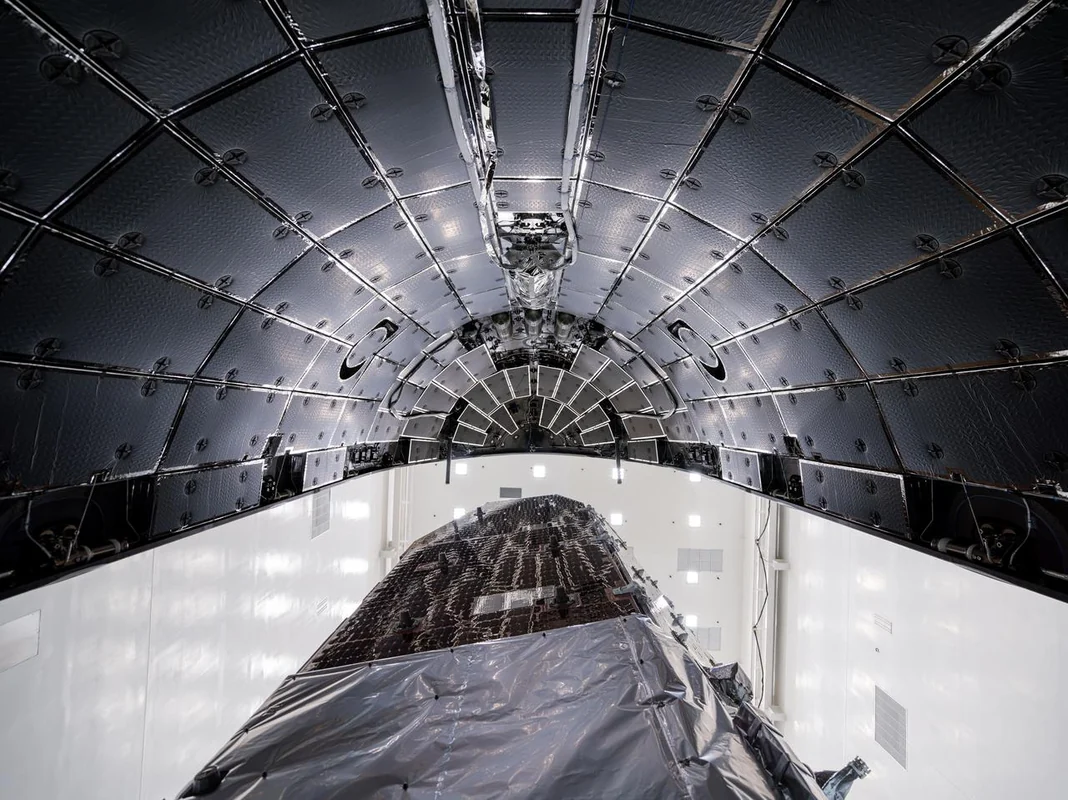
LAUNCH CONFIRMED · AUGUST 30, 2026
Roman begins its journey to Sun–Earth L2
NASA confirmed liftoff and spacecraft separation. Roman is now flying independently toward the Sun–Earth L2 region.
ROMAN · JOURNEY EXPLORERLIVE · NOW
Move left or right to replay the available JPL trajectory. Centre returns to now. Future positions are predictions; playback stops at the available boundary.
Waiting for the shared map’s trajectory…Drag to rotate · Scroll/pinch to zoom · Tap a planet to focus
Solar System ViewPlanet sizes are enlarged for visibility; orbital positions use JPL ephemerides.
EARTH–L2 GEOMETRY
Waiting for dataRoman’s journey, at a glance
Distance change rate—+ receding · − approaching
One-way light time—Geometric distance ÷ light speed
Separation from L2 reference—Approximate point, not route remaining
Display refreshed—Waiting for the shared map
The live distance uses the same position as the map. Decimal digits show small changes, not a guarantee of measurement accuracy. The L2 reference is approximately 1.5 million km from Earth away from the Sun; this ruler is not a journey-completion percentage.
Distance trend · 24 hours / 7 days
Open to load the distance trend.
LIVE NASA/JPL EPHEMERIS
Connecting…
Roman right now
Distance from Earth-- km
Earth-relative speed-- km/s
Earth-distance / ~1.5M km L2 reference (not route progress)--%
Ephemeris time (UTC)--
Source: NASA/JPL Horizons spacecraft target -211. Values come from the public trajectory solution and are not raw spacecraft telemetry.
MISSION ELAPSED TIME
Time since Roman launched
--Days
--Hours
--Minutes
--Seconds
Roman lifted off on August 30, 2026 · 7:26 a.m. EDT (11:26 UTC) aboard a SpaceX Falcon Heavy from Launch Complex 39A at Kennedy Space Center.
Launch in your local time: Loading…
Two instruments, two ways to explore
Wide Field Instrument
Roman’s infrared survey camera captures broad fields of sky. Its images support studies of galaxies, cosmic expansion and planets discovered through gravitational microlensing.
Explore NASA’s instrument guide ↗Coronagraph Instrument
This technology demonstration suppresses a star’s glare to help reveal much fainter nearby planets and surrounding material. It tests techniques for future direct-imaging observatories.
Read NASA’s mission overview ↗Roman, Hubble and Webb: complementary views
| Observatory | Main approach | Explore |
|---|---|---|
| Roman | Wide-field infrared surveys and a coronagraph demonstration | Follow the journey above |
| Hubble | Detailed ultraviolet, visible and near-infrared observations | Hubble tracker |
| Webb | Infrared imaging and spectroscopy of distant galaxies and planetary systems | Webb tracker |
Each telescope answers different questions. See NASA’s Roman mission information for official science plans. Illustrations above are explanatory diagrams, not instrument photographs.
POST-LAUNCH TIMELINE
Confirmed NASA updates and current planning targets
Roman commissioning milestones
Planned items are not confirmations and may move as the team evaluates spacecraft performance. SpaceTracker.live updates the status only from authoritative mission sources.
THE MISSION & ITS SCIENCE
What will the Roman Space Telescope discover?
Roman combines a Hubble-sized primary mirror with an unusually wide infrared view. Its science program is designed to study the distribution and evolution of galaxies, the expansion of the universe, and planetary systems throughout the Milky Way. These are planned scientific observations—not claims that full survey operations have begun.
High-Latitude Wide-Area Survey
By mapping large regions of the sky in near-infrared light, Roman will measure the shapes and clustering of galaxies over cosmic time. Scientists can compare these observations with models of dark matter, dark energy, and the growth of large-scale structure. Unlike a narrow deep-field observation, the survey will cover a broad area with consistent measurements.
High-Latitude Time-Domain Survey
Repeated observations of selected sky fields will reveal objects that brighten or fade, including distant Type Ia supernovae. Those supernovae are essential tools for studying how cosmic expansion has changed. Regular imaging also helps separate genuine transient events from background sources and measure their light curves.
Galactic Bulge Time-Domain Survey
Roman will watch extremely crowded star fields near the Milky Way’s centre to detect gravitational microlensing. When one object passes in front of another, its gravity can briefly amplify the distant star’s light. This method can reveal exoplanets at orbital distances that are difficult for transit surveys to reach, and can also constrain populations of free-floating planets.
Coronagraph technology demonstration
The Coronagraph Instrument uses specialized optics and wavefront control to suppress bright starlight, allowing much fainter nearby material to be investigated. It is designed to demonstrate techniques for observing planets and disks around other stars. It is not the same observing system as Roman’s large-area survey camera, and its tests are part of commissioning.
HOW IT WORKS
Two instruments, complementary capabilities
300-megapixel infrared survey camera
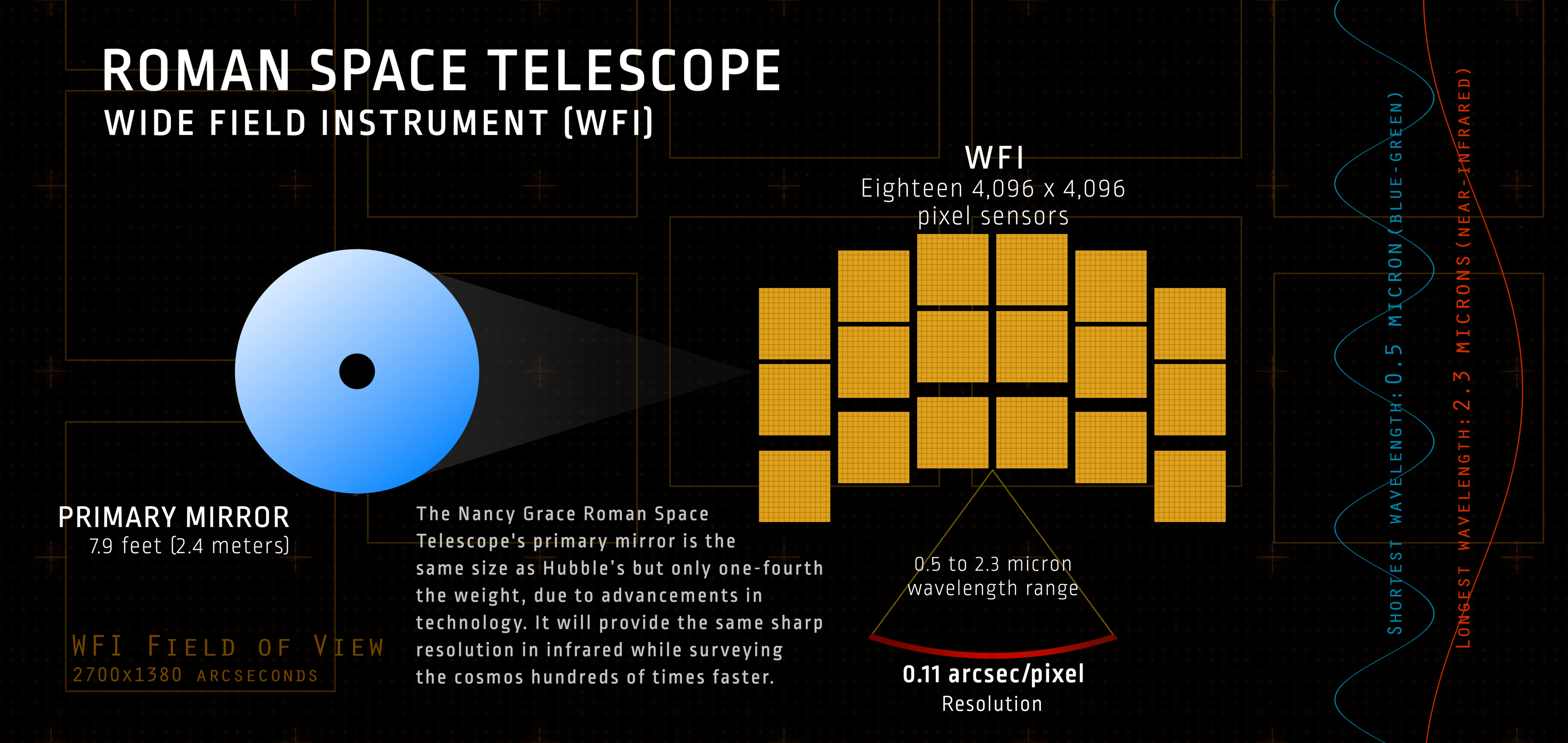
Roman’s Wide Field Instrument uses 18 infrared detectors to observe large areas of sky in one pointing. NASA confirmed activation in September 2026. The 2.4-metre mirror gathers light while the wide focal plane enables efficient surveys; the team must align, focus, calibrate, and validate the full system before routine science.
Suppressing starlight to study exoplanets

The Coronagraph Instrument tests high-contrast observing technology designed to reduce the glare of stars. NASA reported first incoming light on September 22, 2026, followed by further calibration work. This milestone demonstrates a working optical system; it does not signify that every planned science observation has already been completed.
COMPARING THREE OBSERVATORIES
Roman vs Hubble vs James Webb
The three telescopes complement one another rather than perform identical jobs: Roman surveys wide fields, Hubble spans ultraviolet to near-infrared wavelengths, and Webb studies faint infrared targets in exceptional detail.
| Specification | Roman | Hubble | James Webb |
|---|---|---|---|
| Primary mirror | 2.4 m | 2.4 m | 6.5 m |
| Strength | Wide infrared surveys | UV, visible & near-IR detail | Infrared imaging & spectroscopy |
| Observing vantage | Sun–Earth L2 region (planned) | Low Earth orbit | Sun–Earth L2 region |
| Special capability | ~100× Hubble’s infrared field of view; coronagraph test | Broad UV-to-IR coverage | High sensitivity to distant/obscured objects |
| Mission lifetime | 5-year primary design; fuel may support ≥22 years | Extended ongoing operation | Operating at L2 |
| Track here | Roman map above | Hubble tracker ↗ | Webb tracker ↗ |
The potential 22-year Roman lifetime is a NASA fuel projection, not a committed science-operations duration. Read NASA’s explanation ↗
MISSION OPERATIONS
Communications, commissioning and next images
How Roman sends its data home
NASA confirmed on September 25, 2026 that the ground stations supporting Roman were prepared to receive its high-volume science data. This is not a live DSN contact indicator. A station or link is marked “connected now” only when a verifiable mission-specific real-time source reports an active contact.
First light is not the same as science surveys
Engineers are checking guidance, optics, instrument focus and calibration. The Coronagraph first-light test and Wide Field Instrument activation confirm commissioning progress, but do not mean routine sky surveys have started. NASA has anticipated the first science images by early 2027, with schedules subject to change.
ORIGINAL NASA MEDIA
Roman images, mission artwork and official reports
Explore verified NASA media for the observatory and its instruments. Official artwork represents the spacecraft; do not mistake an illustration for a live camera view. Actual science images will be added as NASA releases them.
Looking for Roman in your sky?
Use the existing Observer Sky View and 15-day position table farther down this page. They calculate direction from your selected location; they do not promise telescope visibility.
Go to Observer Sky View ↓Live JPL ephemeris on the journey to L2
Roman is commissioning while travelling from Earth toward the Sun–Earth L2 region. The live figures above are calculated from NASA/JPL Horizons spacecraft target -211, using the public trajectory solution for the current time.
Instrument checkout and calibration
The Wide Field Instrument has been activated, the guidance system has passed tests, and the Coronagraph has collected its first light. NASA continues instrument alignment, calibration and validation ahead of planned science imaging in early 2027.
A stable deep-space observing region
Roman is heading toward the second Sun–Earth Lagrange region, roughly 1.5 million kilometres from Earth, where it can maintain a broad and stable view of the universe.
Roman observatory in space

Roman Space Telescope questions
Did the Roman Space Telescope launch successfully?
Yes. NASA confirmed liftoff at 7:26 a.m. EDT on August 30, 2026 and confirmed spacecraft separation at 7:57 a.m. EDT.
Where is the Roman Space Telescope now?
Roman is travelling from Earth toward the Sun–Earth L2 region during commissioning. SpaceTracker.live now uses NASA/JPL Horizons spacecraft target -211 to calculate its current Earth distance and Earth-relative speed.
Is the map showing Roman’s exact live position?
The common Solar System map plots NASA/JPL Sun-centred spacecraft vectors at the displayed epoch. The spacecraft marker is enlarged and illustrative; the L2 reference is approximate.
How far is L2 from Earth?
The Sun–Earth L2 region is roughly 1.5 million kilometres, or about 930,000 miles, from Earth.
What will Roman study?
Roman will investigate dark energy, dark matter, exoplanets and many other astrophysical phenomena with a wide-field infrared view.
When will Roman begin science observations?
Roman is still in commissioning. NASA confirmed that both instruments were activated in September 2026, while alignment and calibration continue, and anticipates first science images by early 2027. The schedule can change.
OFFICIAL SOURCES
Verified Roman mission information
Mission-status facts are checked against NASA Science. Live distance and speed are calculated from the NASA/JPL Horizons public ephemeris for Roman spacecraft target -211.
CONTINUE EXPLORING SPACE
Track another deep-space mission
MISSION POSITION
Where is Nancy Grace Roman Space Telescope in space?
Two views help place the current spacecraft position: a Sun-centred overview and an Earth-centred close-up. Both use the latest available JPL vector solution. Orbit reference circles show distances, not the actual positions of other planets.
Waiting for JPL vector data…
Waiting for JPL vector data…
Nancy Grace Roman Space Telescope · FROM YOUR LOCATION
Find the spacecraft in the sky
See where the spacecraft appears in the sky for the location selected above. The chart shows direction and does not guarantee naked-eye or telescope visibility.
Waiting for your selected location…
Right ascension · ICRF—
Declination · ICRF—
Sky direction—
Above horizon—
OBSERVER SKY VIEW
Awaiting observer dataWhere to look
Compass projection of the current sky direction. The chart shows direction, not brightness or a photograph of the sky.
Rise, highest point and set
Rise above horizon—
Highest altitude—
Set below horizon—
Rise, highest point and set are estimates. Atmospheric refraction and terrain are excluded.
A calculated direction does not imply optical visibility.
Distance from your location
Observer range in astronomical units. Close flybys and maneuvers can change the distance quickly.
About Nancy Grace Roman Space Telescope
NASA’s Nancy Grace Roman Space Telescope, currently commissioning while travelling from Earth toward the Sun–Earth L2 region.
DestinationSun–Earth L2 region
Launched2026-08-30
AgencyNASA
DAILY SKY POSITION
12:00 UTC sample · dates and times labeled UTCThe next 15 days
| Date (UTC) | RA (°) | Dec (°) | Azimuth (°) | Altitude (°) | Range (AU) |
|---|---|---|---|---|---|
| Select your observing location above to load the position table. | |||||
These are observer-based line-of-sight calculations, independent of the compressed scale used in the 3D voyage map. No brightness prediction is made.
Roman communication explorer
Roman’s existing journey controls remain available above. The radio calculator uses the current Earth-distance sample; it does not measure a real command acknowledgement or instrument status.
FROM EARTH NOWWaiting for dataSample timestamp will appear here
FROM SUN NOWWaiting for dataSample timestamp will appear here
ONE-WAY RADIO DELAY—Geometric light time to Earth
TIME SINCE LAUNCH—Launch date: 2026-08-30 · calendar-day estimate
Loading current samples independently of the map date.
Radio signal simulator
Estimate a signal’s travel time from a fixed distance sample. No signal is transmitted. Spacecraft motion, processing time and station scheduling are excluded.
An ideal immediate reply takes twice the one-way light time.