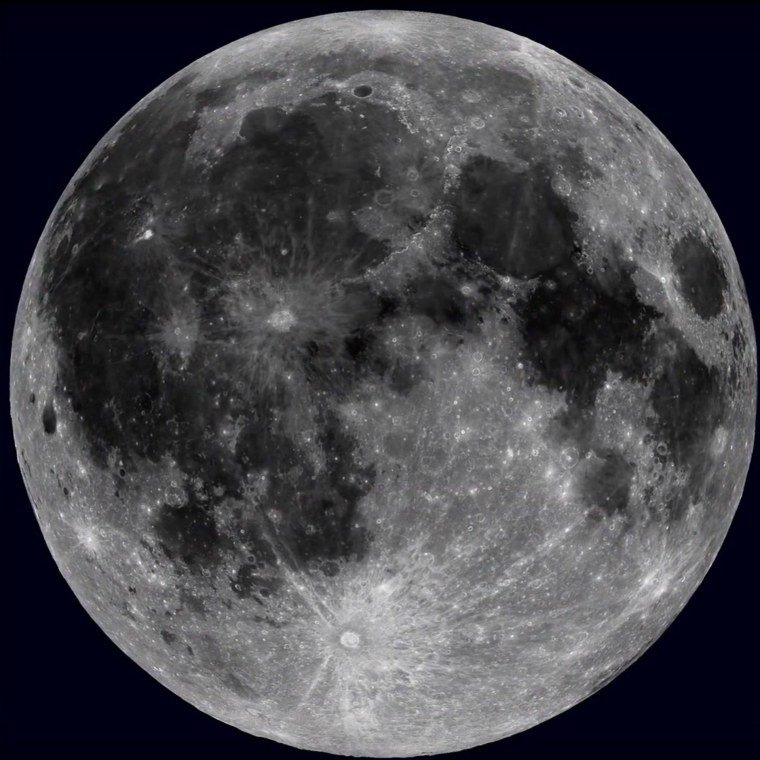
Select a name to locate it on the global NASA surface mosaic. Diameters and center coordinates come from the USGS/IAU Gazetteer; the blue markers identify approximate crater centers. Map markers show reference locations and do not predict illumination or visibility tonight.
A full moon is an astronomical instant, not an all-night state. This tool checks whether the calculated full-moon instant falls on your local calendar date and separately shows how illuminated the Moon will appear tonight.
The Moon can look essentially full for more than one evening even when the exact full-moon instant occurred hours earlier or will occur hours later.
Full Moon Tonight? How to Interpret the Exact Moment and What You See
“Is there a full moon tonight?” sounds like a simple yes-or-no question, but astronomy separates the exact Full Moon instant from the way the Moon looks during an entire evening. This page compares the calculated full-phase moment with your local date and also shows the illumination expected around the current time.
The exact Full Moon is a moment, not a whole night
A Full Moon occurs when the Moon is approximately opposite the Sun in the sky as seen from Earth. Astronomically, the phase reaches a specific point in its cycle at a particular instant. That instant can occur during daytime at your location even though the Moon looks full when it rises later that evening.
This is why two people in different time zones can attach different calendar dates to the same Full Moon event. The event itself is global, but “tonight” is a local-time question.
Why the Moon can look full on more than one night
The illuminated fraction changes gradually near Full Moon. Human vision cannot easily distinguish extremely small differences in the bright disk, so the Moon may appear fully round on the evening before or after the exact phase moment. A page that says the exact Full Moon is not tonight can therefore still show very high illumination.
Clouds, haze and the Moon’s height above the horizon also affect its appearance. A low Moon can look warmer in color because its light travels through more atmosphere, but that color change does not mean the lunar phase has changed.
When will the Full Moon be visible from your location?
The phase alone does not tell you whether the Moon is above your horizon. Set your observing position and use Moonrise and Moonset Time for local rise/set estimates. The Moon Live Tracker adds altitude and azimuth, which tell you how high the Moon is and which compass direction to face.
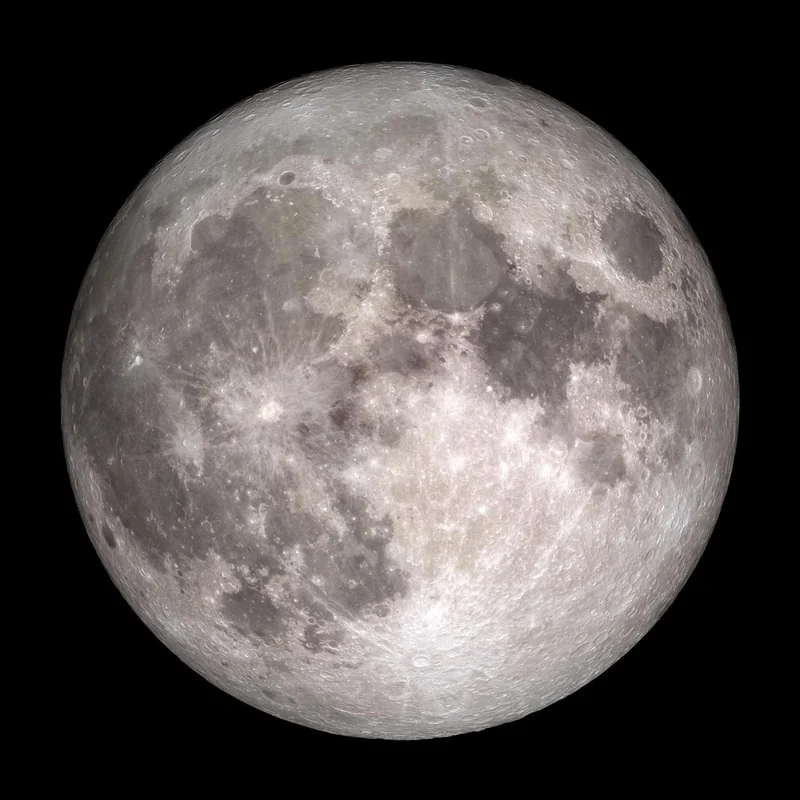
Full Moon reference view from NASA. This photograph is educational reference imagery, not the current live phase. NASA source.
Full Moon and lunar eclipses are not the same event
Every lunar eclipse happens at Full Moon, but most Full Moons do not produce an eclipse. The Moon’s orbit is tilted by about five degrees relative to Earth’s orbital plane, so the Moon usually passes above or below Earth’s shadow. An eclipse requires the Full Moon to occur near one of the Moon’s orbital nodes. Check Lunar Eclipse Tonight separately when eclipse visibility is your question.
Planning photography or observing
A bright Full Moon can wash out faint stars and make deep-sky observing more difficult, but it is an easy naked-eye target and can reveal prominent lunar maria and ray systems. For detailed surface contrast, many observers prefer phases away from Full Moon because shadows along the terminator emphasize craters and mountains.
To see where the cycle is today rather than focusing only on Full Moon, open Moon Phase Today. To find the upcoming full-phase date and countdown, use When Is the Next Full Moon?.
About the calculation
SpaceTracker.live estimates lunar illumination and the next full-phase crossing with browser-based astronomical formulae. The result is designed for general information and observing preparation, not precision scientific timing. For authoritative astronomical data, compare the result with an official ephemeris service.
Exact full phase versus a full-looking Moon
A Full Moon is a calculated instant, while the disk can look almost round for the preceding and following nights. This page answers whether the exact event falls on your local calendar date. Check the annual Full Moon Calendar for the official Universal Time, then compare its date with your time zone. The Moon Phase Tonight page reports the illumination expected in the evening rather than treating an entire night as a single phase instant.
A Full Moon generally rises around sunset and sets around sunrise, but that is only a broad geometric expectation. Your actual horizon, latitude and season can shift the timing and apparent path. Use local rise and set estimates and the live Moon tracker before planning a low-horizon photograph. NASA's phase guide explains the changing Sun–Earth–Moon alignment.
What is worth looking for at full phase?
The bright rays around craters such as Tycho are often easy to recognize on a full-looking Moon; the low-angle relief along the terminator is less pronounced at this stage. Explore the near-side reference in the surface atlas and remember that its labelled landmarks are reference locations, not a live visibility guarantee. Strong moonlight also reduces contrast for dim meteors and galaxies; consult the meteor calendar when choosing a dark-sky night.
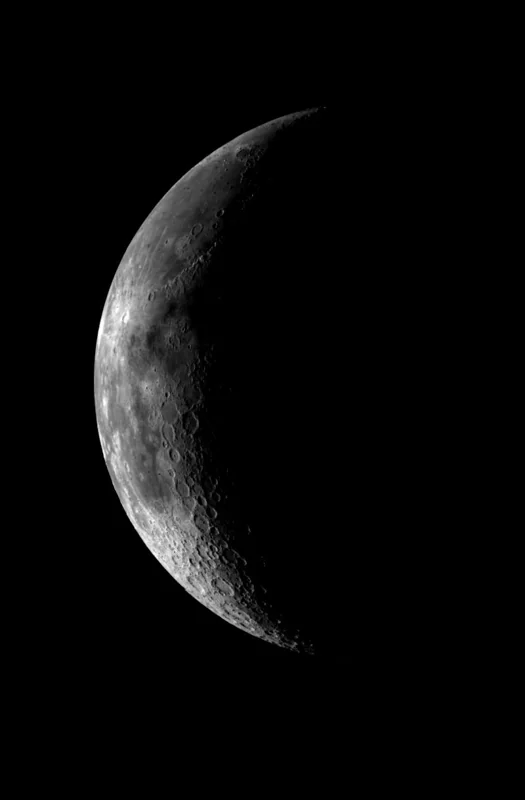
NASA/JPL Galileo view of the western near side, showing lunar surface features. This is a reference photograph, not a live observation. NASA source.NASA Lunar Reconnaissance Orbiter near-side reference mosaic (NASA/Goddard/Arizona State University). This is a surface reference, not tonight’s phase or a live camera image. Explore crater centers with the interactive lunar atlas.
Crater rays under a bright Moon
Bright-ejecta features can stand out when the disk looks full. In the interactive surface atlas, the blue markers for Tycho (85.29 km across) and Copernicus (96.07 km across) are good starting points. Their USGS records give measured centers and diameters. The bright near-side surface image is a reference view; the live phase visualization in the tool provides the lighting estimate, and real visibility still depends on the Moon’s position and your conditions.
Frequently asked questions
Can the Full Moon occur during the daytime?
Yes. The exact phase instant is independent of whether the Moon is visible from your location at that moment.
Why does the Moon still look full tomorrow?
Illumination changes slowly around Full Moon, so the disk can look round to the eye on adjacent evenings.
Does a Full Moon always cause a lunar eclipse?
No. A lunar eclipse requires the Moon to pass through Earth’s shadow near an orbital node.
Is “tonight” based on my timezone?
The page uses your browser’s local date and time when interpreting tonight and formatting the calculated event time.
Educational-use note: SpaceTracker.live is an independent educational website. Moon positions, phases, distances and rise/set times on these tools are calculated values and can differ slightly from high-precision professional ephemerides.