Select a name to locate it on the global NASA surface mosaic. Diameters and center coordinates come from the USGS/IAU Gazetteer; the blue markers identify approximate crater centers. Map markers show reference locations and do not predict illumination or visibility tonight.
A lunar eclipse happens when Earth moves between the Sun and Moon and Earth’s shadow falls on the Moon. Total, partial and penumbral eclipses are distinct events.
The eclipse schedule on this page is based on NASA/GSFC catalog dates and greatest-eclipse times. Regional visibility still depends on whether the Moon is above your horizon during the event.
Lunar Eclipse Tonight: How Eclipse Type, Timing and Local Visibility Fit Together
The Lunar Eclipse Tonight tool compares your local date with NASA/GSFC eclipse catalog events and shows the next scheduled lunar eclipse. The important distinction is that an eclipse can be happening somewhere on Earth without being visible from your location, so date, eclipse type and local Moon position must be considered separately.
Why a lunar eclipse happens
A lunar eclipse occurs when Earth is positioned between the Sun and the Moon and the Moon moves through part of Earth’s shadow. This geometry is possible only around Full Moon. It does not happen every month because the Moon’s orbit is tilted relative to the plane of Earth’s orbit around the Sun.
Near the points where the Moon’s tilted orbit crosses that plane—the orbital nodes—the alignment can become close enough for an eclipse. The exact path through Earth’s shadow determines the eclipse type and duration.
Penumbral, partial and total lunar eclipses
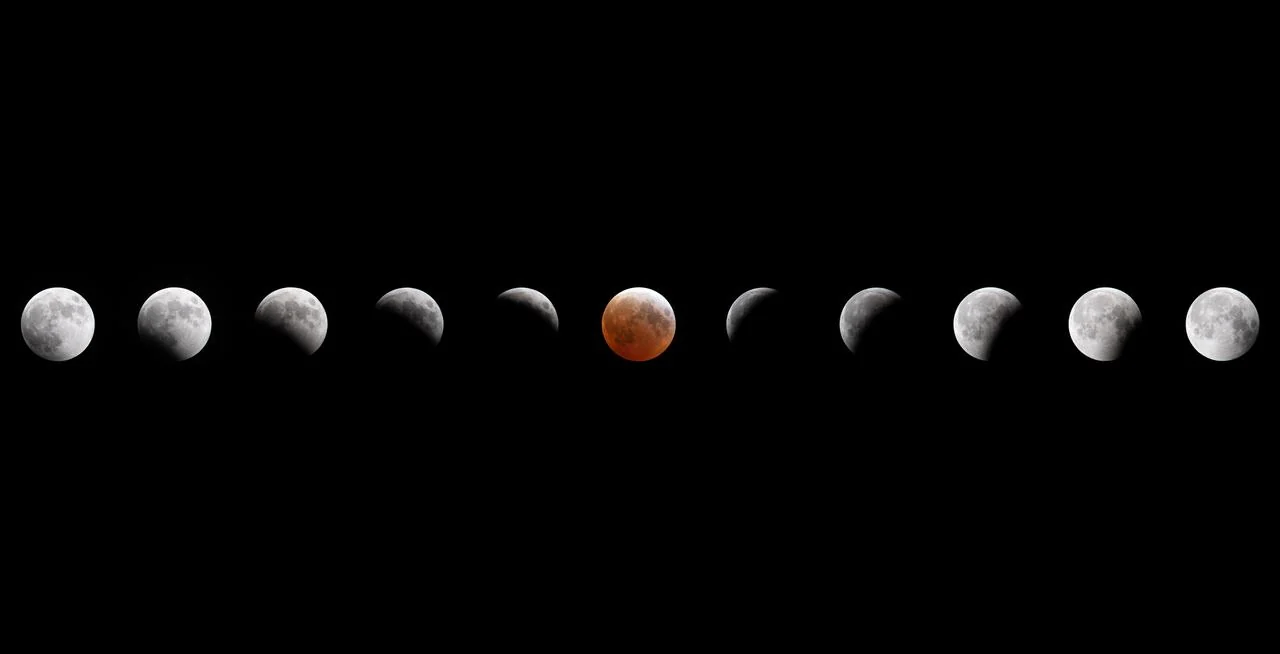
During a penumbral eclipse, the Moon passes through Earth’s lighter outer shadow and the visual dimming can be subtle. During a partial eclipse, part of the Moon enters the darker umbra. During a total lunar eclipse, the entire lunar disk passes into the umbra. The Moon can then appear coppery or red because sunlight filtered and bent through Earth’s atmosphere reaches the shadowed lunar surface.
NASA/Jordan Cochran: a total lunar eclipse sequence. The red Moon appears when sunlight is filtered through Earth’s atmosphere. NASA source.
“Tonight” is local, but the eclipse event is global
NASA catalogs eclipse events in Universal Time. SpaceTracker.live converts the event timing for display and compares it with your local calendar date. An eclipse near midnight can therefore be listed on different dates in different time zones. That does not represent two separate eclipses; it is the same physical event described by different local clocks.
Why an eclipse may not be visible where you are
To see a lunar eclipse, the Moon must be above your horizon during the relevant eclipse phases. Daylight, moonrise/moonset timing, weather and local obstructions also matter. The broad visibility region supplied by eclipse catalogs is not a street-level forecast.
Use Moon Live Tracker to see whether the Moon is currently above your horizon and Moonrise and Moonset Time to estimate local horizon crossings. For the underlying phase, check Full Moon Tonight or Moon Phase Today.
Why every Full Moon does not become an eclipse
The Moon’s orbital tilt is the key. At most Full Moons, the Moon passes north or south of Earth’s central shadow. Only when Full Moon occurs sufficiently close to an orbital node does an eclipse take place. The repeating alignment patterns are related to eclipse cycles such as the Saros, but each event still has its own visibility geometry.
How this page should be used
The eclipse list is intended for educational planning and quick reference. The embedded catalog covers the listed future dates and uses NASA/GSFC greatest-eclipse times and broad visibility regions. For detailed contact times, maps, local circumstances and scientific work, follow the official NASA/GSFC eclipse tables or another professional astronomical ephemeris.
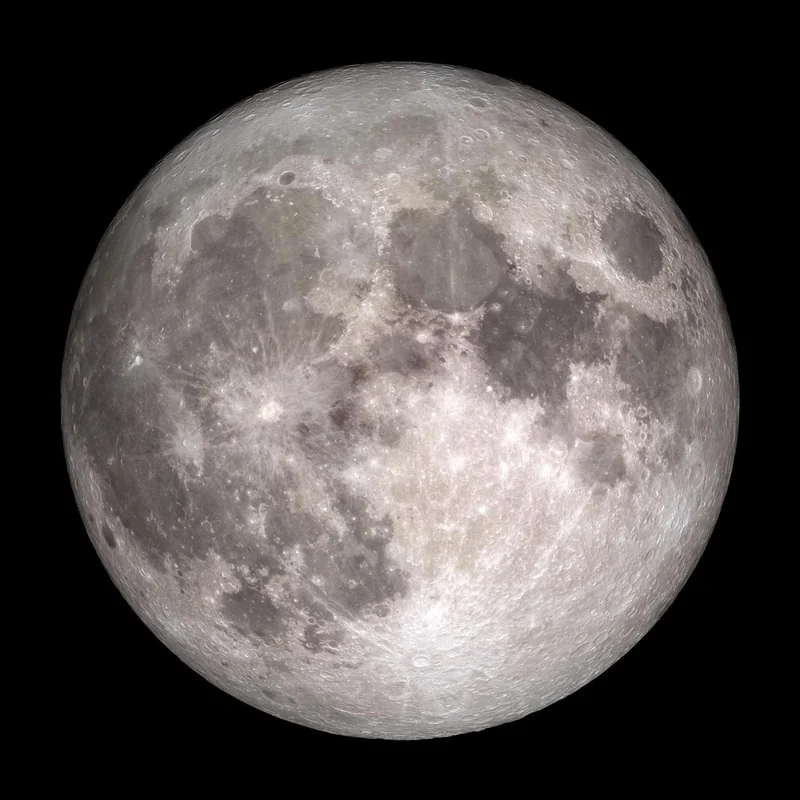
Full Moon reference view from NASA. This photograph is educational reference imagery, not the current live phase. NASA source.
Read catalog events and local circumstances separately
An eclipse catalog identifies a global event, usually by a reference instant such as greatest eclipse. It does not promise that an observer can see all phases from every place on Earth. The Moon must be above your horizon for the relevant interval; use Moonrise and Moonset and the Moon Live Tracker to make a first local check. The NASA eclipse tables and maps provide event-specific contact times and viewing regions.
When an eclipse begins before local moonrise, you might see only later stages. Conversely, an eclipse can finish after moonset. Atmospheric conditions can alter how a totally eclipsed Moon looks, so photographs of a previous red Moon are not a forecast for the next event. The ordinary monthly phase cycle is separate from Earth’s eclipse shadow; the distinctive red coloration requires an actual total eclipse and cannot be predicted from a regular phase picture.
Eclipse planning steps
First, confirm the global event date and type in the Eclipse Calendar or the NASA catalog. Next, translate Universal Time to your local time and check whether the Moon is above your horizon. Finally, choose an unobstructed sky and check cloud cover close to the event. A Full Moon alone is not an eclipse because the Moon usually passes above or below Earth's shadow. NASA's Moon eclipse explainer discusses the alignment.
Watch surface landmarks through the eclipse
During a total lunar eclipse, Earth’s shadow can dim large areas and change their apparent color; the surface features themselves stay fixed. Familiar reference targets include Tycho and Grimaldi. Use the interactive atlas to identify their approximate positions before the event, then consult NASA’s eclipse resources for contact times. A previous eclipse photograph cannot predict how red the next event will look.
Frequently asked questions
Can I look at a lunar eclipse safely?
Yes. Unlike a solar eclipse, a lunar eclipse is safe to view with the unaided eye; normal binocular or telescope use does not require a solar filter.
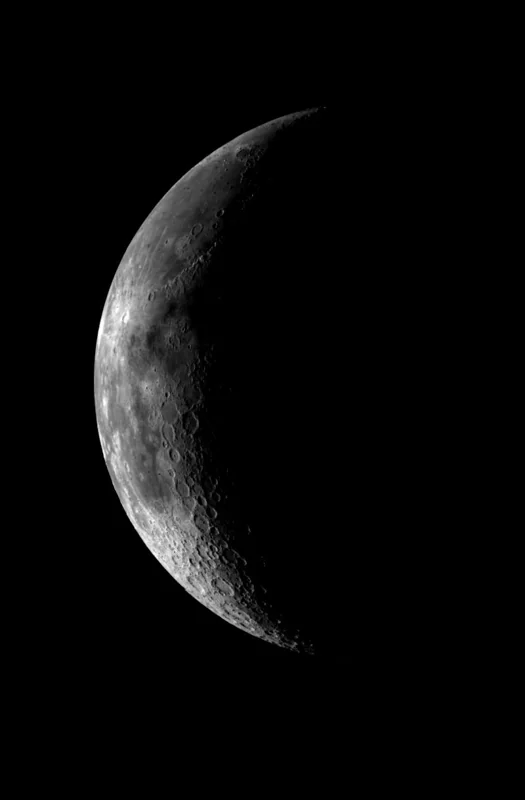
NASA/JPL Galileo view of the western near side, showing lunar surface features. This is a reference photograph, not a live observation. NASA source.Does every lunar eclipse happen at Full Moon?
Yes. A lunar eclipse requires Full Moon geometry, although most Full Moons do not produce an eclipse.
Why can the Moon look red during totality?
Earth’s atmosphere filters and bends sunlight into the umbral shadow, with redder wavelengths reaching the Moon more effectively.
If the page says an eclipse occurs tonight, am I guaranteed to see it?
No. The Moon must be above your local horizon, and weather and local obstructions can prevent observation.
Educational-use note: SpaceTracker.live is an independent educational website. Moon positions, phases, distances and rise/set times on these tools are calculated values and can differ slightly from high-precision professional ephemerides.