
Choose an object you can actually place in the sky
A galaxy name is exciting, but it is not yet an observing plan. You still need to know where the object is, when it is above your horizon, and whether its brightness and size suit your equipment. This deep sky object explorer starts with a real catalogue and adds your selected time and saved observing location. Search a familiar name, a Messier number or an NGC or IC designation, then use altitude and magnitude filters to narrow the list. Our constellations visible tonight page helps establish the larger star patterns before you work toward a faint target.
The explorer includes galaxies, clusters and several kinds of nebulae. It does not turn every catalogue entry into a promise of visual detection. Its purpose is to make the planning information accessible and traceable, so you can choose a target with a clear understanding of what the numbers describe.
Search names and catalogue identifiers
Try a compact identifier such as M31, NGC1976 or IC434. Spaces are ignored in the search, so a designation entered with a space still works. Common names are also searchable when the catalogue supplies them. Not every object has a popular name, and one region of the sky can contain several nearby catalogue entries with different identifiers.
The list shows up to one hundred matches at a time to keep the browser responsive. A status message reports the full filtered count, and the CSV download includes the full filtered set. If a search gives no result, widen the altitude or magnitude limits and check whether a type filter is still active. A restrictive filter can hide a correctly entered object without implying that the catalogue has lost it.
Know what the object types mean
An open cluster is a relatively loose stellar grouping, while a globular cluster is a much denser, roughly spherical stellar system. Galaxies are large external systems of stars, gas and dust. Emission nebulae, reflection nebulae and dark nebulae become visible in different ways, so they should not be treated as identical fuzzy patches with interchangeable observing requirements.
The table preserves compact catalogue type codes. G denotes a galaxy, OCl an open cluster, GCl a globular cluster, PN a planetary nebula and HII an ionized hydrogen region. Some entries describe groups or combined cluster-and-nebula regions. NASA's Hubble Messier catalogue offers physical context and reference images for many familiar targets, but a catalogue classification remains distinct from a prediction of what your telescope will reveal.
Magnitude is useful, but incomplete
The explorer uses V magnitude where the source catalogue provides it. A missing magnitude is shown as unavailable and is not replaced by a made-up number. Entries without that value remain in the list, allowing you to inspect them instead of silently discarding a potentially interesting object. The magnitude limit therefore filters known values; it is not a guarantee that every remaining entry has a measured brightness below the threshold.
Integrated magnitude can be especially misleading for extended objects. A large galaxy may spread its light over a broad area and look much less conspicuous than a compact object with a similar total magnitude. Surface brightness, sky darkness and the size of the object matter. Read the major-axis size as well as the magnitude before deciding that one target should be easier than another.
Your location changes the useful list
With a valid saved location, the explorer calculates altitude and azimuth at the selected UTC time. The altitude filter then removes objects below your chosen minimum. Results are ordered with the highest objects first, which is a useful starting point when you want to reduce atmospheric obstruction and extinction. Without a location, you can still browse catalogue information, but local horizon values are not invented.
Use the site header's shared location control when you travel. A remembered home location can make a target appear above the horizon when it is unavailable from your actual observing site. The mathematical horizon does not include local hills, trees or buildings. Check the chart's direction against your surroundings and leave a practical margin instead of planning a difficult observation exactly at zero degrees altitude.
Select a target and use the sky view
Click an object's table button to highlight its direction in the Observer Sky View and reveal its catalogue coordinates, constellation, magnitude and size. The chart uses the same UTC field as the table. Move the time to compare an earlier or later session, and watch how the local direction changes while the object's catalogue position remains effectively fixed for ordinary planning.
The background is a real bright-star subset, not a deep photographic finder field. You can use it to locate the relevant part of the sky and recognize broad guide patterns. For the final star hop, use a detailed chart that contains stars faint enough for your finder and telescope. A whole-sky projection cannot show every comparison star near a compact nebula, and should not pretend to do so.
Choose equipment to match the target
Large binoculars or a wide-field telescope can be excellent for an extended cluster that does not fit comfortably into a high-power eyepiece. A compact planetary nebula may reward a different field and magnification. Begin by checking angular size, then consider your actual field of view rather than assuming that more magnification always improves the experience.
For a first session, choose one bright, well-placed target and give it time. Let your eyes adapt, shield distracting lights and compare direct vision with averted vision where useful. Use our next new Moon page to plan a period with reduced lunar glare, then check Moonrise and Moonset for the specific observing window. A dark lunar phase is helpful, but it cannot overcome opaque cloud or severe local light pollution.
What the NASA pictures should teach you
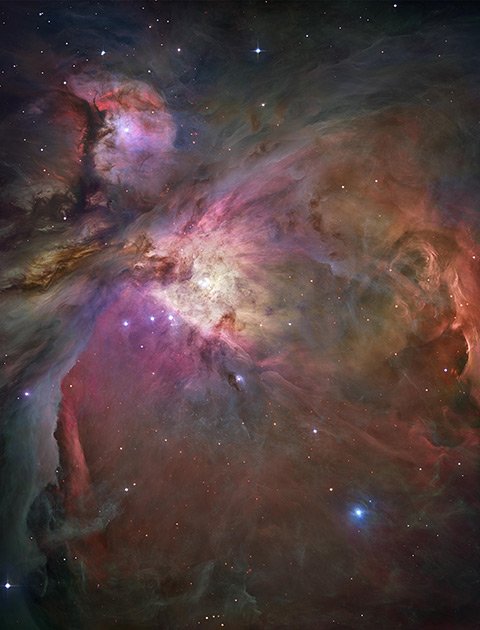
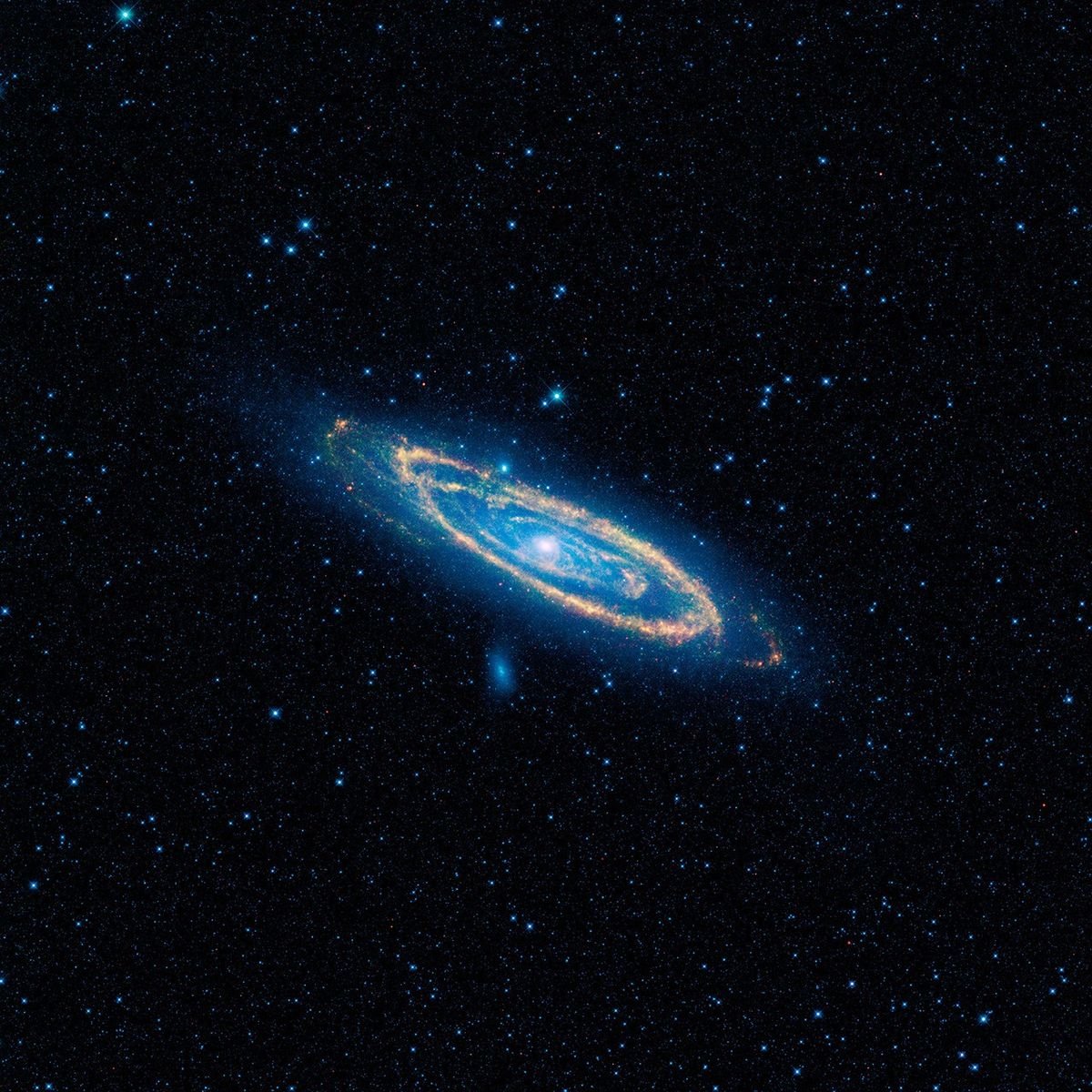
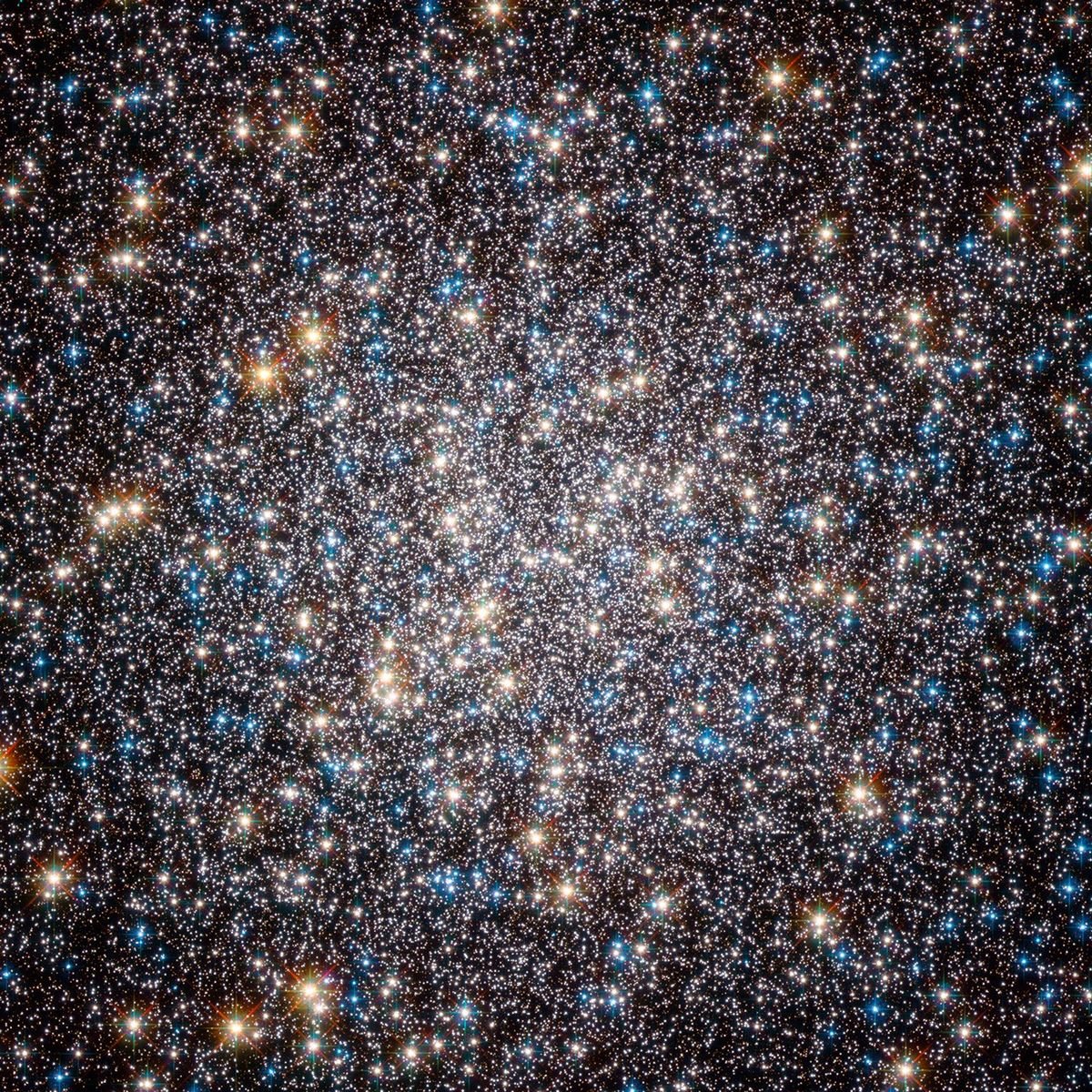
The Orion Nebula, Andromeda and Messier 13 images in this article are genuine NASA mission reference images, each linked to its source. They illustrate different kinds of deep-sky targets rather than claim to show today's view through your telescope. Their cameras, wavelength coverage and exposure methods differ, so equal image widths do not mean equal angular sizes or similar visual brightness.
The Andromeda picture here is a WISE infrared view. It is valuable for understanding structure, but it should not be mistaken for the color appearance seen by an unaided eye. Hubble resolves detail far beyond an ordinary visual setup. Use these images to learn what a target contains, then enjoy the subtler view you can actually observe. A modest glow can still represent a remarkable physical system.
Where the catalogue comes from
The data are a selected representation of the public OpenNGC catalogue, retaining meaningful object types and valid coordinates. Names, magnitudes and angular sizes are preserved rather than filled with estimates when fields are missing. The redistributed subset includes its attribution and share-alike licence so that the source remains identifiable beyond this page.
Positions are catalogue equatorial coordinates referenced to J2000, transformed for the selected date before local horizon calculation. The result is suitable for general observing planning, with a standard refraction model rather than measured atmospheric conditions. It is not a replacement for a professional astrometric catalogue or a telescope mount's alignment procedure. The date and location need to be correct even when the underlying deep-sky object barely changes its celestial position.
Make a short observing list and keep notes
Export a filtered CSV when you have a manageable set of candidates. Keep the UTC time and location in your observing notes alongside the object's identifier, equipment and actual appearance. An entry such as “large diffuse glow, brighter core” records more useful information than copying a mission photograph into the log. Mark uncertain identifications so you can revisit them with a better finder chart.
Our personalized star map can preserve the broader sky for the same session. Combine that overview with a detailed target chart and a current forecast before you leave home. A well-chosen list does not need dozens of objects. One cluster, one nebula and one galaxy can make a satisfying evening when you know where to look and give each target enough attention.