
An asteroid is a moving point, not a tiny photograph
Looking for an asteroid usually means identifying a faint, star-like point and showing that it changes position against the background. You are unlikely to see a rocky shape through an ordinary telescope. That is why this asteroids visible tonight tool starts with coordinates, brightness estimates and your local horizon instead of a decorative animation. Choose a UTC time, load the supported objects from JPL, and compare the candidates above your location. Our night sky tonight chart is a useful first stop for orienting yourself before narrowing the search to a small field.
The catalogue here is deliberately limited to eleven familiar numbered objects. It is not an exhaustive list of all asteroids that exist or all objects currently detectable with professional equipment. A short, documented list is more useful than a long table filled with unverified positions.
What happens when you load positions
Press Load JPL positions after setting your shared observing location and the UTC time. The tool requests the objects sequentially, shows progress, and keeps successful results available if another request fails. Positions are obtained from NASA/JPL Horizons. The table combines those coordinates with the location already saved in the site header to calculate altitude and azimuth.
A response can be temporarily unavailable because of network or service limits. In that case the page identifies the missing data rather than inserting an invented position. Changing the time clears the previous asteroid results and asks you to load fresh ones. That is intentional: a plausible-looking coordinate from another date can be much worse than a clear empty result when you are searching a telescope field.
Reading brightness without overpromising visibility
The V magnitude column is a predicted apparent visual magnitude from the returned ephemeris, where available. Smaller numbers mean brighter objects. This is not a direct measurement through your telescope at that moment. Atmospheric extinction, moonlight and local sky glow can make detection harder than the number suggests. Some returned records may lack a usable brightness estimate; those remain labelled unavailable.
The magnitude control limits the candidates in the table. An unavailable magnitude remains visible as unavailable, so that a missing value does not silently become a bright object. Lowering the threshold can leave an empty list. That does not prove that no asteroids exist above your horizon; it means that none of the supported, successfully loaded objects met the current filters. Widen the range thoughtfully and check the status message before drawing a conclusion.
Altitude, azimuth and the meaning of tonight
Altitude is the object's height above the mathematical horizon. Azimuth gives its compass direction, with north near zero degrees and east near ninety degrees. Choose a reasonable minimum altitude instead of accepting every object barely above the horizon. Low targets suffer from extinction and turbulence, and may be hidden behind terrain long before the mathematical horizon is reached.
The Sun-altitude readout identifies daylight, twilight or astronomical night at your selected instant. The page evaluates a time, not an automatic guarantee of visibility throughout an entire evening. You can test several times to build an observing window. Our best time to stargaze tonight page adds weather-oriented context, while this table stays focused on the calculated geometry of its supported asteroids.
Ceres, Vesta and the rest of the selected sample
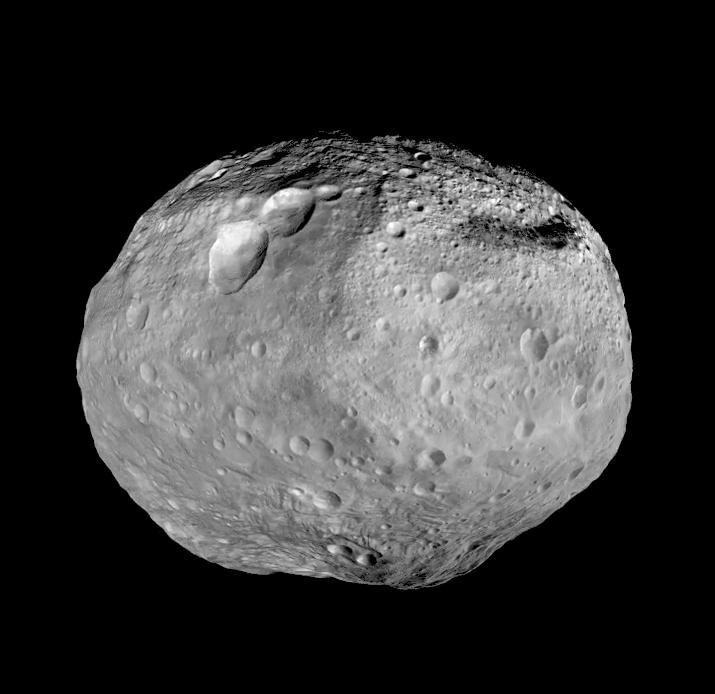
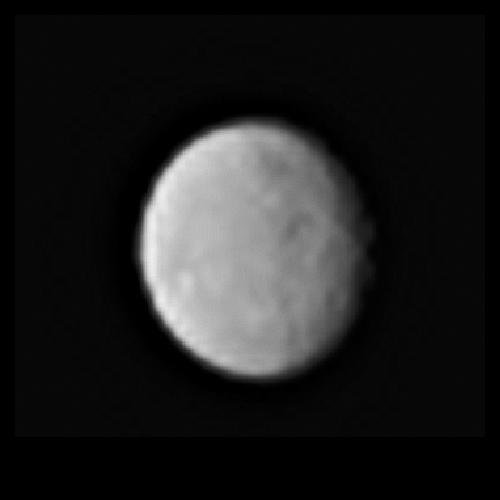
Ceres and Vesta are useful names to learn first, partly because they have a rich history of observation and spacecraft study. Ceres is classified as a dwarf planet but is included here as numbered object 1 in the small-body catalogue. Pallas, Juno, Hebe, Iris, Flora, Metis, Hygiea, Eunomia and Psyche broaden the sample without pretending that they will all be practical targets on any given night.
The ordering changes with returned magnitude and your filters. It is not a permanent ranking of physical size, importance or observing difficulty. A brighter object low in twilight may be a worse choice than a slightly fainter one high in a dark sky. Read the columns together. NASA's asteroid science guide explains the physical population behind these individual observing targets.
Finding the object in a telescope field
Use the Observer Sky View to identify the correct part of the sky, then use a detailed finder chart for the final field. A whole-sky chart is good at direction but does not replace a chart containing the faint comparison stars around a small moving object. Confirm the field using a recognizable pattern of several stars rather than the position of one isolated point.
Record the candidate's relationship to those stars. If possible, obtain another observation after enough time has passed for the motion to be measurable with your equipment. Photographs with consistent framing can make that comparison easier. Do not assume that an object has to streak in a single exposure to be an asteroid. Many show only a subtle displacement between frames, especially over a short interval.
The coordinate frame behind the numbers
Horizons supplies geocentric astrometric coordinates in the ICRF frame and an Earth distance for the chosen UTC instant. The browser subtracts the observer's position, transforms the direction into the equatorial frame of date, and calculates the local horizon coordinates. The chart applies a normal atmospheric refraction model; it does not measure actual air conditions over your telescope.
These details explain why raw right ascension and declination are not the same thing as altitude and azimuth. They also explain why the observer's location should be correct before you interpret a low target. The Horizons API documentation describes the service interface. For precise astrometric work, use the full source ephemeris with the reference frame and observing parameters recorded.
Planning around Moonlight and weather
A bright Moon can reduce contrast around a faint asteroid even when its position is ideal. Check the Moon's phase and whether it is above the horizon during your proposed session. Our next new Moon tool helps identify darker parts of the lunar cycle, but the exact conjunction time is not the only dark observing night. Nearby evenings can also be useful, depending on Moonrise and Moonset.
Cloud climatology is another planning layer. Historical monthly averages may help choose a season for a trip, but they cannot decide whether tonight will clear. Check a current local forecast and look outside before setting up. Stable conditions, an unobstructed direction and a field you can positively identify are often worth more than chasing the faintest numerical candidate in the list.
Passing Earth and visible tonight are different questions
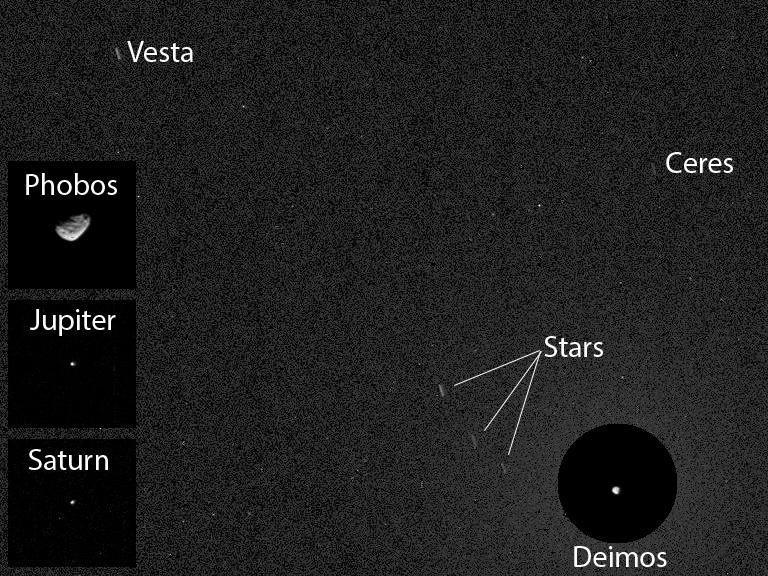
An asteroid's close approach distance does not by itself tell you whether it is observable from your garden. A very small object may pass relatively close and still remain faint, while a much larger main-belt body can be a better telescope target at a greater distance. Solar elongation, size, reflectivity and geometry all play a role in the brightness you receive.
For encounters, use our asteroids passing Earth today page. Keep that purpose separate from this observing list. Neither table should be interpreted as a personal hazard alert based on apparent brightness. Here the practical question is simply whether a supported object is geometrically placed for an observation at the chosen time, and whether its brightness estimate makes it a reasonable candidate for your equipment.
Build a repeatable observing habit
Start with one accessible object and a field you can revisit. Save your observing time in UTC, note the telescope and camera settings if relevant, and preserve the comparison stars in a sketch or image. A careful record lets you distinguish real motion from a mistaken star identification, a framing change or an incorrect date setting.
If the first attempt fails, check the simplest possibilities: wrong field, mirrored orientation, stale time, poor transparency or a threshold beyond your equipment's reach. Retry with a brighter candidate before abandoning the method. The successful result is not just seeing a point. It is recognizing a small body as part of a moving Solar System, using a documented position and your own observations to support the identification.