Check the current lunar phase, illuminated percentage, lunar age and distance. The values update automatically in your browser.
LIVE LUNAR DATA
Calculating the Moon…
Your browser is calculating the current lunar geometry.
LIVE
Moon phase
Blue dots: mapped craters · tap to explore
Illumination
—Calculating…
Phase——
Illuminated—visible disk
Lunar age—of 29.53 days
Distance—from Earth
MOON THROUGH THE WEEK
Seven days of Moon phases
Daily phase and illumination estimates at your local noon. Compare each day’s appearance; the live sky map below continues to show your current observing time.
The Moon images use NASA LRO near-side imagery with a schematic phase shadow. Phase timing is approximate; for exact quarter and Full Moon instants, use the USNO-based Full Moon Calendar.
TODAY
Moon details
Phase—
Illumination—
Lunar age—
Times are shown in your browser’s local timezone unless marked UTC.
MOON EXPLORER · LIVE SKY + GLOBAL ATLAS
Explore the Moon from Earth and up close
Follow the Moon across your local sky, then explore its complete surface and Apollo landing sites.
Astronomy calculations · NASA surface data
YOUR LOCAL HORIZON
Where is the Moon in your sky?
Position is calculated in your browser from your saved location and selected local time.
Using saved observer location
15-minute steps · calculated for the selected date and location
Moon position Today's visible pathHorizon = outer circle
The sky dome shows geometric position and the calculated horizon crossing. It does not include clouds, terrain, buildings or local light pollution.
GLOBAL LUNAR ATLAS
Explore the Moon's complete surface
Tap a blue crater marker for its measured diameter and story; gold markers identify Apollo landing sites. Click elsewhere for approximate coordinates.
FAR SIDENEAR SIDEFAR SIDE
Moon surface image is unavailable.Try reopening this map after the local surface asset finishes loading.Open NASA map resource ↗
Click map to read coordinates 100%
MAP COORDINATESSelect a crater or landing site
Longitude and latitude are shown in the lunar coordinate reference used by the map.
Select a name to locate it on the global NASA surface mosaic. Diameters and center coordinates come from the USGS/IAU Gazetteer; the blue markers identify approximate crater centers. Map markers show reference locations and do not predict illumination or visibility tonight.
The Moon’s phase is the changing fraction of its sunlit half that we see from Earth. “Moon phase today” is calculated from the geometric angle between the Sun, Moon and Earth at the current moment.
Illumination is a percentage, while lunar age is the approximate number of days since the previous new moon. The phase name describes where the Moon is within its roughly 29.53-day synodic cycle.
Moon Phase Today: Understanding Illumination, Lunar Age and the Daily Cycle
The Moon Phase Today tool gives a quick browser-based view of the Moon’s current phase, illuminated fraction, lunar age and approximate Earth–Moon distance. Those values describe different parts of the same Earth–Moon–Sun geometry, so reading them together is more useful than looking at the phase name alone.
What “Moon phase” actually means
The Moon does not make its own visible light. Sunlight always illuminates roughly half of the lunar globe, but the fraction of that sunlit half that faces Earth changes as the Moon travels around our planet. From Earth we describe that changing appearance with familiar names: New Moon, Waxing Crescent, First Quarter, Waxing Gibbous, Full Moon, Waning Gibbous, Last Quarter and Waning Crescent.
The complete new-Moon-to-new-Moon cycle is called a synodic month and averages about 29.5 days. The Moon also completes an orbit relative to the background stars in about 27.3 days. The two periods differ because Earth and the Moon are moving around the Sun at the same time.
Illumination and lunar age are different measurements
Illumination is the estimated percentage of the Moon’s visible disk that is sunlit from our viewpoint. Lunar age is the approximate time since the most recent New Moon within the current synodic cycle. A Moon can therefore be described by a phase name, an illumination percentage and an age at the same time.
Phase labels are useful categories rather than sharp boundaries in nature. The Moon changes continuously, so a value just before or after First Quarter may still look very close to a half Moon. Likewise, the Moon can look practically full on evenings surrounding the exact Full Moon instant.
Waxing versus waning
When the illuminated fraction is generally increasing from New Moon toward Full Moon, the Moon is waxing. After Full Moon, the illuminated fraction generally decreases and the Moon is waning. This distinction is often more informative for observing than the illumination percentage alone because it tells you which direction the phase cycle is moving.
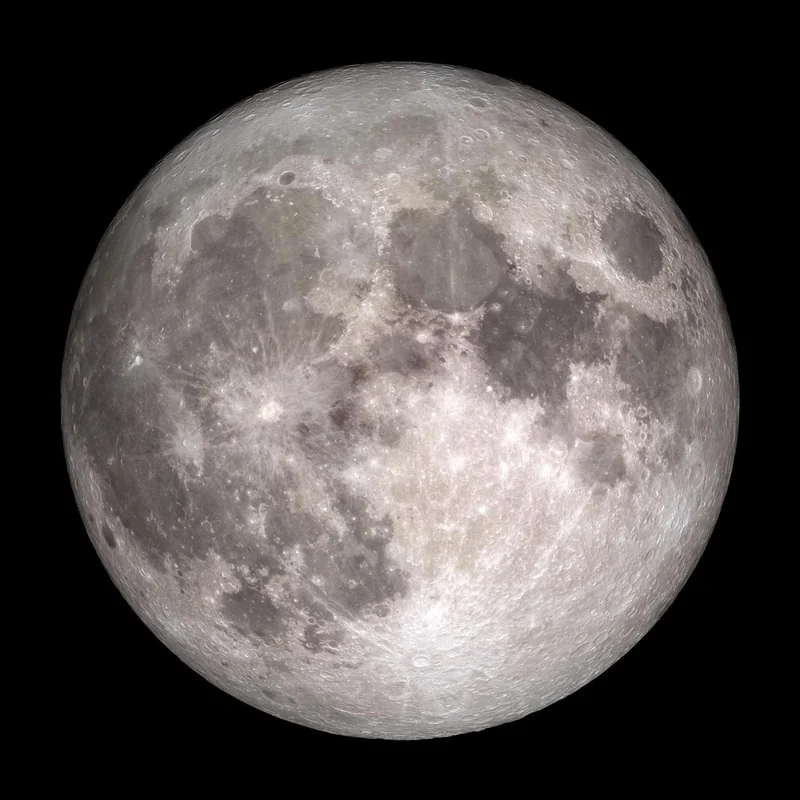
Full Moon reference view from NASA. This photograph is educational reference imagery, not the current live phase. NASA source.
Why the Moon’s distance changes
The Moon’s orbit is not a perfect circle. Its distance from Earth therefore varies over the month. The value shown by this site is an astronomical calculation rather than a direct measurement from a spacecraft. Distance affects the Moon’s apparent angular size slightly, but ordinary day-to-day visual changes are dominated by phase and observing conditions.
How to use this page for planning
Use the phase and illumination as a first step, then combine them with local timing. The Moonrise and Moonset Time tool tells you when the Moon is expected to cross your local horizon, while the Moon Live Tracker provides current altitude and azimuth after you set a location. For evening planning, Moon Phase Tonight gives a 9:00 p.m. local-time reference. If you are specifically waiting for Full Moon, use Next Full Moon.
Calculation limits
The Moon tools on SpaceTracker.live use compact browser-side astronomical formulae intended for educational and general observing use. They are not a substitute for high-precision professional ephemerides. Atmospheric refraction, local terrain, buildings and the observer’s exact elevation can also affect what you actually see near the horizon.
Loading the lunar phase sequence…
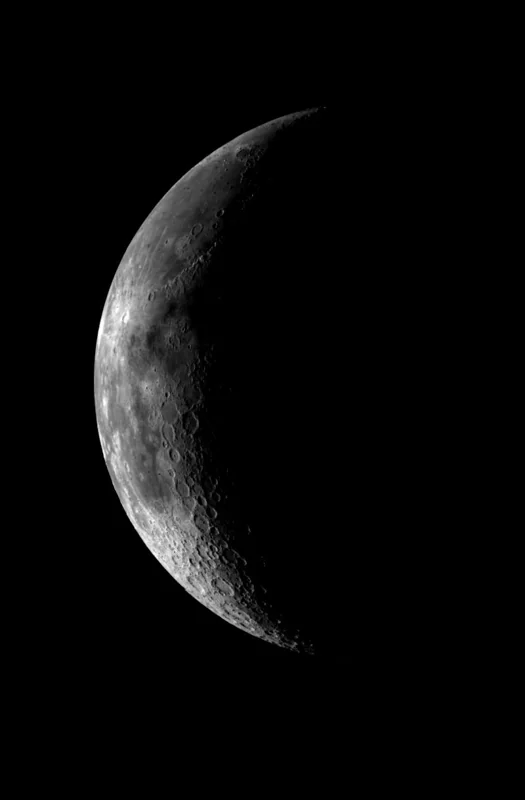
NASA Lunar Reconnaissance Orbiter near-side surface texture with calculated schematic phase shadows. These are real lunar surface details, arranged as a teaching sequence rather than dated spacecraft photographs. NASA explains the phase geometry.
How to read today's changing terminator
The line between lunar day and lunar night is called the terminator. Near First or Last Quarter, sunlight reaches the ground at a shallow angle along that line, helping craters cast visible shadows. A telescope can show more relief there than in evenly lit areas near Full Moon. Use the existing Moon sky and surface explorer to locate the Moon in your horizon and inspect mapped landmarks, then compare the live Moonrise and Moonset times before going outdoors.
The pictured near side is a NASA Lunar Reconnaissance Orbiter reference texture. Our shadow visual follows the calculated phase category, but the precise shape and orientation of the real terminator can differ because of lunar libration, observing latitude and the Sun's changing direction. For a scientifically grounded tour of surface types and named features, consult the NASA Moon overview; the surface atlas is for exploration, not a claim that every labelled crater is visible tonight.
Planning with phase and location together
Moon phase is essentially shared across the globe at a given instant, whereas rising, setting, altitude and sky direction depend on location. For tonight's lighting, open Moon Phase Tonight; for a week-by-week pattern, see the Moon Phase Calendar. A bright Moon may wash out faint stars even if its phase is attractive for lunar photography. The stargazing planner helps put lunar brightness beside darkness and observing conditions.
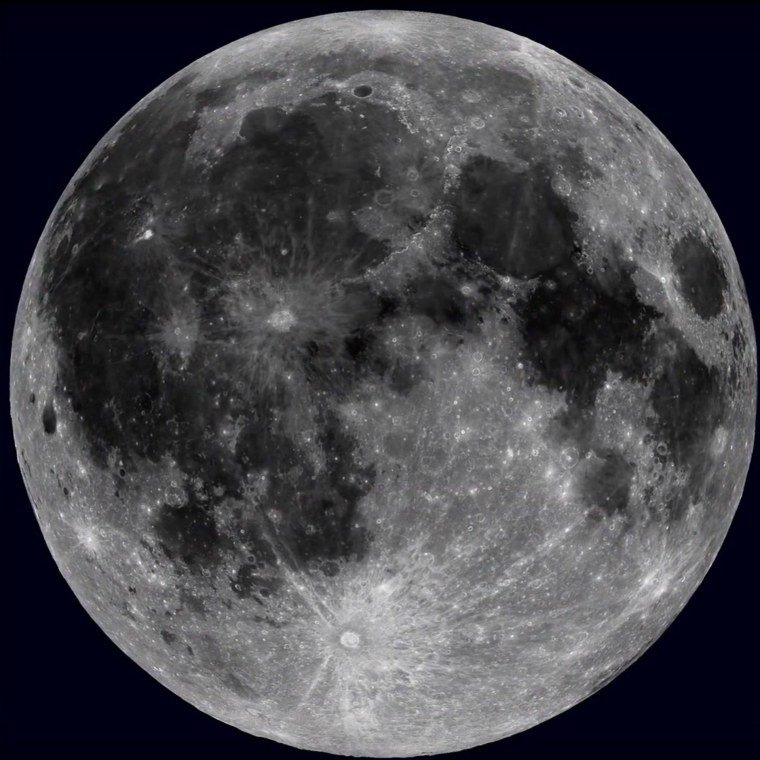
NASA/JPL Galileo view of the western near side, showing lunar surface features. This is a reference photograph, not a live observation. NASA source.NASA Lunar Reconnaissance Orbiter near-side reference mosaic (NASA/Goddard/Arizona State University). This is a surface reference, not tonight’s phase or a live camera image. Explore crater centers with the interactive lunar atlas.
Find real craters on the map
Open the surface map and select the blue dot for Copernicus to see its 96.07 km diameter and center coordinates. The broad ray system around Tycho becomes conspicuous under bright illumination, while shading across crater rims can give a better sense of relief nearer the terminator. The markers remain in their geographic positions through every phase; the atlas does not assert that all fourteen craters are visible today. Follow NASA’s viewing tips for observing methods.
Frequently asked questions
Why does the phase change every day?
Because the viewing angle between the Sun, Moon and Earth changes continuously as the Moon orbits Earth.
Does 100% illumination last all night?
No. The exact Full Moon is an instant. The Moon can look essentially full for a period around that instant.
Is lunar age the same as the Moon’s orbital period?
No. Lunar age tracks position within the roughly 29.5-day phase cycle, while the Moon completes an orbit relative to the stars in roughly 27.3 days.
Does my location change the Moon phase?
The global phase is essentially the same for everyone at one instant, although local time, horizon position, moonrise and moonset depend strongly on location.
Educational-use note: SpaceTracker.live is an independent educational website. Moon positions, phases, distances and rise/set times on these tools are calculated values and can differ slightly from high-precision professional ephemerides.