
Supernova Remnants: find the aftermath, not a new explosion
A supernova remnant is the evolving material and environment left after a stellar explosion. It can contain an expanding shell, shocked gas, dust and a compact object, with different parts becoming prominent at different wavelengths. This directory provides a small set of well documented examples and their local sky directions. The photographs show observations by major telescopes; the selected map symbol marks a reference centre and does not reproduce the full nebula on the star chart. Start with the named guides for the Crab Nebula, Cassiopeia A and SN 1987A, then compare what each instrument is actually observing.
A remnant develops through interaction
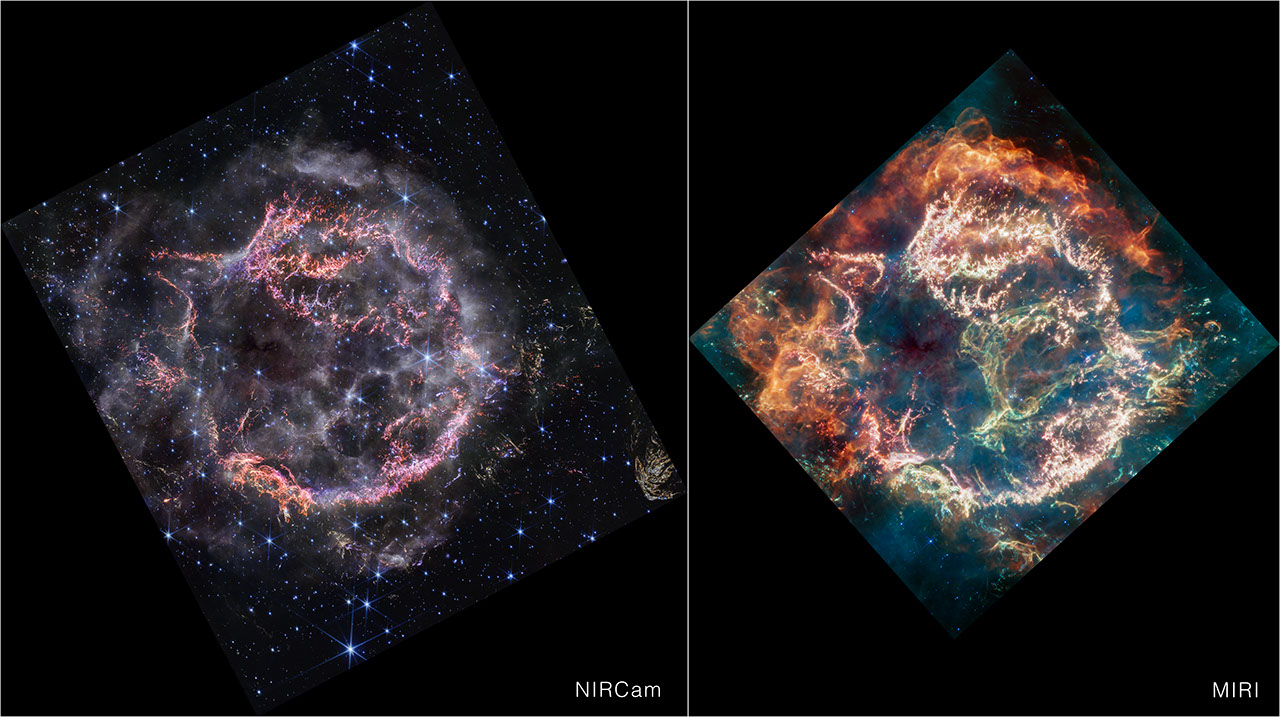
The debris does not expand into an empty, identical environment in every direction. It encounters material lost by the progenitor star and matter already present between stars. Shocks can heat gas, magnetic fields influence energetic particles, and dust can absorb or emit radiation. An image therefore combines the history of the explosion with the structure of the surroundings. A bright filament is not simply a painted edge of a perfect sphere. Look for the instrument and wavelength in each caption before deciding what a feature represents. The Cassiopeia A source image is a useful example of a detailed infrared observation, while an optical view can emphasize a different subset of the same remnant's material.
Why the catalogue uses a centre
Extended objects do not have one sky coordinate for every piece of visible structure. This tool uses a reference centre so you can identify their general direction consistently. At the chart's scale, a compact symbol is more usable than a physically scaled outline that could disappear on a phone. The marker should not be used to aim at an individual ejecta knot or infer the angular diameter of an image. Check a detailed chart and the source coordinates when planning a narrow field. The displayed altitude and azimuth are computed for that centre at the chosen time and location. The object may extend slightly above or below that direction, and foreground hills may obstruct its entire field even when the calculated centre is technically above the horizon.
Three examples reveal different kinds of aftermath
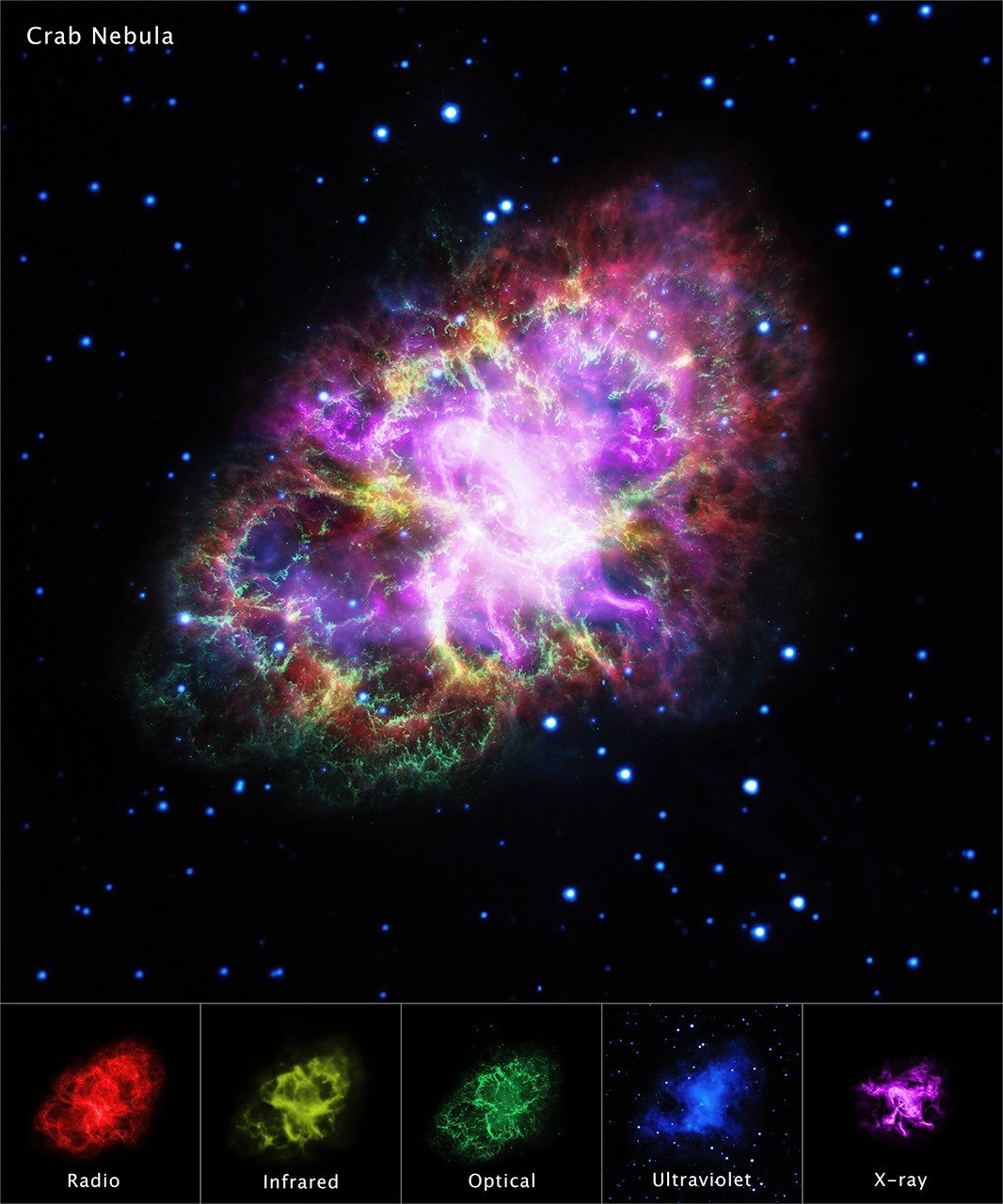
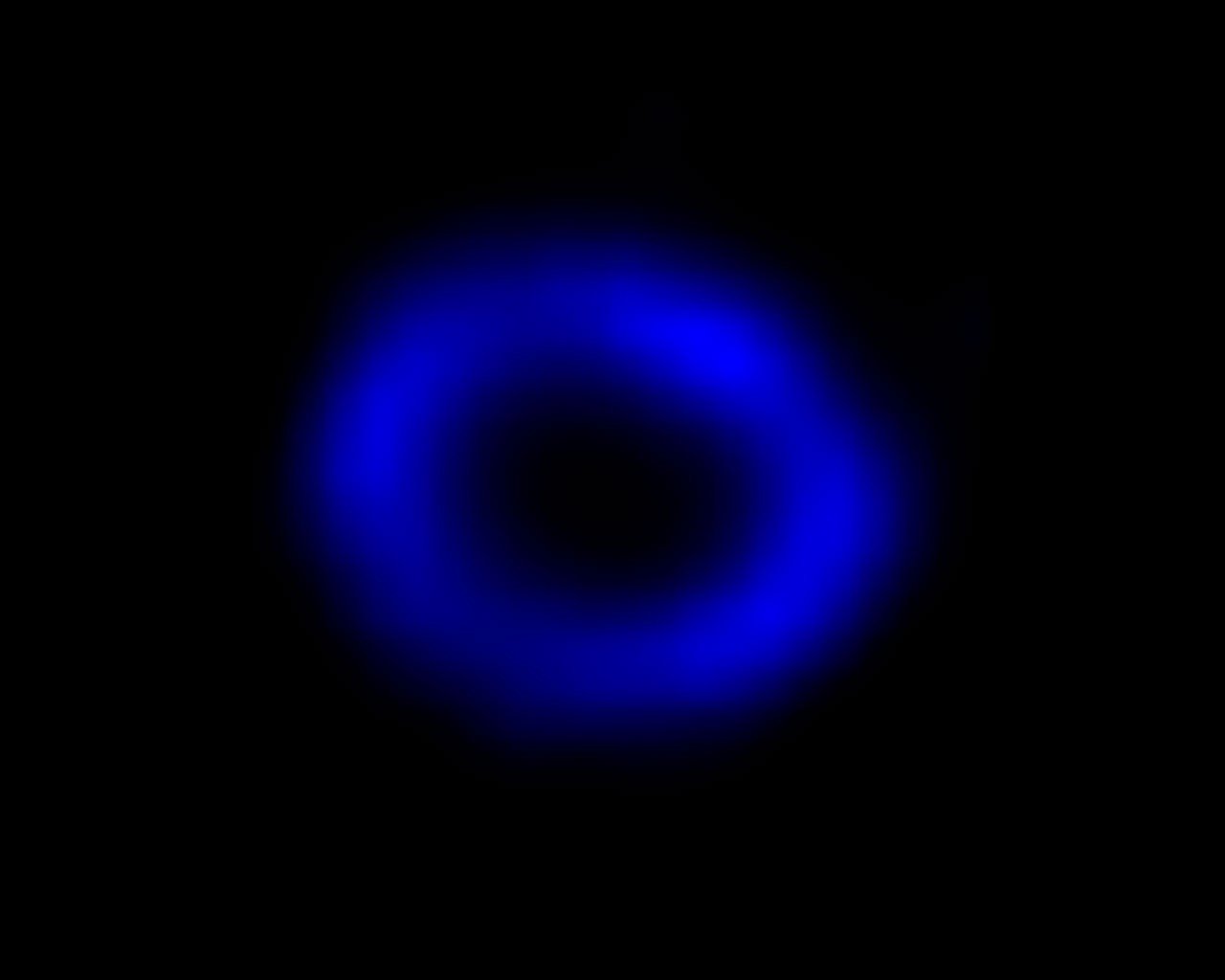
The Crab, Cassiopeia A and SN 1987A are not interchangeable teaching pictures. The Crab includes a pulsar-powered nebula within the material associated with a historically observed explosion. Cassiopeia A offers a strongly structured young debris system. SN 1987A provides observations of rings and ejecta associated with an explosion whose light was recorded in 1987. The Webb image of SN 1987A shows why a compact remnant can reward high-resolution study while remaining a very difficult target for ordinary visual observing. Compare the captions and guide pages instead of judging scientific importance from how large or bright a processed image appears on the screen.
Infrared, optical and X-ray pictures answer different questions
An optical camera can record visible filaments; infrared observations can reveal warm dust or emission lines outside visible-light bands; X-ray observations trace energetic conditions inaccessible to the eye. Combining these data can be scientifically valuable, but the display colours must be read as a key rather than a literal eyepiece prediction. The multiwavelength Crab image documents how observations from different telescopes can be assembled into one view. A coloured region may correspond to a selected wavelength band, not the natural colour you would see through a telescope. Keep that difference in mind when comparing two published images whose colour palettes look very different despite showing the same region.
Surface brightness matters for extended observing
A nebula spreads its light across an area, so its integrated magnitude cannot be used exactly like the magnitude of a star. The background sky, contrast, angular size and instrument field all affect detection. Under a bright urban sky, a large diffuse feature can be harder than a compact source with a similar total brightness. Filters may help particular emission features, but they do not make every remnant an easy target. Cassiopeia A is a clear example of an object that is important in radio, infrared and X-ray research yet unsuitable as a casual visual expectation. Read the target-specific guide and set a realistic goal: locating the field, detecting a diffuse feature or obtaining a calibrated image are three different accomplishments.
Use one shared location for the whole comparison
This tool reads the site's existing observer location and calculates local directions for the selected time. It does not require a separate remnant location form. You can compare the same evening with Night Sky Tonight and the wider deep-sky catalogue. If the location is unset, the object list and source links remain available, while altitude and direction wait for the header setting. A below-horizon icon is a bearing reference rather than an observing opportunity. Try a different date only when planning a genuinely different session, and keep UTC input distinct from local display time. Consistent location and time settings prevent misleading comparisons between northern and southern targets.
Separate remnant evolution from a light echo
Changes around an old explosion can have different causes. Gas can move, shock interactions can brighten material, and an earlier flash can illuminate more distant dust as a light echo. A shifting bright feature in a sequence does not always mean that the same parcel of matter travelled between those points. Image dates, scale and geometry are essential to the interpretation. The source materials linked from the Cassiopeia A guide offer useful examples of why apparent motion and physical motion need careful separation. This map does not animate remnant expansion or claim to predict it. Its time control changes the observer's sky view, while the reference coordinates and archival scientific photographs remain identified as catalogue and image data.
Make a comparison that can be repeated
Choose a single remnant, keep the field orientation and image scale consistent, and record the instrument, wavelength and exposure date for every reference you use. If you compare your own images, preserve the original frames and avoid interpreting aggressive sharpening as new structure. A proper difference needs similar processing and an understanding of the noise. For a newly reported unresolved explosion, use the supernova directory instead of treating the historical-remnant list as a latest-discoveries feed. The value of these reference targets is their documented context: you can return to the same sky region, examine different observational windows and build a more careful understanding of what a stellar explosion leaves behind.