
Sunrise, Sunset and Twilight: A Practical Planning Guide
Use sunrise, sunset, twilight and Sun direction to plan photographs and sky sessions. Understand golden hour, day length, horizon effects and local time.
A sunset time is useful, but it does not describe the entire evening. The Sun's direction, the duration of twilight, your local horizon and the activity you are planning all matter. A photograph, an ISS sighting and a faint-star session may need different parts of the same transition. Begin with Sunrise and Sunset, then use the related Sun tools to answer the more specific question.
Keep the selected location consistent across the site. A result for another city can look plausible while shifting the useful window enough to miss a low Sun or a brief pass. The U.S. Naval Observatory's Sun and Moon data provide a helpful official reference for event definitions and local planning context.
Sunrise is a calculated horizon event Published sunrise and sunset times use conventions involving the solar disk and atmospheric refraction. They are not the moment the Sun clears every local obstacle. A building, hill or tree line can delay your first direct view in the morning or hide the Sun before the calculated evening event.
For a landscape plan, inspect the actual horizon. Note the direction where the Sun is expected and whether that line is open. A rooftop location and a valley floor can give different practical experiences even with similar coordinates. The tool supplies astronomical geometry; your surroundings supply the last part of the view. This is why scouting the site is worthwhile instead of expecting an exact minute to solve the whole composition.
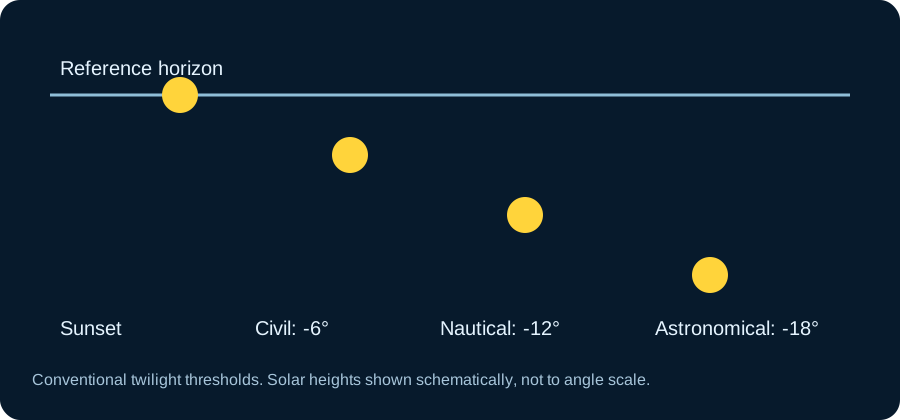
Twilight describes a continuing transition After sunset, sunlight still reaches the upper atmosphere and brightens the sky. The conventional civil, nautical and astronomical twilight stages are associated with different solar depression angles below the horizon. Use Twilight Times to see those stages for the selected place rather than treating sunset as immediate darkness.
The labels help match activities to the available light. Bright objects can be enjoyable before the sky is fully dark; faint detail usually benefits from a darker background. Weather and the Moon still affect the result. A twilight boundary is a geometrical reference, not a promise of a particular camera exposure or star count. Read it as one part of the session rather than an all-purpose quality rating.
Why some dates have no ordinary event At sufficiently high latitudes, the Sun can remain above or below the horizon for extended periods around parts of the year. Some twilight thresholds may also be absent even when sunrise and sunset occur. A correct tool can therefore show that an event does not happen on a particular date.
Do not turn that condition into a made-up time. Check the selected date, latitude and the meaning of the result. If your travel plans involve a northern or southern summer, the lack of full darkness can matter for stargazing. The seasonal pattern is better explored in the Sunrise and Sunset Calendar than inferred from a single day's result.
Golden hour is a planning convention Golden-hour tools help identify periods associated with a low Sun and attractive illumination. The precise definition can vary, so read the calculator's stated threshold. The result does not guarantee warm colour, clear air or a beautiful photograph. Cloud and the direction of the light can make two sessions inside the same nominal window look very different.
Use Golden Hour Calculator alongside Sun Position. Decide whether you want the Sun in the frame, behind the subject or off to one side. A useful time without a useful direction can leave the intended composition impossible. Start with the subject and viewpoint, then choose the window that gives the right lighting relationship.
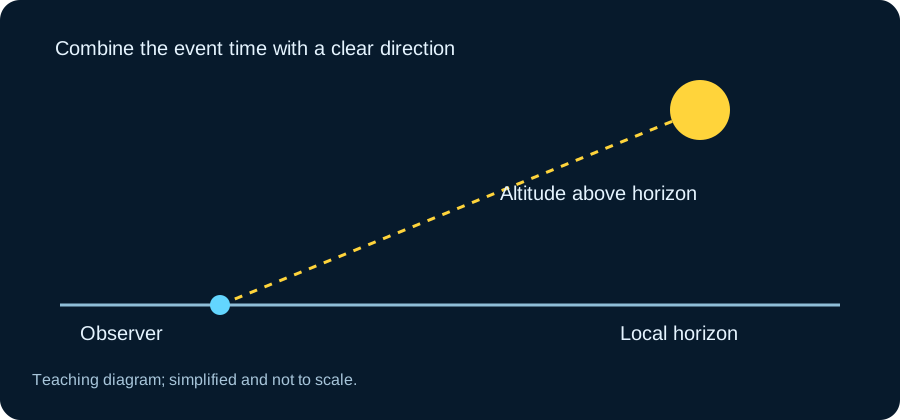
Azimuth turns a time into a direction Sun azimuth describes where to face around the horizon. Altitude describes the angular height above it. Together they are more useful for a photograph than a countdown alone. A Sun that is low in the sky can illuminate a subject differently depending on whether it is in front of or behind your camera position.
Mark a few landmarks when you scout the site. If the planned azimuth lies behind a building, consider another viewpoint or another date. The direction changes through the year, so the place where you watched a sunset previously may not fit a later composition. For the underlying angle vocabulary, read azimuth and elevation.
The useful planning reference is the event definition and time convention, not a universal guarantee of brightness. Read the U.S. Naval Observatory’s Sun and Moon service when you want to check the underlying context rather than infer it from a thumbnail or summary number. Compare it with the twilight tool for the selected question.
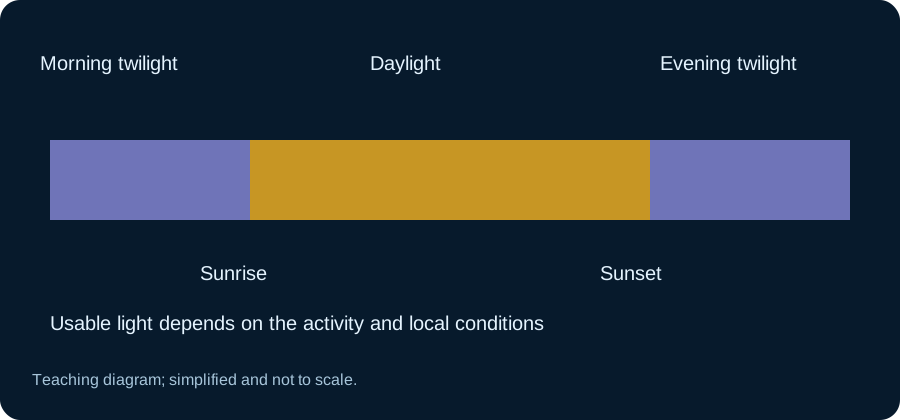
Day length and clock time are different ideas Day Length describes the duration between the defined sunrise and sunset events when both exist. It is not the duration of all usable light, because twilight can extend the morning and evening. Nor does a change in a local clock convention change the physical length of daylight.
When comparing dates, keep the same location and check the time-zone label. Daylight-saving rules can move displayed clock times without representing an abrupt astronomical change. A monthly table can show the seasonal trend more clearly than comparing a few isolated screenshots. Read the trend together with the calendar's definitions rather than expecting daylight to increase or decrease at the same rate every day.
Combine Sun and Moon information for an evening session For faint stars, check when useful darkness begins and whether the Moon is above the horizon. A clear astronomical-twilight boundary does not remove moonlight. Use Moonrise and Moonset and the phase page to understand the background you will actually observe.
For an ISS pass, you want a dark-enough ground sky while the station remains sunlit. The station's lighting is a separate calculation, so sunset alone cannot guarantee a sighting. Why the ISS appears around dawn and dusk explains that relationship. Each tool contributes one part: Sun timing, Moon context and the target's own local geometry.
Test a plan at one familiar location Choose a place you can revisit and record the predicted sunset direction, calculated event time and the moment the Sun disappears behind your actual horizon. Do not stare directly at the Sun to make the record; note the scene and lighting sensibly. You may find that a hill or roof changes the practical experience while the astronomical time remains correctly defined.
Repeat on another suitable date and compare the direction as well as the clock. This makes the seasonal change visible without requiring a complicated project. Keep weather and local obstruction in the notes, because both affect what you experience. The exercise teaches you why a precise calculator result and a real landscape can differ without either being meaningless. It also gives future photographs a practical advantage: you know the site instead of discovering its blocked horizon at the last moment.
Use the prediction with sensible observing practice Never turn a low-Sun plan into unsafe direct viewing through binoculars or a telescope. Proper solar equipment and guidance are needed for optical observation. NASA's solar safety guidance is the appropriate reference when solar viewing is part of the activity. A timing calculator does not supply eye protection.
For a normal landscape or evening plan, keep the checklist short: selected location, time zone, direction, horizon and weather. Recheck shortly before leaving, then record what the real conditions allowed. The Sun tools become more useful when they help you make a practical choice instead of presenting one event time as a guarantee of the entire scene.
Preserve the time-zone label in shared plans
If someone else will join the session, send the location, clock time and time zone together. Include the direction or landmark you intend to use. A sunset time copied without a city can be misleading, especially when people travel or compare results from different regions. The practical value comes from making the whole plan reproducible, not from displaying a single minute with no observing context.
Continue with the twilight tool for the selected question, and keep the U.S. Naval Observatory’s Sun and Moon service beside the result when you need its definitions or broader context.