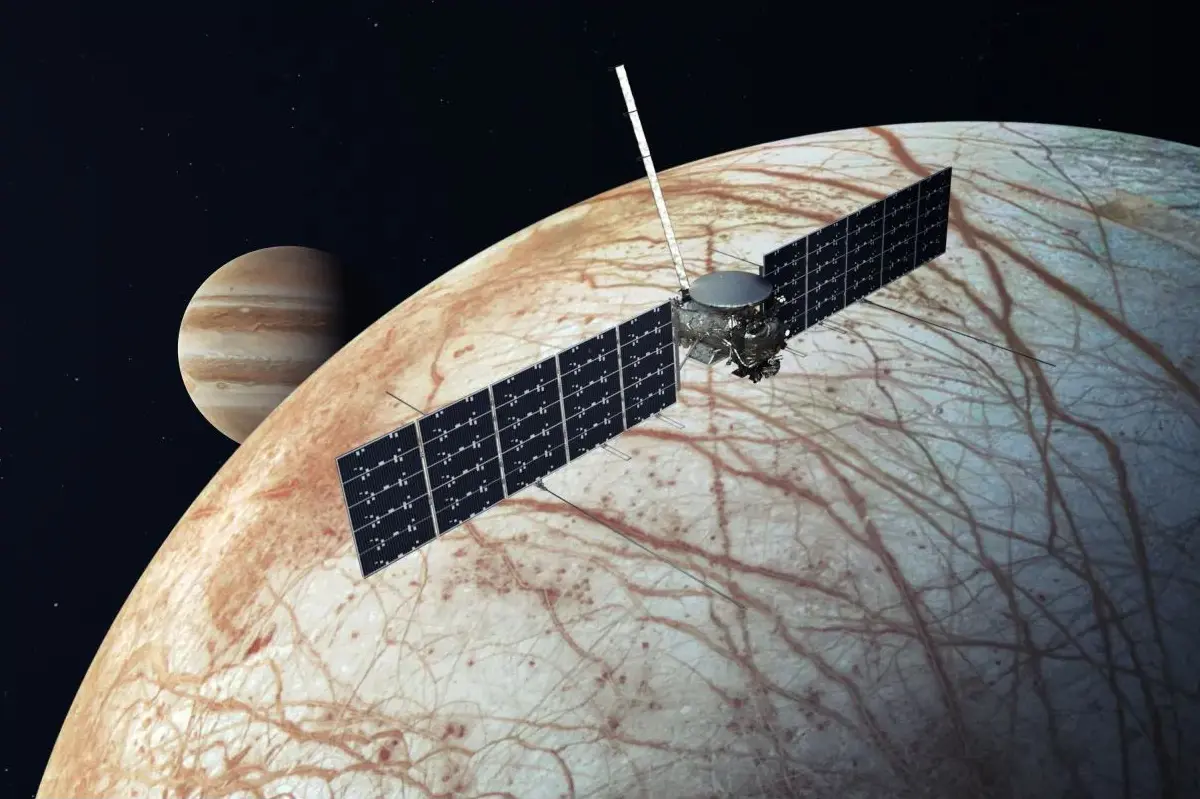
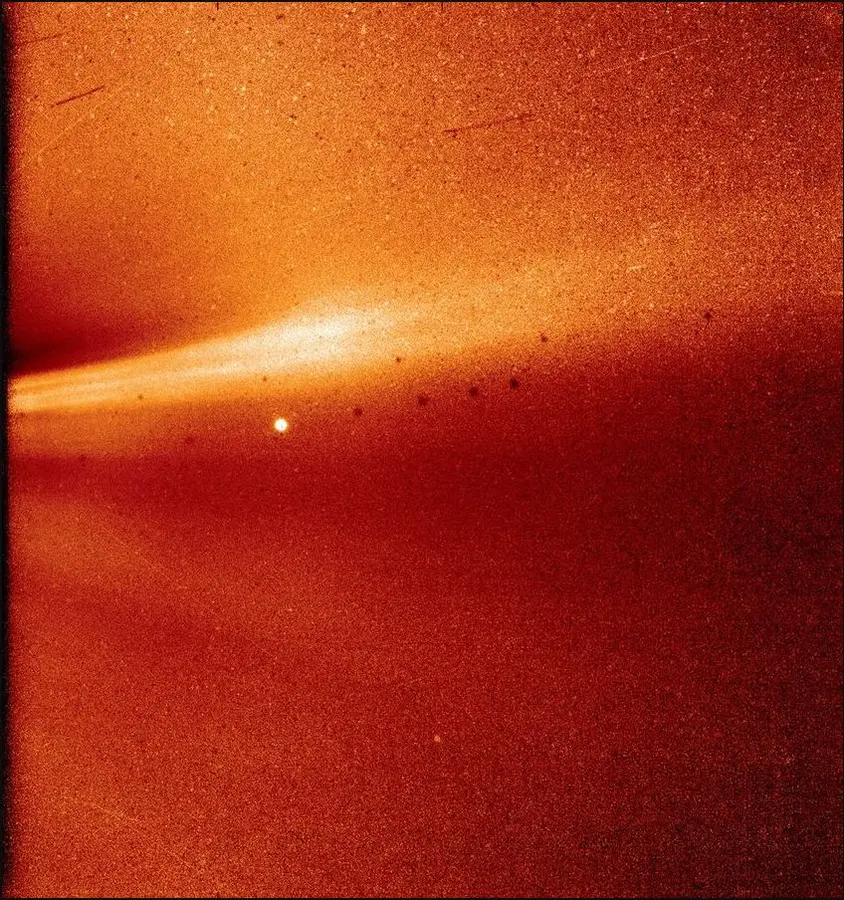
Lucy, Psyche and Hera: Three Different Asteroid Missions
A Trojan tour, a metal-rich world and a planetary-defence test show how varied asteroid exploration has become.
Lucy, Psyche and Hera belong to the same broad era of asteroid exploration, but they are not following the same kind of mission plan. Compare their targets, trajectories and scientific objectives separately, then use each mission tracker to place the spacecraft in its current journey.
Lucy is a travelling survey
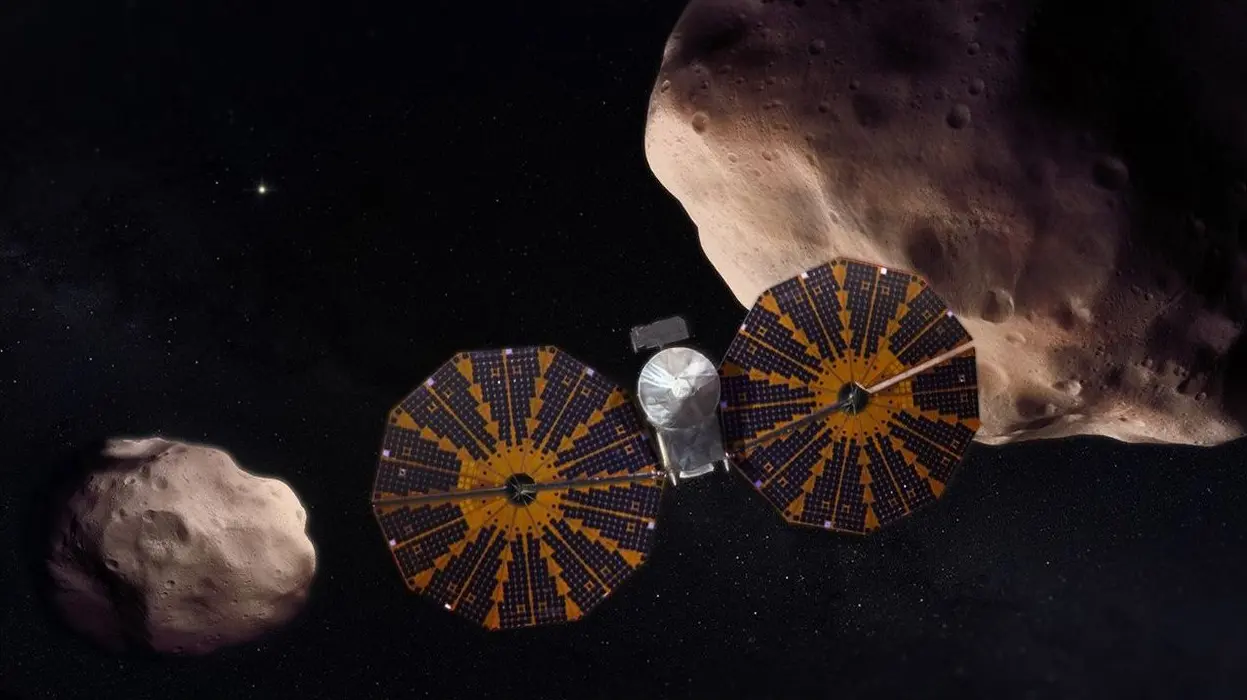
Lucy flies past multiple asteroids, including Jupiter Trojans that share the giant planet’s orbit around the Sun. Comparing many targets can reveal diversity among remnants from the early solar system. A flyby mission must gather its closest data during brief, carefully choreographed encounters.
Psyche settles in
NASA’s Psyche mission targets the metal-rich asteroid of the same name in the main belt. It is designed to orbit and map the body over an extended science phase. The central question concerns composition and what this unusual object can teach us about planetary building blocks.
Hera examines an impact experiment
ESA’s Hera heads to the Didymos–Dimorphos binary system after NASA’s DART changed Dimorphos’s orbit through impact. Hera will measure the aftermath in detail, helping turn one deflection demonstration into better-understood planetary-defence knowledge. Its goal is not to push the asteroid again.
Three tracker pages, three stories
Cruise-phase tracker positions can look like dots moving through the same solar system, yet the mission stories differ: sample a population, orbit a metal-rich target, and investigate a deflection test. Follow the numeric ephemerides for location, then use the official mission sources for instrument operations and discoveries.
The word asteroid hides a wide variety of worlds
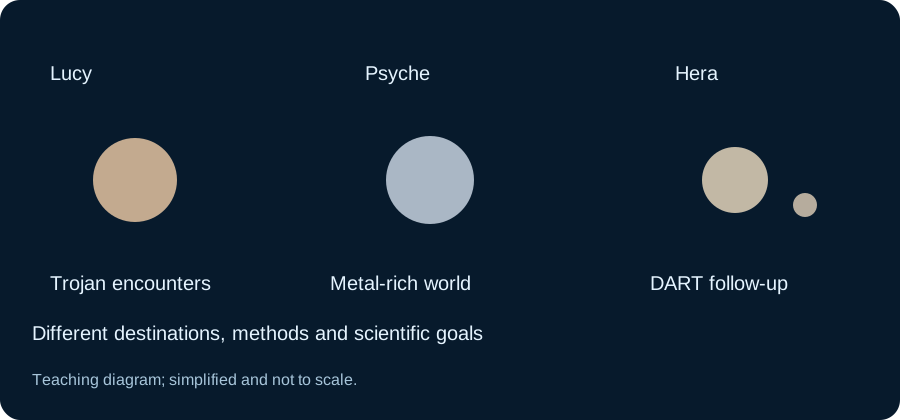
Small bodies differ in composition, history, size and orbital setting. A mission to one asteroid cannot stand in for the entire population. Lucy, Psyche and Hera were selected for different scientific questions, which is why their destinations and observing strategies vary. Treating all three as generic asteroid trackers loses the most interesting part of the comparison.
Before comparing distances, write down what each mission is trying to learn. Lucy investigates a set of Trojan asteroids through encounters. Psyche studies a world thought to be rich in metal. Hera examines the outcome of a planetary-defence experiment in a binary asteroid system. The mission names can appear together in a directory, but the science behind each deserves its own explanation. A map is the beginning of that story, not the conclusion.
Trojans share an orbital neighbourhood, not one rock
Jupiter's Trojan populations occupy regions associated with the giant planet's orbit around the Sun. They are separate objects with varied characteristics, rather than one continuous cloud that a spacecraft simply flies through. Lucy's itinerary is designed around selected encounters, so its path should be read as a sequence of opportunities rather than a direct journey to one final point.
When using a compressed solar-system view, remember that an object's visible proximity to Jupiter on screen does not measure its true separation. The reference plane and camera angle can hide depth as well. Read the official encounter descriptions when you want to understand which body is being visited. Keep the tracker for trajectory context and the mission source for target identity, planned observations and confirmed results.
A metal-rich target is a scientific hypothesis to test
Psyche's mission is interesting because observations can constrain the nature and history of an unusual asteroid. Avoid turning the phrase 'metal-rich' into a claim that the world is a solid, pure-metal sphere. Remote observations motivate a mission precisely because important questions remain unresolved. The instruments are designed to improve that understanding rather than simply confirm an attractive headline.
Similarly, a picture of the spacecraft near the asteroid is often an artist's concept. It helps explain the intended environment, but it is not a close-up photograph proving the surface composition. A good comparison keeps illustrations, hypotheses and measurements distinct. As official results become available, evaluate them in their stated context instead of reading scientific conclusions from a public position marker.
Hera connects exploration with a measured experiment
The Didymos system provides a setting for studying the consequences of the DART impact on Dimorphos. Hera's investigation is designed to improve understanding of the outcome and the properties of the system. That is different from forecasting that a particular asteroid will strike Earth. The mission is part of learning how a deflection technique behaves under measured conditions.
Follow confirmed mission updates for arrival and instrument activity; do not infer them from a tracker scene. For the public reader, the useful comparison is the diversity of approaches: a tour of several bodies, detailed investigation of an unusual world, and follow-up to a controlled impact experiment. These three questions make asteroid exploration more understandable than a ranking based on spacecraft speed, distance or how dramatic an animation appears.
Build a small mission notebook
For each mission, list the primary body or bodies, the observing method and the next milestone described by its official agency. Record whether that milestone is planned or completed. Lucy's flyby science depends on particular encounter windows; Psyche's destination requires a different kind of sustained investigation; Hera's measurements relate to a specific planetary-defence experiment. Different instrument choices and encounter durations are the point of the comparison.
Once those goals are clear, use the deep-space tracker directory to follow their separate journeys. For fresh encounter dates and spacecraft health, consult the responsible mission teams, such as NASA Lucy, NASA Psyche and ESA Hera. Do not treat a date in a static article as a substitute for a current mission update.