
James Webb Telescope: Peering into the Universe’s Deepest Secrets
Explore the incredible James Webb Telescope – NASA’s game-changing infrared observatory revealing ancient galaxies, weird exoplanets, and cosmic surprises. Latest 2026 discoveries and stunning images on SpaceTracker.live.
Have you ever stared at the night sky and wondered what secrets are hidden beyond what our eyes can see? That’s exactly what the James Webb Telescope was built to uncover. Launched on Christmas Day 2021, this incredible machine has been blowing astronomers’ minds ever since with views of the universe that were once impossible to imagine.
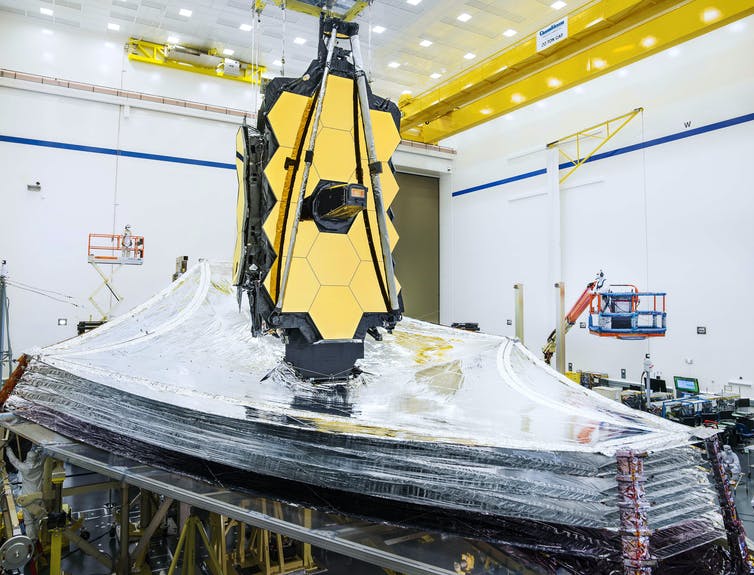
Unlike the famous Hubble, which mostly sees in visible light, the James Webb Telescope is an infrared powerhouse. It can look through dusty clouds and peer back almost to the beginning of time itself. Parked at a special spot called L2 (about 1.5 million km from Earth), it stays super cold thanks to its huge sunshield – think of it as the world’s most expensive beach umbrella!
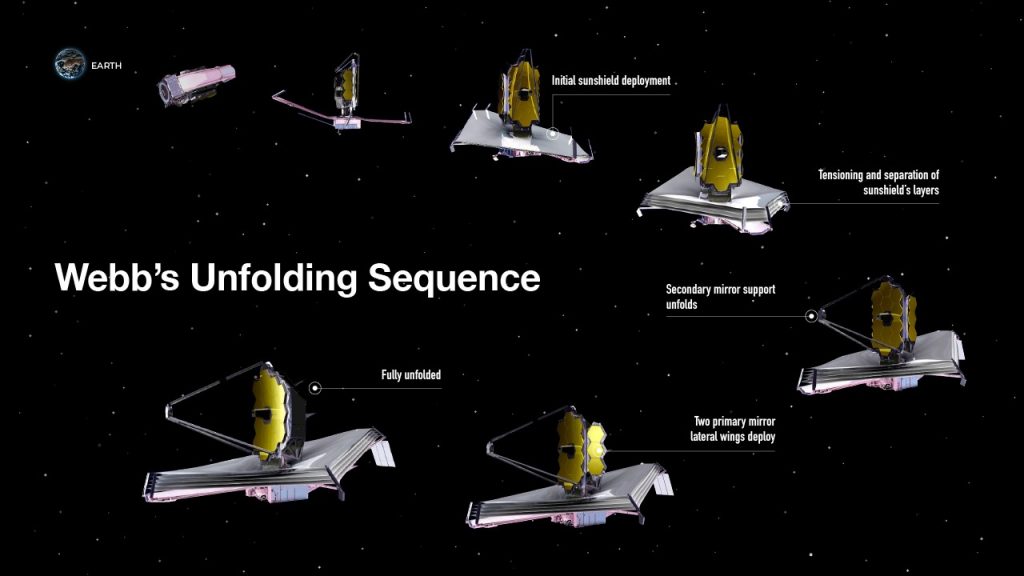
Here’s a stunning shot of the telescope fully deployed in space:
Why the James Webb Telescope Feels Like Magic
The telescope’s mirror is massive – 6.5 meters across, made of 18 gold-coated segments that unfolded perfectly after launch (a nail-biting moment for everyone involved!). Its instruments let it detect the faint heat glow from distant objects, making it perfect for spotting the first stars and galaxies, studying exoplanet atmospheres, and watching stars being born.
For a quick comparison with Hubble, check out our earlier post: Hubble vs. James Webb Telescope.
Want to see more jaw-dropping space visuals? Head to our Space Images Gallery.
Iconic Views That Still Give Us Chills
One of the first big moments came in 2022 when the James Webb Telescope released its “first deep field” image – a tiny patch of sky packed with thousands of galaxies, some from over 13 billion years ago. It was like opening a time machine!
Then there’s the revamped Pillars of Creation in the Eagle Nebula. The infrared view shows newborn stars hidden inside dusty pillars – way more detail than we ever had before.
Take a look at this breathtaking version:
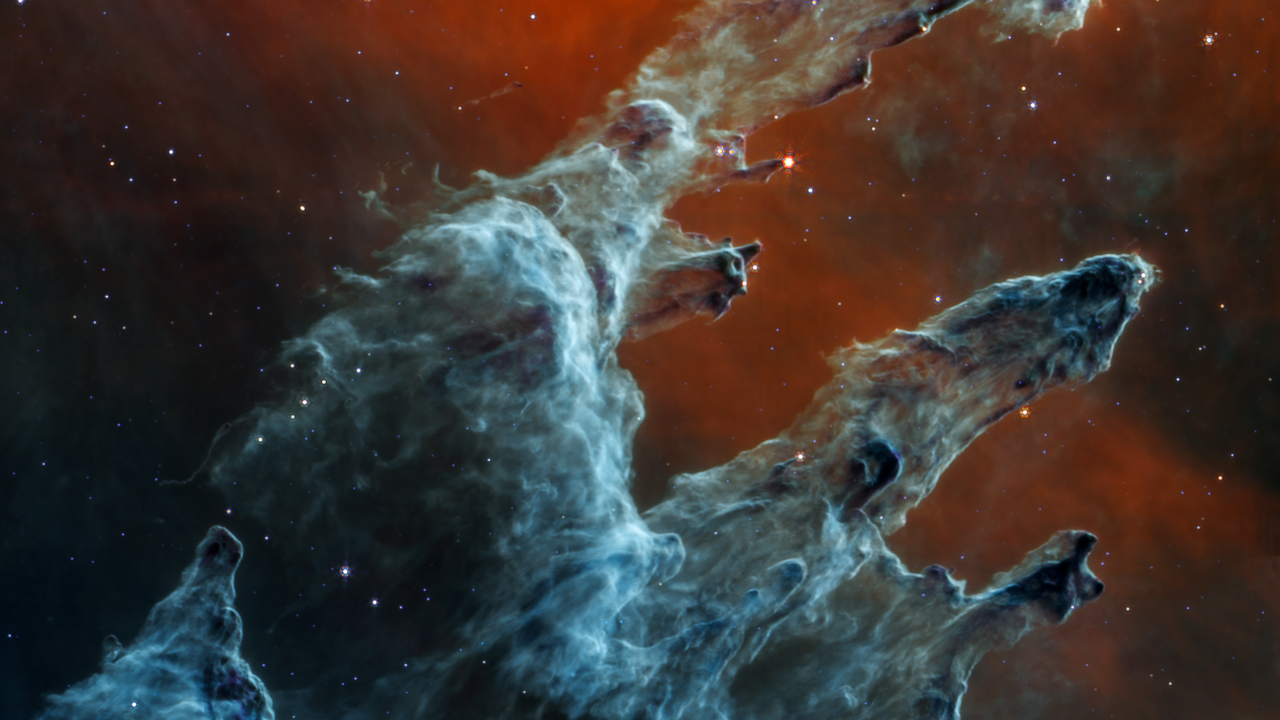
Pillars of Creation (MIRI Image) – NASA Science
And who could forget the deep field images? Here’s one of the most famous:
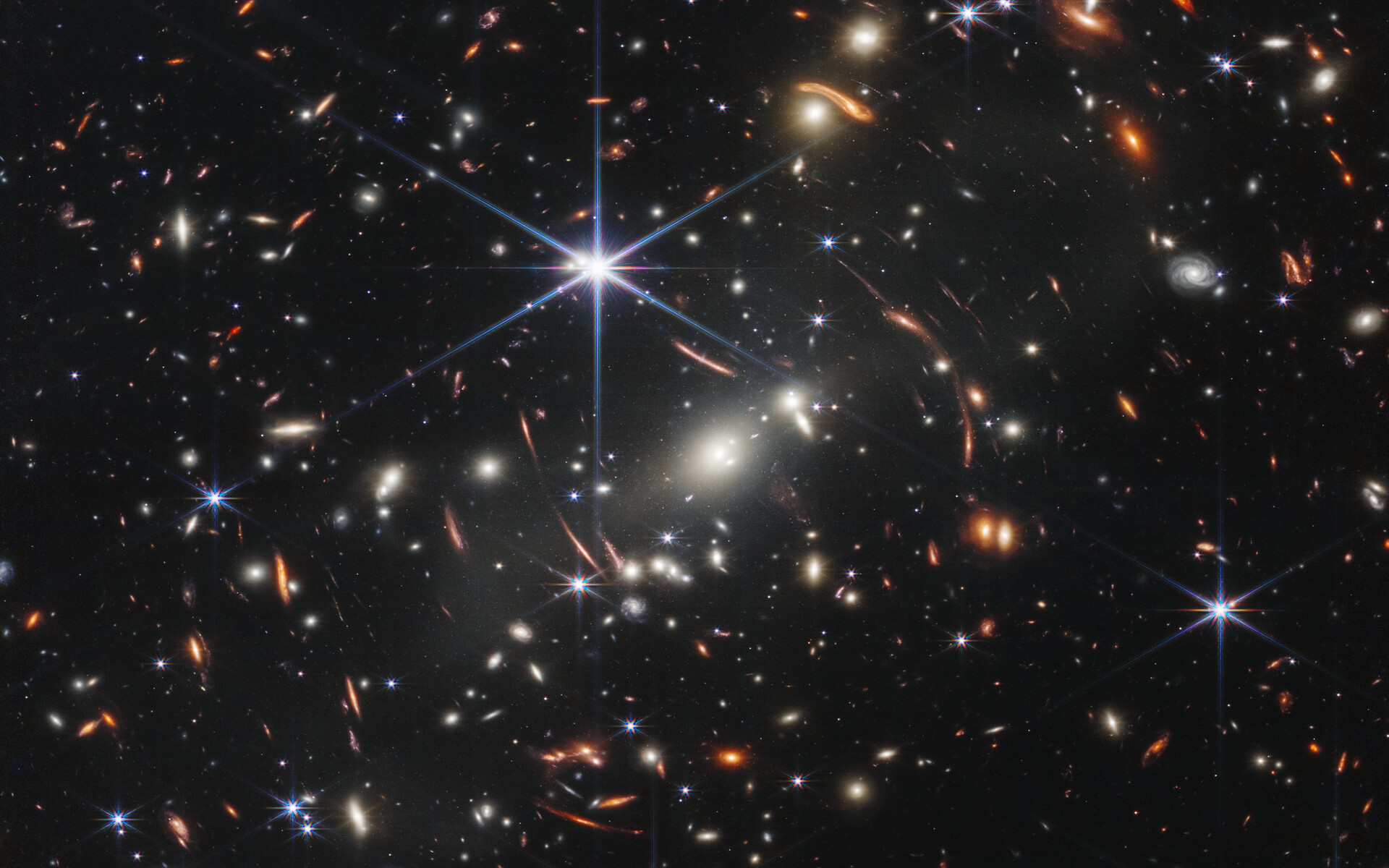
Webb Delivers Deepest Infrared Image of Universe Yet | ESA/Webb
Closer to home, JWST has given us gorgeous shots of Jupiter’s glowing auroras dancing in infrared light:
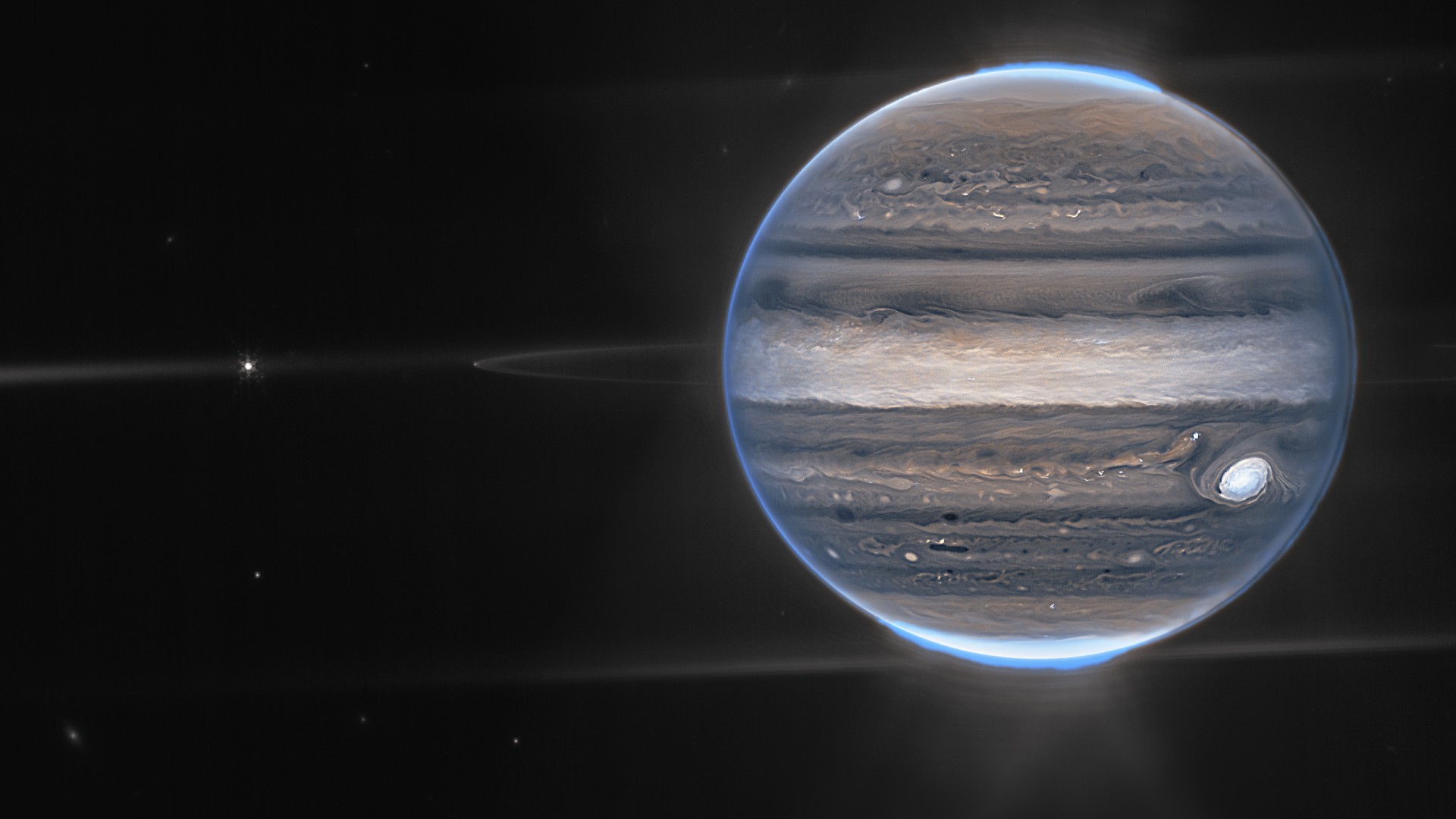
Jupiter’s auroras look radiant in James Webb Space Telescope …
What’s New with the James Webb Telescope in 2026?
As of early 2026, the discoveries just keep coming! In January alone, astronomers announced some mind-bending finds.
First, the telescope spotted rare dust grains – including almost pure metallic iron and complex carbon molecules – in the super-primitive dwarf galaxy Sextans A. This tiny galaxy is like a time capsule from the early universe, and it’s showing us that dust formation happened much faster than we thought.
Even stranger: researchers have identified “platypus galaxies” – weird objects that look like stars but act like baby galaxies. They’re so hard to classify that scientists are calling them astronomy’s platypus! These were found in deep JWST surveys and date back 12+ billion years.
Then there’s the “little red dots” mystery. These compact, ancient objects might actually be gigantic “monster stars” – massive, short-lived beasts that could explain how the first supermassive black holes formed.
And don’t forget the bizarre exoplanet discoveries from late 2025 spilling into 2026 – one with an atmosphere that completely defies planet-formation models, almost like a lemon-shaped world with rules all its own.
For official updates, NASA’s James Webb page is always worth a visit, or dive into ESA/Webb’s 2025 press releases (many carry over into 2026 excitement).
The Future Looks Even Brighter
With years of fuel left, the James Webb Telescope is set to keep surprising us well into the 2030s. It’s already working alongside other observatories, and upcoming missions like the Nancy Grace Roman Telescope will build on what JWST starts.
Here on SpaceTracker.live, we’re committed to bringing you the freshest space news and images as they drop. The universe is full of wonders, and the James Webb Telescope is helping us see them like never before.
What discovery excites you the most? Drop a comment below – we’d love to hear your thoughts!
James Webb Telescope FAQs: Your Top Questions Answered
Curious about the James Webb Telescope (JWST) and all the mind-blowing things it’s revealing about the universe? We’ve compiled the most common questions based on what space fans like you are asking. These FAQs build on our latest blog post and cover everything from basics to the exciting 2026 discoveries.
1. What is the James Webb Telescope?
The James Webb Telescope is NASA’s most powerful space observatory, launched on December 25, 2021. It’s designed mainly for infrared observations, allowing it to see through cosmic dust and peer back to the universe’s earliest galaxies—something the Hubble couldn’t do as effectively. It’s positioned at the L2 point, about 1.5 million km from Earth, where it stays cold and shielded for perfect infrared viewing.
Here’s a stunning view of the telescope fully deployed in space:
2. How is the James Webb Telescope different from Hubble?
Hubble excels at visible and ultraviolet light, while JWST is an infrared specialist. This lets JWST observe cooler objects, distant galaxies from just after the Big Bang, and details hidden by dust. Its 6.5-meter mirror (much larger than Hubble’s 2.4m) gives sharper, more sensitive images. Think of JWST as Hubble’s infrared successor!
3. When did the James Webb Telescope launch, and is it still working in 2026?
It launched successfully in late 2021 and reached its final position in early 2022. As of January 2026, JWST is in excellent health, continuing operations with fuel for many more years—potentially into the 2030s or beyond. It recently received awards like the SPIE 2026 George W. Goddard Award!
4. What are some of the most famous images from the James Webb Telescope?
Iconic ones include the first deep field (thousands of ancient galaxies in a tiny sky patch), the infrared Pillars of Creation in the Eagle Nebula, and detailed views of Jupiter’s auroras. These images have rewritten textbooks!
Check out this breathtaking infrared take on the Pillars of Creation:
And here’s one of JWST’s famous deep-field views:
5. What are the latest discoveries from the James Webb Telescope in early 2026?
2026 is already packed with surprises! Recent highlights include:
- Rare dust types (including nearly pure metallic iron and complex carbon molecules) in the primitive dwarf galaxy Sextans A, showing dust formed faster than expected in the early universe.
- “Platypus galaxies”—weird hybrid objects that look like stars but behave like young galaxies, defying categories.
- Evidence that mysterious “little red dots” could be gigantic “monster stars” helping explain early supermassive black holes.
- Bizarre exoplanets with unexpected atmospheres, like one that might rain diamonds!
These findings are challenging our models of cosmic evolution. For more, visit NASA’s official Webb page.
6. Can the James Webb Telescope find signs of life on other planets?
Yes, it’s one of its big goals! JWST studies exoplanet atmospheres by analyzing starlight passing through them, detecting molecules like water vapor, methane, or carbon dioxide. While it hasn’t confirmed life yet, it’s spotting ingredients for habitability and even potential biosignatures.
7. How long will the James Webb Telescope last?
The planned mission is at least 5–10 years, but with careful operations, it could go much longer. Unlike Hubble, JWST isn’t designed for servicing, so engineers maximize its lifespan through precise fuel use.
8. Why does the James Webb Telescope use a sunshield?
The huge, tennis-court-sized sunshield keeps the telescope extremely cold (around -223°C) to block heat from the Sun, Earth, and Moon. This is crucial for detecting faint infrared signals from distant objects.
9. Where can I see more James Webb Telescope images and updates?
NASA’s site, ESA/Webb, and of course SpaceTracker.live! We regularly post the latest images, news, and breakdowns. Check our Space Images Gallery for more cosmic eye-candy.
10. Is 2026 going to be a big year for the James Webb Telescope?
Absolutely! With ongoing surveys and new data releases, astronomers predict 2026 will be huge for galaxy discoveries. Upcoming missions like the Nancy Grace Roman Telescope will complement JWST, making this an exciting era for space exploration.
Got more questions about the James Webb Telescope? Drop them in the comments below—we love hearing from fellow space enthusiasts!
(These FAQs are tailored for quick reading while keeping the wonder alive. Stay tuned to SpaceTracker.live for the next big JWST reveal!)