
Current Position Of Comet 3I/ATLAS: Discover the Current Position Of Comet 3I/ATLAS on January 10, 2026 – this rare interstellar comet in Cancer constellation. Latest updates, images, and how to observe from Earth on SpaceTracker.live.
Current Position Of Comet 3I/ATLAS: Tracking the Third Interstellar Visitor in January 2026
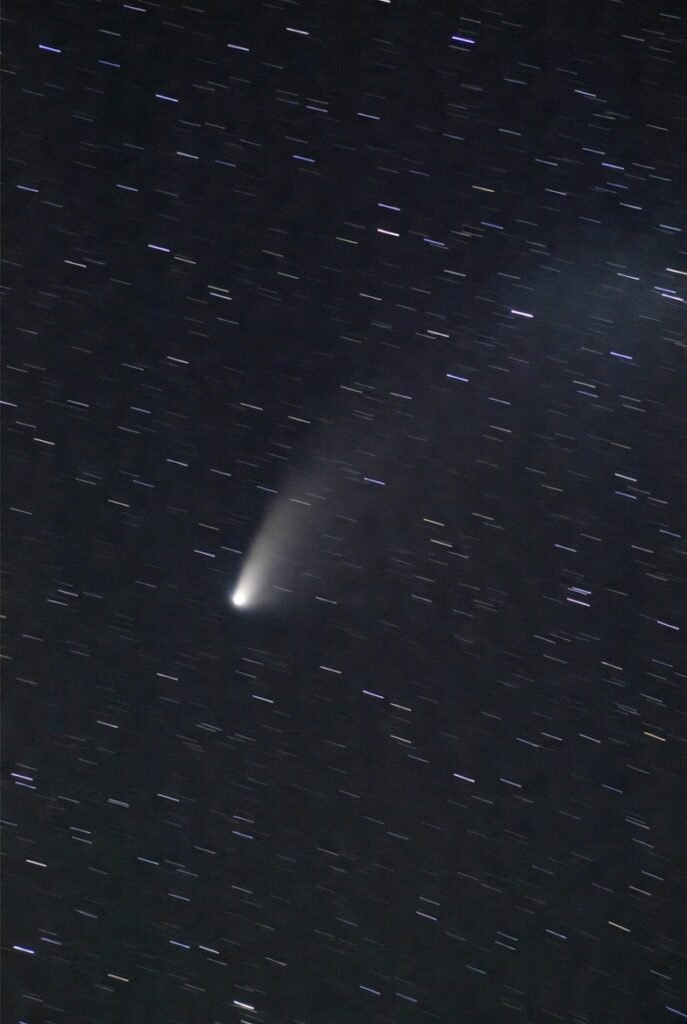
Have you ever dreamed of spotting a visitor from another star system? Right now, in early 2026, Comet 3I/ATLAS (also known as C/2025 N1) is giving us that chance! As the third confirmed interstellar object ever detected — after ʻOumuamua and 2I/Borisov — this fascinating comet is speeding out of our solar system after a close brush with the Sun last October.
Discovered on July 1, 2025, by the ATLAS telescope in Chile, 3I/ATLAS has been full of surprises: active outgassing, multiple tails, and even a mysterious sunward “anti-tail” jet captured by Hubble in recent images. Now, as it heads toward Jupiter for its next encounter in March, let’s dive into the Current Position Of Comet 3I/ATLAS and why it’s still worth watching.
Here’s a stunning recent view of Comet 3I/ATLAS glowing in the night sky with its prominent tail:
And another breathtaking capture showing the comet streaking through the stars:
What is Comet 3I/ATLAS?

Comet 3I/ATLAS is an interstellar comet, meaning it originated outside our solar system and is just passing through on a hyperbolic (unbound) orbit. It reached perihelion (closest to the Sun) on October 29-30, 2025, at about 1.36 AU — inside Mars’ orbit — where it became active, developing a coma and tails.
It made its closest approach to Earth on December 19, 2025 (about 1.8 AU or ~270 million km — perfectly safe!), and now it’s fading as it moves farther out. Current estimates put its nucleus size between 1-5 km, and it’s showing unusual activity, including a powerful anti-tail jet toward the Sun observed in January 2026 Hubble images.
For more on past interstellar visitors, check our internal guide: Interstellar Objects: From ʻOumuamua to Now.
Current Position Of Comet 3I/ATLAS – January 10, 2026
As of January 10, 2026, the Current Position Of Comet 3I/ATLAS places it firmly in the constellation Cancer.
- Right Ascension (RA): ~09h 02m 24s
- Declination (Dec): +14° 47’
- Distance from Earth: ~2.03 AU (~305 million km)
- Distance from Sun: ~2.96 AU
- Magnitude: Around 14.2 (fading from its post-perihelion peak; visible with medium telescopes)
- Altitude & Visibility: Best in pre-dawn/eastern skies for northern observers; check local rise/set times.
It’s moving slowly westward through Cancer, passing near open clusters like M67 and M44 in mid-January. The comet remains active, with recent reports of continued outgassing and a triple jet structure.
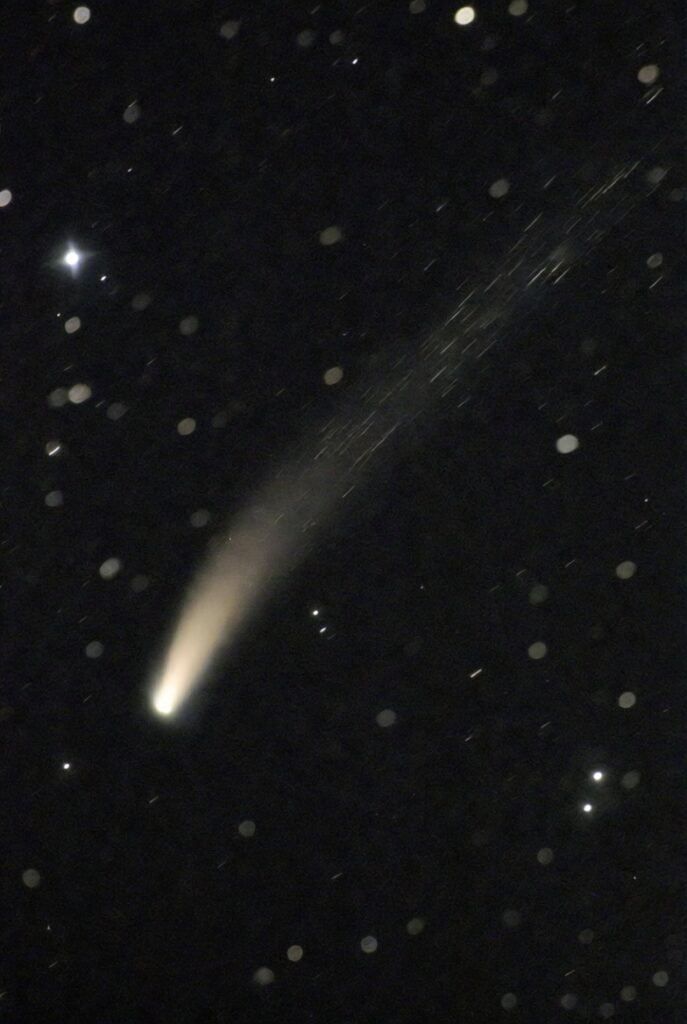
Here’s a close-up of the comet’s fascinating features from recent observations:
For real-time tracking, visit NASA’s official resources: NASA Comet 3I/ATLAS Page or TheSkyLive interactive map: TheSkyLive 3I/ATLAS Tracker.
Latest Discoveries and Activity in Early 2026
Even after perihelion, 3I/ATLAS keeps surprising scientists! Hubble’s January 7, 2026, images revealed a prominent anti-tail jet extending ~400,000 km sunward — an unusual feature for comets. Amateur astronomers are capturing its green coma and evolving tails.
The comet is expected to stay brighter than magnitude 18 until March 2026, when it encounters Jupiter at ~0.36 AU. After that, it fades rapidly as it exits the inner solar system forever.
Explore more cosmic wonders in our Space Images Gallery.
How to Observe Comet 3I/ATLAS Right Now
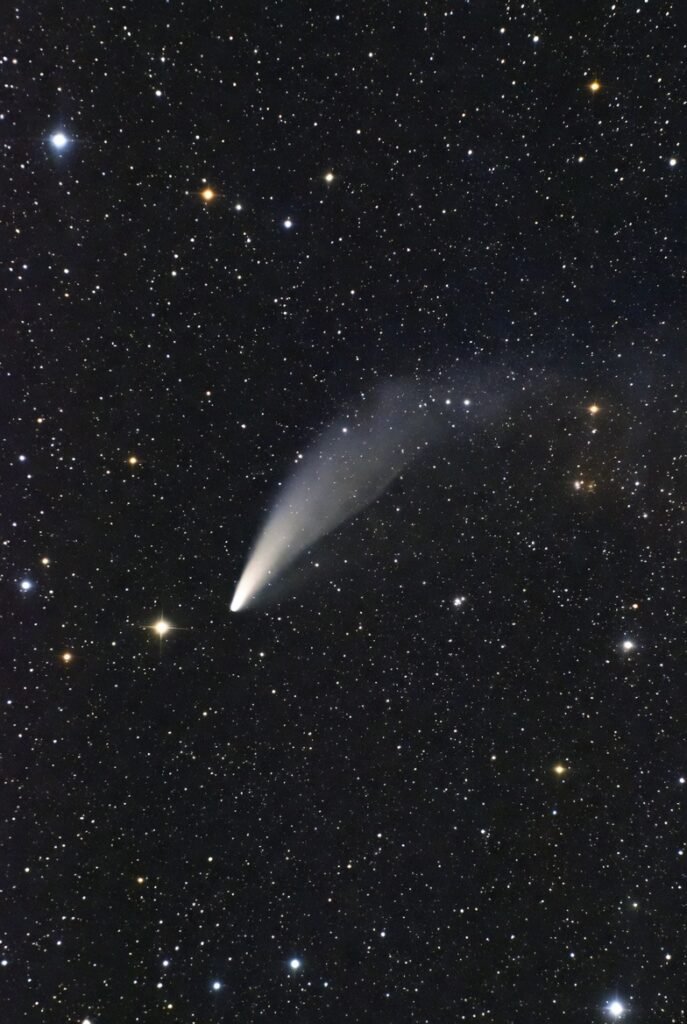
With magnitude ~14, 3I/ATLAS requires a 6-8 inch telescope under dark skies. Look east before dawn in Cancer — use star-hopping from bright stars like Regulus in Leo. Apps like Stellarium or SkySafari help pinpoint it.
It’s not naked-eye visible, but imaging setups capture its beauty beautifully. Optimal viewing continues through January!
Future of Comet 3I/ATLAS
This interstellar wanderer will swing by Jupiter in March 2026, then head into the outer solar system, crossing Saturn/Uranus/Neptune orbits by 2028-2030s, before entering interstellar space in the mid-2030s. It won’t return — a true one-time cosmic traveler!
On SpaceTracker.live, we’ll keep updating you with the freshest comet news. The universe keeps delivering surprises!
What do you think of this interstellar guest? Share in the comments below!
Current Position Of Comet 3I/ATLAS FAQs
Here are answers to the most common questions about Current Position Of Comet 3I/ATLAS in January 2026.
1. Where is Comet 3I/ATLAS right now on January 10, 2026?
It’s in the constellation Cancer at RA ~09h 02m, Dec +14° 47′, about 2.03 AU from Earth and 2.96 AU from the Sun. Magnitude ~14.2 — visible with telescopes.
2. Is Comet 3I/ATLAS still visible in early 2026?
Yes! It’s fading but remains observable with medium telescopes through January and into spring 2026. Best in pre-dawn skies.
3. How bright is Comet 3I/ATLAS currently?
Around magnitude 14.2 as of January 10, 2026 — down from its peak but still active with visible coma and tails in images.
4. Will Comet 3I/ATLAS come close to Earth again?
No — its closest approach was December 19, 2025 (~1.8 AU). It’s now outbound forever on a hyperbolic path.
5. Why is it called an interstellar comet?
Its speed and trajectory show it originated outside our solar system, like ʻOumuamua and Borisov. It will never return.
6. Can I see Comet 3I/ATLAS with binoculars?
Probably not — it’s too faint (~mag 14). A telescope (6″+) under dark skies is needed, or follow live images online.
7. What’s next for Comet 3I/ATLAS?
Closest approach to Jupiter in March 2026 (~0.36 AU), then gradual fading as it leaves the inner solar system.
8. Where can I track the Current Position Of Comet 3I/ATLAS live?
Use tools like TheSkyLive, NASA’s Eyes on the Solar System, or JPL Horizons for real-time ephemeris.
9. Is Comet 3I/ATLAS dangerous to Earth?
Absolutely not! It stayed far away at all times — minimum distance ~270 million km.
10. Why is 3I/ATLAS so interesting scientifically?
As the third interstellar object, it reveals clues about other star systems, comet formation, and even potential chemistry from billions of years ago.
Got more questions? Drop them below — we’re tracking every update on SpaceTracker.live! 🚀